
Need Help?
+91 94294 10291
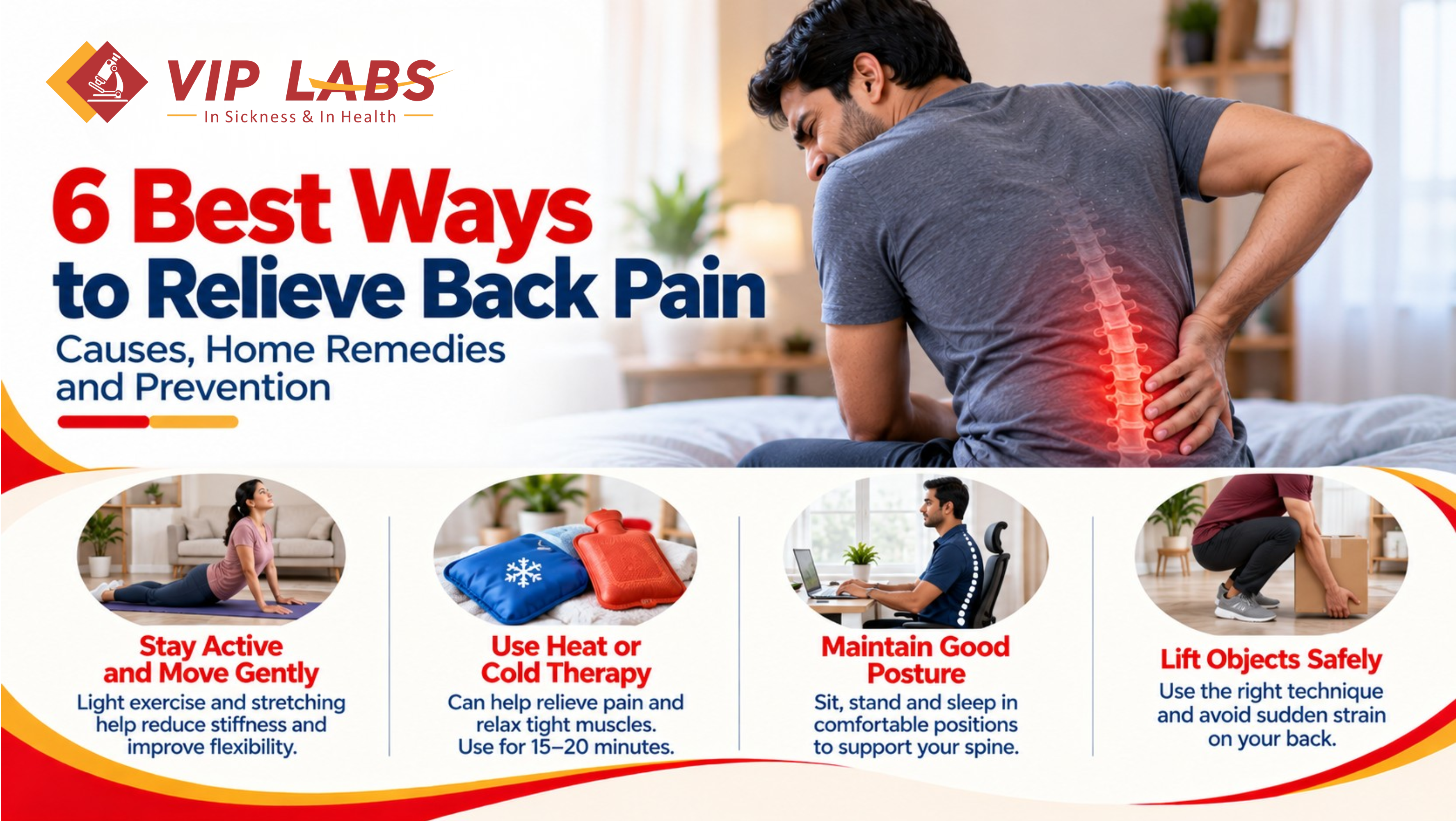
Back pain is one of the most common health complaints and can affect people of different ages. It may develop after sitting for long hours, lifting heavy objects incorrectly, exercising without proper preparation, or maintaining poor posture. In some cases, back pain may be related to muscle strain, spinal conditions, or an underlying medical problem.
Back pain can interfere with walking, working, sleeping, and everyday activities. Fortunately, many cases of uncomplicated lower back pain improve with appropriate self-care and gradual movement.
Understanding the possible cause of your discomfort and following healthy daily habits can help you manage back pain and reduce the risk of recurrence.
In this article, we explain six practical ways to relieve back pain, common causes, prevention tips, and warning signs that should not be ignored.
Back pain can affect the upper, middle, or lower back. The cause may vary depending on the location, severity, duration, and other symptoms.
Sitting for long periods, slouching, and working in an uncomfortable position may contribute to muscle discomfort and stiffness.
Lifting heavy objects, sudden twisting movements, or unfamiliar physical activity can strain the muscles and ligaments supporting the back.
Long periods of inactivity may contribute to stiffness and reduced strength in the muscles that support the spine.
Excess body weight may increase the load on the back and can contribute to discomfort in some people.
Conditions such as a herniated disc, spinal stenosis, or age-related changes in the spine may cause back pain. Some conditions can also cause pain, tingling, numbness, or weakness that travels into the legs.
Occasionally, back pain may be associated with fractures, infections, inflammatory conditions, kidney problems, or other medical issues. Persistent, unusual, or severe pain should be assessed by a healthcare professional.
The most appropriate treatment depends on the cause of your back pain. For many cases of uncomplicated lower back pain, the following measures may help.
When your back hurts, resting briefly may feel comfortable. However, prolonged bed rest can increase stiffness and make it harder to return to normal activities.
Gentle movement, such as walking at a comfortable pace, can help maintain mobility.
What you can do:
Take short walks throughout the day.
Change positions regularly instead of sitting for hours.
Continue everyday activities as tolerated.
Increase activity gradually as your symptoms improve.
Avoid movements that significantly worsen the pain.
If movement causes severe pain or new symptoms, stop and seek medical advice.
Heat and cold may provide temporary relief from back discomfort.
Heat therapy: A warm compress or heating pad may help relax tight muscles and reduce stiffness.
Cold therapy: A cold pack wrapped in a towel may help soothe pain after a recent strain.
Use either option for approximately 15–20 minutes at a time, depending on comfort. Never place ice or a very hot object directly against the skin, and avoid falling asleep with a heating pad.
People with reduced skin sensation or circulation problems should take particular care with heat and cold applications.
Gentle mobility exercises may help reduce stiffness and improve flexibility. However, not every exercise is suitable for every cause of back pain.
You may try gentle movements such as:
Move slowly and breathe normally. Do not force a stretch or bounce at the end of a movement.
Stop if an exercise increases your pain, causes pain to travel further down your leg, or produces numbness or weakness. If you have had an injury, surgery, or a diagnosed spinal condition, ask a healthcare professional which exercises are appropriate.
Your daily positions can influence how comfortable your back feels, especially when you remain in one position for a long time.
While sitting:
While sleeping:
There is no single perfect posture or sleeping position for everyone. Comfort, movement, and individual needs matter.
Incorrect lifting and sudden twisting can aggravate back pain.
When lifting an object:
You do not need to keep your back perfectly rigid during every movement. The aim is to use a controlled, comfortable technique and avoid sudden overload.
If lifting causes sharp pain, stop rather than trying to push through it.
Regular physical activity can help improve overall strength, endurance, and mobility. For people whose back pain is improving, a gradual return to activities may help reduce future episodes.
Helpful activities may include walking, swimming, suitable strengthening exercises, and a physiotherapist-guided exercise programme.
Other supportive habits include:
If back pain keeps returning, a physiotherapist or healthcare professional can help develop an exercise plan suited to your condition.
Some habits may worsen discomfort or delay recovery.
If your pain started after a major accident or fall, seek prompt medical assessment.
Many cases of back pain improve with time and appropriate self-care. However, medical assessment is important if your symptoms are severe, persistent, or unusual.
Consult a healthcare professional if:
Seek emergency medical care if back pain is accompanied by new difficulty passing urine, loss of bladder or bowel control, numbness around the groin or saddle area, or rapidly worsening weakness in the legs. These symptoms may indicate serious nerve compression.
Back pain with chest pain, severe abdominal pain, fainting, or significant difficulty breathing also requires urgent evaluation.
Yes. Although many episodes of back pain are related to muscles, joints, or spinal structures, some cases may be associated with other medical conditions.
For example:
A healthcare professional will consider the pattern of pain, medical history, physical examination, and other symptoms before deciding whether tests or imaging are needed.
Not everyone with back pain needs blood tests, an X-ray, or an MRI. Investigations should be selected according to the suspected cause and clinical findings.
Although not every episode of back pain can be prevented, certain habits may help reduce the risk of recurring discomfort.
Avoid remaining seated or standing in one position for long periods. Take movement breaks and include physical activity in your daily routine.
Suitable exercises that improve core strength, flexibility, and overall fitness may help support comfortable movement.
Adjust your chair, desk, and screen to support a comfortable working position. Remember that regular movement is important even when your workstation is well arranged.
Keep loads close to your body, avoid sudden twisting, and ask for assistance when an object is too heavy or awkward.
Adequate sleep, balanced nutrition, and a suitable activity level support overall health and recovery.
If back pain repeatedly returns or interferes with daily activities, seek advice rather than relying only on temporary relief measures.
1. What is the fastest way to relieve back pain at home?
For uncomplicated back pain, gentle movement, short walks, comfortable positions, and a warm or cold compress may provide relief. The best approach depends on the cause and severity of the pain.
2. Is walking good for back pain?
Gentle walking can help maintain mobility and reduce stiffness in many people with uncomplicated back pain. Start with a comfortable duration and stop if symptoms become significantly worse.
3. Should I rest in bed when my back hurts?
Brief rest may help during severe discomfort, but prolonged bed rest is generally not recommended for uncomplicated back pain. Gentle movement as tolerated is usually preferable.
4. Is heat or ice better for back pain?
Both may provide temporary relief. Heat may help with stiffness or muscle tightness, while cold may soothe discomfort after a recent strain. Use a protective layer and avoid extreme temperatures.
5. Which exercises help relieve back pain?
Depending on the cause, gentle pelvic tilts, comfortable mobility exercises, walking, and physiotherapist-guided strengthening may help. Stop any exercise that worsens pain or causes new neurological symptoms.
6. Can poor posture cause back pain?
Prolonged or uncomfortable positions can contribute to back discomfort in some people. Regular movement, a comfortable workstation, and suitable strengthening exercises may help.
7. Can back pain be related to kidney problems?
Yes. Kidney stones or kidney infections can sometimes cause pain in the side or back. Fever, painful urination, nausea, or blood in the urine are reasons to seek medical assessment.
8. When should I see a doctor for back pain?
Seek medical advice for severe, worsening, persistent, or recurring pain, particularly if you have fever, unexplained weight loss, numbness, or weakness. New bladder or bowel problems with saddle-area numbness require emergency assessment.
9. Do all cases of back pain require an X-ray or MRI?
No. Many cases can be assessed through medical history and physical examination. Imaging is recommended when the symptoms or examination suggest that it is necessary.
10. How can I prevent back pain from returning?
Regular movement, suitable strengthening exercises, comfortable work positions, safe lifting techniques, and gradual increases in activity may help reduce recurrence. Repeated pain should be assessed to identify contributing factors.
Back pain can develop due to muscle strain, prolonged sitting, reduced physical activity, spinal conditions, or other medical problems. Staying gently active, applying heat or cold safely, practising appropriate stretches, maintaining comfortable positions, lifting carefully, and building strength gradually may help relieve many uncomplicated episodes.
However, back pain should not be ignored when it is severe, persistent, follows a significant injury, or occurs with symptoms such as fever, leg weakness, or changes in bladder or bowel control.
If your pain continues or affects your everyday activities, consult a healthcare professional to identify the cause and choose the right treatment.
For information about laboratory investigations and health services, visit the VIP Labs Test Parameters Directory or explore VIP Labs health check-up packages.