
Need Help?
+91 94294 10291
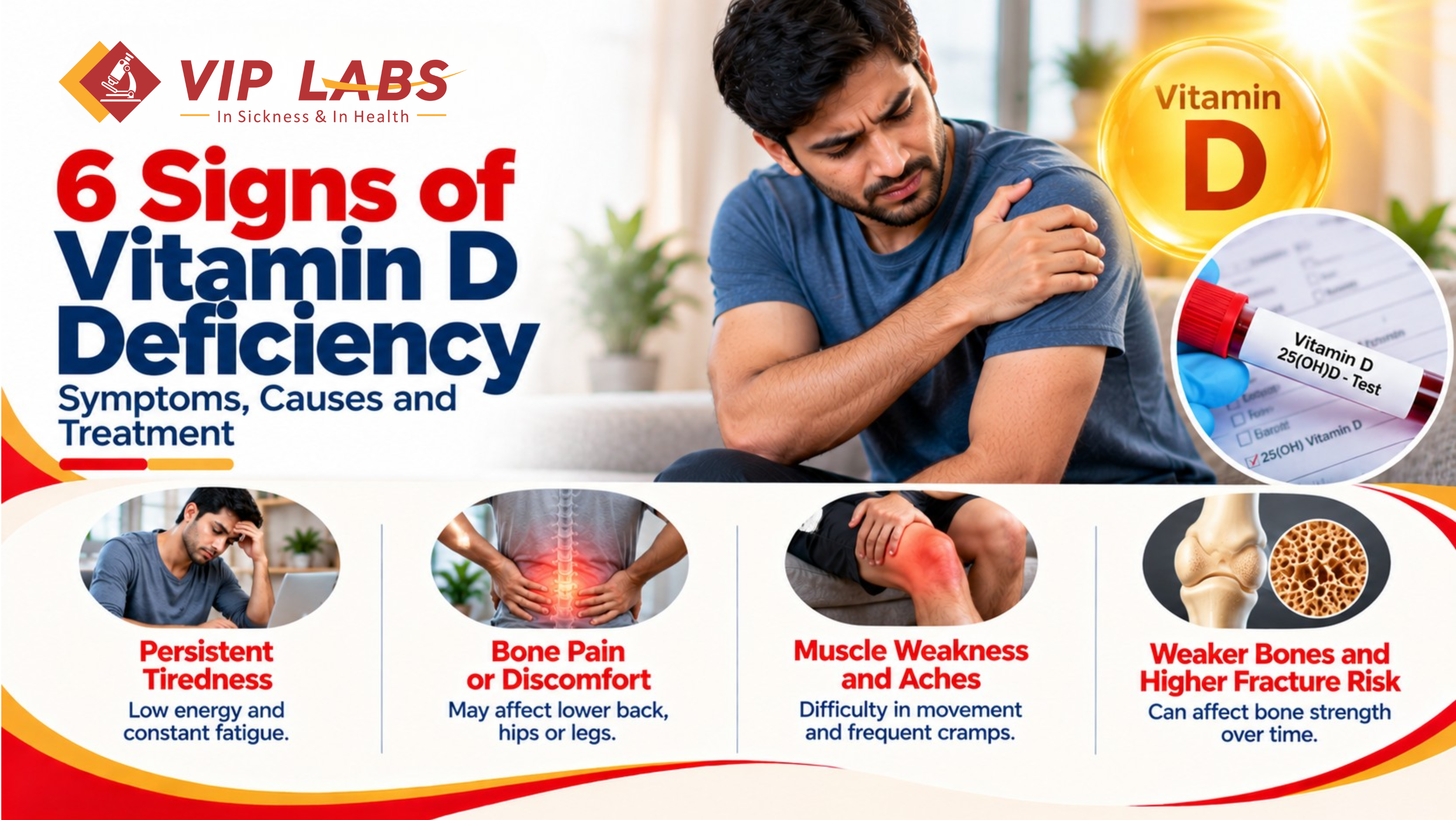
Vitamin D plays an important role in maintaining healthy bones, muscles, and teeth. It helps the body absorb calcium and supports normal muscle and immune function. When the body does not get enough vitamin D, it can affect bone health and may lead to muscle weakness and other health problems.
Vitamin D deficiency can develop gradually, and some people may not notice any symptoms initially. When symptoms do occur, they can be mistaken for everyday tiredness, body aches, or general weakness.
Recognising the possible signs of vitamin D deficiency can help you understand when to seek medical advice and whether a blood test may be appropriate.
In this article, we explain six possible signs of vitamin D deficiency, common causes, ways to maintain healthy vitamin D levels, and how the condition is diagnosed.
Vitamin D is a fat-soluble vitamin that helps the body absorb calcium and maintain healthy bones. It also contributes to normal muscle function and supports the body's immune system.
The body obtains vitamin D through three main sources:
Vitamin D deficiency occurs when the body does not have enough vitamin D to meet its needs. Severe deficiency can cause weak or painful bones and muscle weakness. In children, it can lead to rickets, while in adults it can cause osteomalacia, a condition in which bones become softer than normal.
Vitamin D deficiency does not always cause obvious symptoms. However, the following signs may occur, particularly when the deficiency is significant or prolonged.
Feeling tired occasionally is normal, especially after a busy day or inadequate sleep. However, persistent fatigue may sometimes occur alongside vitamin D deficiency.
People may experience low energy, reduced stamina, or difficulty completing everyday activities.
Fatigue has many possible causes, including poor sleep, stress, anaemia, thyroid disorders, and other health conditions. Therefore, tiredness alone cannot confirm vitamin D deficiency.
If fatigue continues despite adequate rest, consult a healthcare professional to determine whether further evaluation is needed.
Vitamin D helps the body absorb calcium, which is essential for maintaining strong bones.
When vitamin D deficiency becomes severe or prolonged, bone mineralisation can be affected. Adults may develop osteomalacia, which can cause bone pain and tenderness.
Discomfort may be noticed in areas such as the lower back, hips, pelvis, or legs.
Bone pain can also result from several other conditions, so persistent or unexplained pain should be assessed rather than automatically attributed to low vitamin D.
Vitamin D is involved in normal muscle function. Low vitamin D levels may be associated with muscle weakness, particularly when the deficiency is significant.
You may notice difficulty climbing stairs, standing up from a low chair, or completing activities that previously felt easier.
Muscle weakness can also occur due to inactivity, ageing, medication effects, and other medical conditions.
If weakness is persistent, worsening, or interfering with everyday movement, seek medical advice.
Some people with low vitamin D levels experience muscle aches or discomfort. Severe deficiency can affect bone and muscle health, although muscle pain is not specific to vitamin D deficiency.
Cramps and aches may also be associated with dehydration, physical overexertion, certain medicines, or imbalances in minerals such as calcium and magnesium.
If you frequently experience unexplained muscle discomfort, a healthcare professional can assess your symptoms and decide whether vitamin D testing or other investigations are appropriate.
Vitamin D helps maintain the body's calcium balance and supports normal bone mineralisation.
Long-term deficiency can weaken bones, particularly when it is severe or accompanied by other nutritional problems. This may contribute to osteomalacia in adults and increase the risk of certain bone-related complications.
People with weakened bones may be more vulnerable to fractures, especially after a fall or relatively minor injury.
Fractures can have many causes, including osteoporosis, ageing, and injury. A fracture or repeated fractures should be medically evaluated to identify contributing factors.
Some people with vitamin D deficiency may experience reduced muscle performance or difficulty maintaining their usual level of physical activity.
Activities such as walking, climbing stairs, or getting up from a seated position may feel more challenging when muscle weakness is present.
However, slow recovery after exercise or illness is not a reliable sign of vitamin D deficiency on its own. Sleep, nutrition, underlying medical conditions, and overall fitness can also influence recovery.
If you notice a persistent decline in strength or physical function, seek medical advice rather than relying on symptoms alone.
Vitamin D deficiency can develop for several reasons. Understanding these factors can help identify people who may benefit from medical assessment.
People who spend most of their time indoors, cover most of their skin outdoors, or receive limited UVB exposure may produce less vitamin D through their skin.
Sunlight exposure varies according to the time of day, season, location, clothing, skin pigmentation, and other factors.
Only a limited number of foods naturally contain substantial amounts of vitamin D. People who consume few vitamin D-rich foods or fortified products may have difficulty meeting their needs through diet alone.
As people age, the skin becomes less efficient at producing vitamin D from sunlight. Older adults may also have other risk factors, such as limited outdoor activity or reduced dietary intake.
Certain digestive conditions can reduce the absorption of vitamin D and other nutrients. Examples include coeliac disease, Crohn's disease, and some conditions that affect fat absorption.
The liver and kidneys help convert vitamin D into forms the body can use. Certain diseases affecting these organs may interfere with this process.
Some medicines can affect vitamin D absorption or metabolism. Obesity and certain other medical conditions may also be associated with a higher risk of low vitamin D levels.
People with several risk factors may need individual assessment to determine whether testing or supplementation is appropriate. <Cite refs={["turn666535search0","turn666535search2"]}/>
Symptoms alone cannot reliably diagnose vitamin D deficiency because many of them overlap with other health conditions.
The most commonly used investigation is the 25-hydroxyvitamin D blood test, also called the 25(OH)D test. It measures the main circulating form of vitamin D and is generally used to assess vitamin D status.
The test involves collecting a blood sample, usually from a vein in the arm.
A healthcare professional may consider testing if you have:
Routine testing is not necessary for every healthy person. Whether a test is appropriate depends on symptoms, risk factors, and clinical guidance.
Vitamin D results are commonly reported in nanograms per millilitre (ng/mL) or nanomoles per litre (nmol/L).
Interpretation depends on the laboratory's method, the reference information provided, and the person's clinical circumstances. Different health authorities may use different thresholds when describing deficiency or adequacy.
Your healthcare professional can explain your result and whether dietary changes, supplements, or further evaluation are appropriate.
Healthy vitamin D levels can be supported through a combination of dietary choices, appropriate sunlight exposure, and supplements when needed.
Foods that naturally contain vitamin D include:
Fortified foods, such as some milk products, plant-based milk alternatives, and breakfast cereals, may also provide vitamin D. Check product labels to confirm whether a food is fortified.
The body produces vitamin D when skin is exposed to UVB rays from sunlight. However, the amount produced varies considerably between individuals and environmental conditions.
Avoid prolonged, unprotected sun exposure and sunburn. There is no single exposure duration that is appropriate for everyone because skin type, UV intensity, time of day, and location all affect production.
If you are at risk of deficiency, discuss suitable ways to meet your vitamin D needs with a healthcare professional rather than relying on excessive sunlight.
Vitamin D supplements may be useful for people who cannot obtain enough vitamin D from food and sunlight or who have a diagnosed deficiency.
The appropriate dose depends on age, blood test results, medical history, and individual needs.
Avoid taking high-dose vitamin D supplements without medical guidance. Excessive intake can lead to dangerously high calcium levels and may damage the kidneys or other organs.
A varied diet containing protein-rich foods, vegetables, fruits, whole grains, and appropriate sources of calcium supports overall health.
Vitamin D works together with calcium in maintaining bone health. Depending on your diet and medical circumstances, your healthcare professional may advise whether your calcium intake also needs attention.
If a digestive, liver, kidney, or other medical condition is contributing to low vitamin D levels, managing that condition may be an important part of treatment.
People who take medicines that affect vitamin D should discuss their needs with their healthcare professional. Do not stop prescribed medication on your own.
1. What are the common signs of vitamin D deficiency?
Possible signs include bone pain, muscle weakness, muscle aches, fatigue, and problems related to weakened bones. These symptoms can have many other causes, and some people with low vitamin D levels have no noticeable symptoms.
2. How can I know if I have vitamin D deficiency?
Symptoms alone cannot confirm deficiency. A healthcare professional may recommend a 25-hydroxyvitamin D blood test based on your symptoms and risk factors.
3. Which blood test checks vitamin D levels?
The 25-hydroxyvitamin D test, also known as the 25(OH)D test, is the most commonly used blood test to assess vitamin D status.
4. Can vitamin D deficiency cause bone pain?
Yes. Severe or prolonged deficiency can cause osteomalacia in adults, a condition associated with softened bones and bone pain. Other conditions can also cause bone pain, so evaluation may be needed.
5. Can vitamin D deficiency cause muscle weakness?
Yes. Significant deficiency can be associated with muscle weakness and reduced physical function. Persistent weakness should be evaluated because it can have several possible causes.
6. Which foods are rich in vitamin D?
Fatty fish, egg yolks, certain mushrooms, and fortified foods can provide vitamin D. The amount varies by food and product, so check labels where appropriate.
7. Does sunlight help increase vitamin D?
Yes. The skin produces vitamin D when exposed to UVB rays. However, production varies by skin type, season, location, clothing, and other factors. Avoid excessive exposure that causes skin damage.
8. Should everyone take vitamin D supplements?
Not everyone needs a supplement at the same dose. The appropriate approach depends on age, diet, risk factors, medical conditions, and whether a deficiency has been identified. Ask a healthcare professional for personalised advice.
9. Can taking too much vitamin D be harmful?
Yes. Excessive vitamin D intake, usually from supplements, can cause high calcium levels and potentially damage the kidneys and other organs. Avoid high-dose supplements unless medically prescribed.
10. How often should vitamin D levels be tested?
Testing frequency depends on your health, risk factors, initial results, and treatment. Routine repeated testing is not necessary for everyone. Your healthcare professional can advise whether and when a repeat test is appropriate.
Vitamin D is essential for normal calcium absorption, bone health, and muscle function. Six possible signs associated with deficiency include persistent fatigue, bone pain, muscle weakness, muscle aches, increased bone fragility, and reduced physical function.
These symptoms are not specific to vitamin D deficiency, and some people with low levels may have no obvious symptoms. A 25-hydroxyvitamin D blood test can help assess vitamin D status when testing is clinically appropriate.
A balanced diet, safe sunlight habits, and supplements when recommended can help maintain healthy vitamin D levels. If you experience persistent bone pain, unexplained muscle weakness, or other ongoing symptoms, consult a healthcare professional for an appropriate assessment.
For information about laboratory investigations, visit the VIP Labs Test Parameters Directory or explore VIP Labs health check-up packages.