
Need Help?
+91 94294 10291
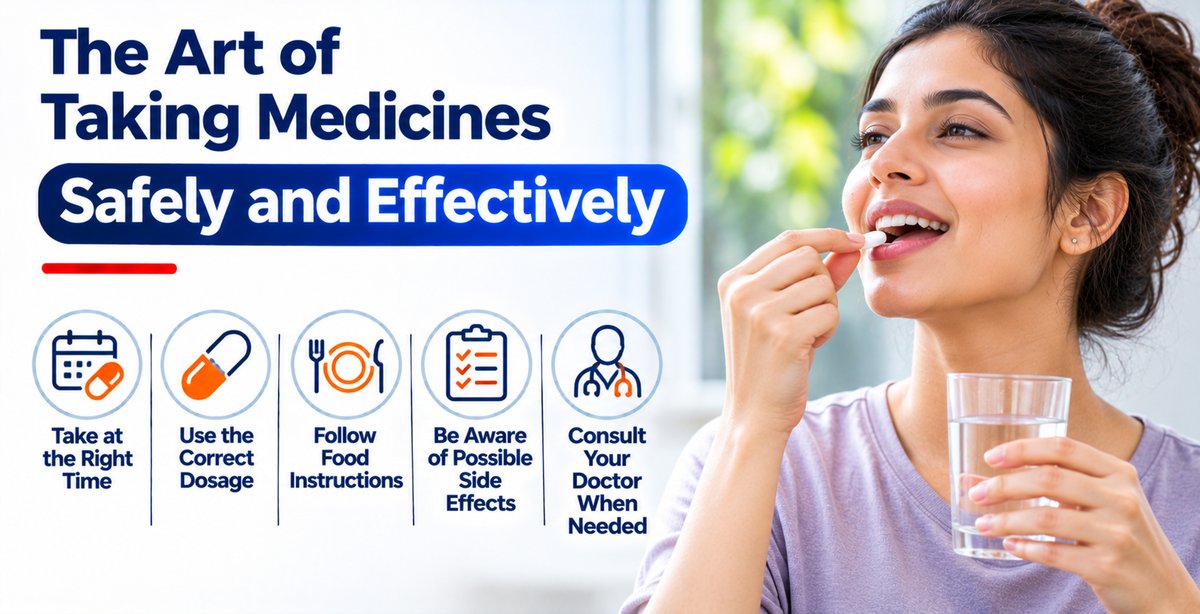
Quick answer: How to take medicines safely: know the name, purpose, dose timing and duration of each medicine, take it exactly as prescribed, keep an updated medicine list, avoid self-medication, finish antibiotic courses as advised, store and dispose of medicines properly, and do the monitoring tests your doctor asks for, such as a liver function test.
Medicines help only when taken correctly. Missed doses, wrong timing or stopping early can make treatment fail or cause harm. This guide keeps the practical habits from our original article and adds what families should know about interactions, antibiotics, storage and monitoring.
Medication errors are among the most common preventable causes of harm in healthcare, and many happen at home rather than in hospital. The World Health Organization runs a global "Medication Without Harm" campaign on this.
Common home mistakes include doubling a dose after forgetting one, taking two brands that contain the same ingredient, giving adult medicines to children, and stopping blood pressure or diabetes medicines once you "feel fine". Learning how to take medicines safely prevents most of these.
Our original article stressed knowing your medicines well. Before you leave the clinic or pharmacy, make sure you can answer these questions for every medicine:
Also ask about common side effects and which ones need a call to the doctor.
Write down every medicine you take, including vitamins, herbal and Ayurvedic products, eye drops and inhalers. Note the strength, timing and the doctor who prescribed it. Show it at every visit.
A weekly pill box, a phone alarm or a medicine reminder app helps you remember doses and see at a glance whether you have taken them.
Keep a few days of extra supply for long-term medicines, refill before you run out,. Ask your doctor what to do if you miss a dose, as the answer differs between medicines.
Someone close to you should know which medicines you take and why. This matters most for elderly people living alone.
Taking leftover tablets, a neighbour's prescription or medicines bought on a chemist's suggestion can hide a serious illness and cause side effects. Frequent painkillers can harm the stomach and kidneys.
Some medicines affect each other, and some react with food, alcohol or herbal products. Tell every doctor and pharmacist about all your medicines, and ask before adding anything new, even a supplement. Avoid alcohol unless your doctor says it is safe with your medicines.
Many cold, flu and pain tablets contain paracetamol or similar ingredients. Taking two such products together can lead to an accidental overdose. Read the ingredient list, not just the brand.
Antibiotics do not work against viral colds, most sore throats or flu. Overuse fuels antimicrobial resistance (AMR), which makes infections harder to treat for everyone, and it is a major public health concern in India. Take antibiotics only when a doctor prescribes them, complete the course as advised, and never share or save them for later.
Medicines for blood pressure, diabetes, thyroid, epilepsy, heart disease or depression usually need to be continued even when you feel well. Stopping suddenly can be dangerous. Discuss any change with your doctor first.
Kitchen spoons vary in size. Use the measuring cup, dropper or oral syringe that comes with the medicine, especially for children, whose doses are based on weight.
Keep most medicines in a cool, dry place away from direct sunlight; a bathroom or a hot car is not ideal. Store insulin and some vaccines in the fridge as the label says, never in the freezer. Keep all medicines out of reach and sight of children.
Check dates when you buy and before each use. Do not use medicines that have changed colour, smell or texture. Eye drops and syrups often need to be discarded a few weeks after opening, so write the opening date on the bottle.
Do not throw tablets loose in the open or flush them down the toilet unless the label says so. Mix them with used tea leaves or soil in a sealed bag before putting them in the dustbin, or use a take-back facility if a pharmacy or hospital near you offers one. Dispose of needles in a hard, closed container.
Elderly people often take five or more medicines (polypharmacy), which raises the risk of interactions, dizziness and falls. Ask the doctor to review the full list at least once a year.
Many medicines can affect an unborn baby or pass into breast milk. Always tell the doctor if you are pregnant, planning a pregnancy or breastfeeding.
| Situation | Do | Don't |
|---|---|---|
| Missed a dose | Follow the leaflet or ask your pharmacist | Take a double dose automatically |
| Feeling better | Finish the course your doctor advised | Stop antibiotics or long-term medicines on your own |
| New symptom | Consult a doctor | Use leftover or borrowed medicines |
| Cold or flu | Rest, fluids, and medicines only if advised | Ask for antibiotics for a viral illness |
| Several doctors | Show one complete medicine list to each | Assume each doctor knows what others prescribed |
| Old medicines | Check expiry and dispose of them safely | Store them loose without labels |
Seek emergency care straight away if, after taking a medicine, you notice:
See your doctor soon for milder side effects that persist or if a medicine does not seem to work.
Some medicines need regular blood tests to check that they are working and not affecting your organs. Your doctor decides which tests you need and how often. Common examples include:
People on blood thinners such as warfarin need INR monitoring; ask your doctor where to get it done. Missing follow-up tests is a common reason long-term treatment goes wrong, so book them on time. Also read our myth about normal lab reports.
Take each medicine exactly as prescribed, at the right time and for the full duration. Know its name, purpose and food instructions, keep an updated medicine list, avoid self-medication, and tell every doctor about all medicines and supplements you use.
Check the leaflet or ask your pharmacist, because advice differs between medicines. For many, you take the missed dose when you remember unless the next dose is close, but you should not double up unless told to. Ask your doctor about this when a medicine is first prescribed.
Stopping too early can leave some bacteria alive, so the infection may return and bacteria are more likely to become resistant. Take antibiotics only when prescribed, follow the duration your doctor advises, and never share or save leftover antibiotics.
Some medicines are affected by milk, tea, coffee, grapefruit juice or alcohol, which can reduce how well they work or increase side effects. Plain water is the safest choice unless your doctor or pharmacist says otherwise. Ask about food and drink rules for each medicine.
Do not flush them or throw them loose in the open. Mix tablets with used tea leaves or soil in a sealed bag before putting them in the dustbin, or return them to a pharmacy or hospital take-back facility if one is available. Keep needles in a hard, closed container.
It depends on the medicine. Doctors commonly check liver function, kidney function and electrolytes, plus HbA1c for diabetes, lipid profile for cholesterol medicines and TSH for thyroid medicines. Follow the schedule your doctor sets.
Knowing how to take medicines safely includes keeping up with your follow-up tests. VIP Labs, a well-established pathology lab in Ahmedabad, offers liver, kidney, electrolyte, HbA1c, lipid and thyroid tests. Book online for home sample collection, find a pathology lab near you, or save on regular monitoring with a health checkup membership.
Disclaimer: This article is for general awareness only and is not a substitute for medical advice. Please consult a qualified doctor for diagnosis and treatment.