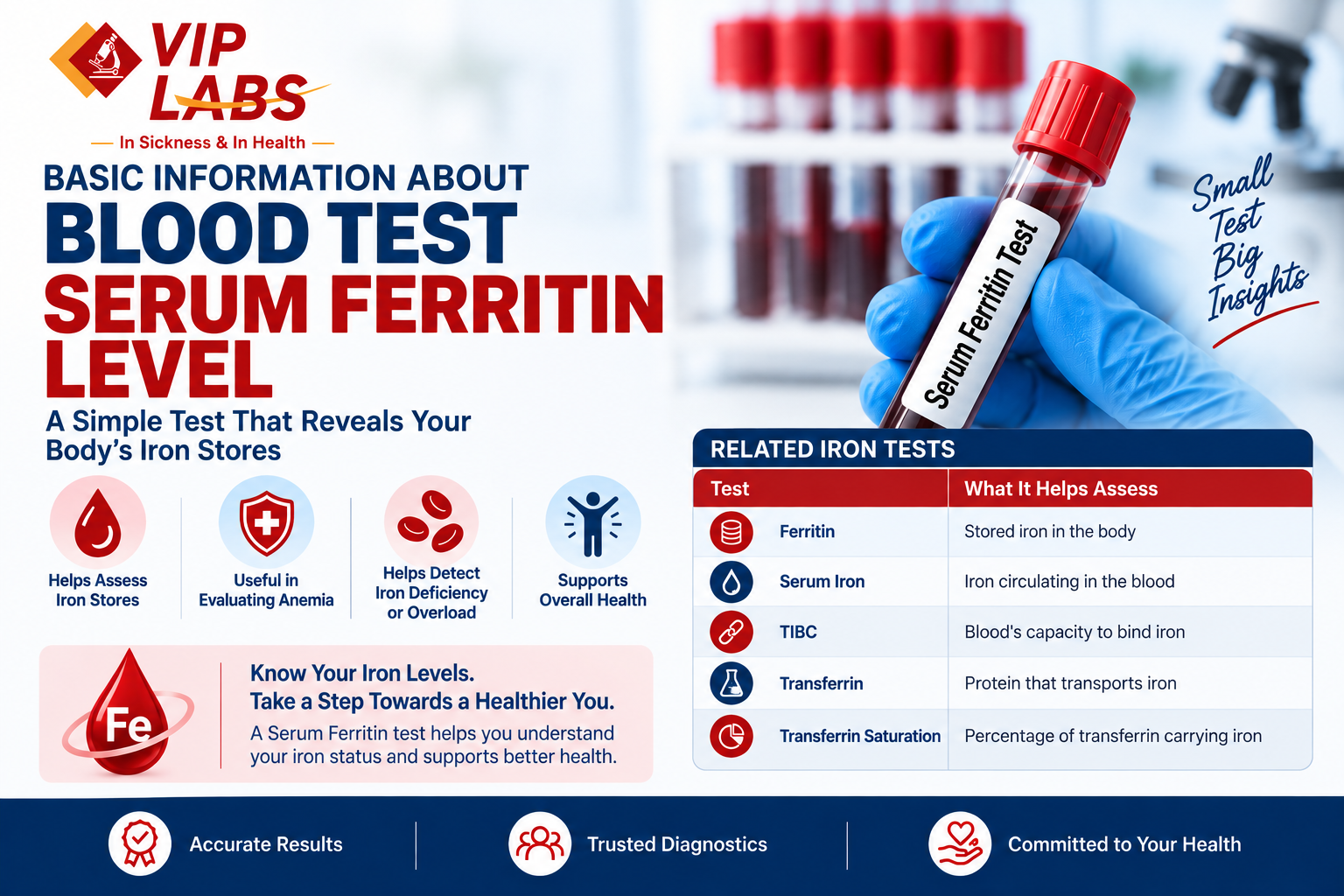
Basic Information About Blood Test Serum Ferritin Level
A serum ferritin blood test measures the amount of ferritin in your blood. Ferritin is a protein that stores iron inside the body's cells, so the ferritin level can provide useful information about the amount of iron stored in the body. It is commonly used along with other iron tests to evaluate iron deficiency, anemia, and conditions associated with excess iron.
What Is a Serum Ferritin Test?
The
Serum Ferritin Test is a blood test that measures ferritin levels in the bloodstream. Because ferritin reflects the body's stored iron, the test can help healthcare professionals assess whether iron stores may be too low or too high.
Ferritin is different from serum iron. Serum iron measures iron circulating in the blood, while ferritin provides information about stored iron.
Why Is the Ferritin Blood Test Done?
A healthcare professional may recommend a ferritin test when evaluating possible problems with iron levels. It can help assess:
- Iron deficiency
- Iron-deficiency anemia
- Possible iron overload
- Certain liver conditions
- Iron status in people at higher risk of deficiency
- Response to treatment for iron deficiency or excess iron
Ferritin is often interpreted together with other tests such as CBC, serum iron, TIBC, transferrin saturation and other iron studies.
What Does a Low Ferritin Level Mean?
A low ferritin level generally indicates that the body's iron stores are low. Low ferritin can occur with iron deficiency and may be associated with iron-deficiency anemia.
Possible causes of low iron stores include:
- Insufficient iron intake
- Heavy menstrual bleeding
- Blood loss
- Reduced absorption of iron
- Increased iron requirements, such as during pregnancy
The underlying cause should be evaluated by a healthcare professional rather than assuming that low ferritin is caused by diet alone.
What Does a High Ferritin Level Mean?
A high ferritin level does not always mean that the body has too much iron. Ferritin can also increase with inflammation, infection, liver disease, certain chronic conditions and other health problems.
High ferritin may also occur with iron overload conditions such as hemochromatosis. Therefore, a high ferritin result usually needs to be interpreted alongside other laboratory results and clinical information.
What Is the Normal Ferritin Level?
Ferritin reference ranges can vary between laboratories, testing methods, age groups and sexes.
For example, MedlinePlus lists common adult ranges of approximately:
- Group Example Ferritin Range
- Adult men 30–400 ng/mL
- Adult women 13–150 ng/mL
These are general reference values, not universal cutoffs. Always use the reference range provided on your laboratory report when interpreting your result.
Ferritin Test vs Other Iron Tests
Ferritin is usually more useful when considered with other iron-related blood tests.
| Test |
What It Helps Assess |
| Ferritin |
Stored iron in the body |
| Serum Iron |
Iron circulating in the blood |
| TIBC |
Blood's capacity to bind iron |
| Transferrin |
Protein that transports iron |
| Transferrin Saturation |
Percentage of transferrin carrying iron |
Looking at these tests together can provide a broader picture of iron status.
What Are the Symptoms of Low Iron or Ferritin?
Some people with low iron stores may experience symptoms such as:
- Fatigue or weakness
- Dizziness
- Shortness of breath
- Pale skin
- Reduced energy
- Fast heartbeat
- Restless legs in some cases
Symptoms can vary, and some people may have low iron without obvious symptoms.
How Is the Ferritin Blood Test Performed?
The test requires a small blood sample, usually collected from a vein in the arm. The sample is then sent to a laboratory for analysis.
Blood collection generally takes only a few minutes. Mild pain or bruising at the collection site can occasionally occur.
Is Fasting Required for a Ferritin Test?
Preparation requirements can vary. Your healthcare provider or laboratory may ask you to fast before the test, particularly when ferritin is ordered as part of a broader group of iron tests. Follow the specific instructions provided by your healthcare professional or laboratory.
Can Ferritin Be Tested Along With an Iron Profile?
Yes. Ferritin is commonly included or ordered alongside other iron studies when a healthcare professional wants a more complete assessment of iron status.
An iron profile may include:
- Serum iron
- TIBC
- Transferrin
- Transferrin saturation
- Ferritin
The exact tests ordered depend on the person's symptoms, medical history, and clinical requirements.
Frequently Asked Questions About Serum Ferritin
1. What is a serum ferritin blood test?
A serum ferritin test measures the amount of ferritin in your blood and provides information about the body's stored iron.
2. What does low ferritin indicate?
Low ferritin generally indicates reduced iron stores and may be associated with iron deficiency or iron-deficiency anemia.
3. Does high ferritin always mean too much iron?
No. High ferritin can occur for several reasons, including inflammation, liver disease, infection, chronic conditions, and iron overload.
4. What is a normal ferritin level?
There is no single universal range. Reference values differ between laboratories. MedlinePlus lists approximately 30–400 ng/mL for adult men and 13–150 ng/mL for adult women as common ranges.
5. Is ferritin the same as an iron test?
Ferritin and serum iron are different tests. Ferritin reflects stored iron, while serum iron measures iron circulating in the blood.
If you have an abnormal ferritin result, discuss it with your healthcare professional. A ferritin result should be interpreted together with other test results and your medical history.