
Need Help?
+91 94294 10291
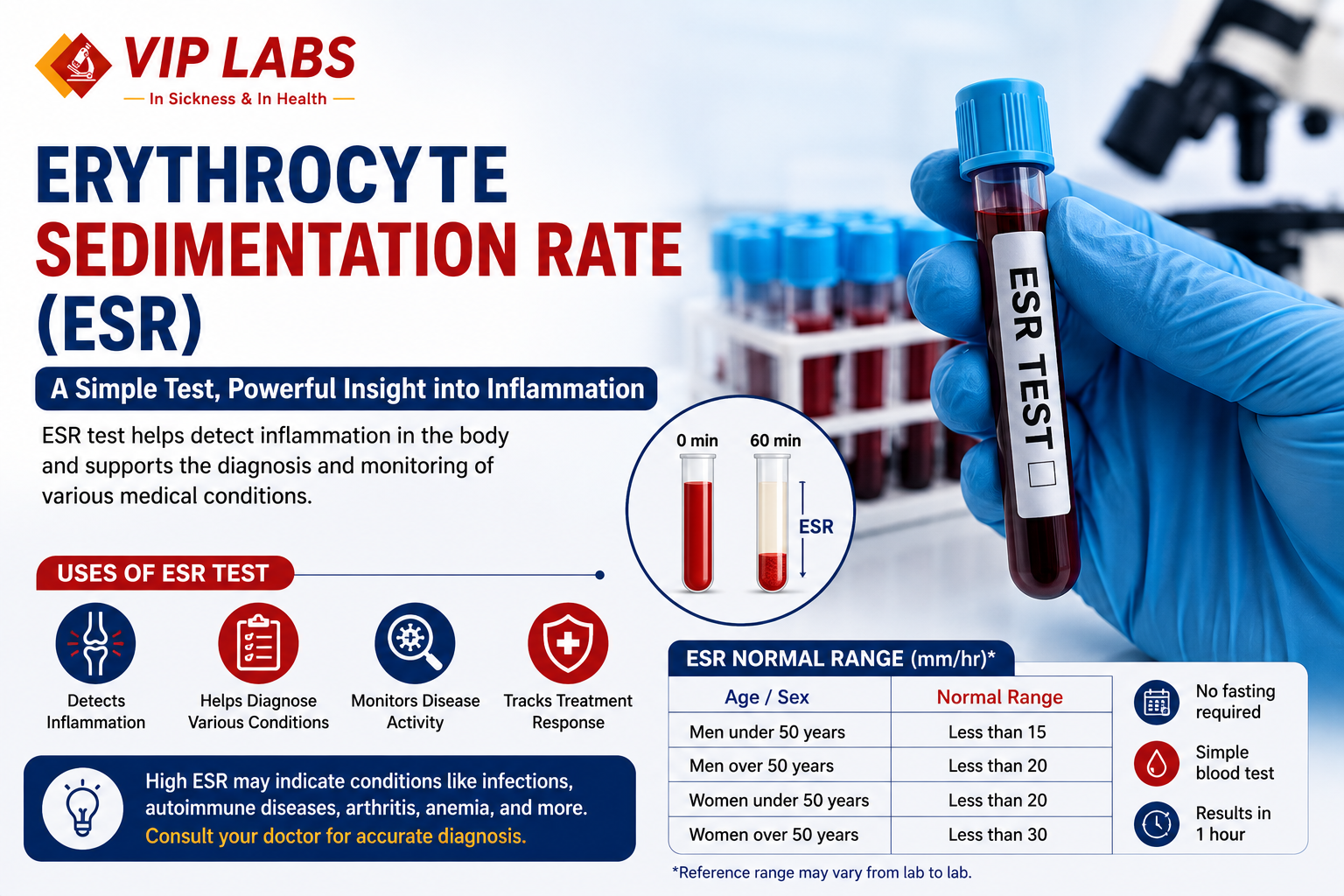
Erythrocyte Sedimentation Rate (ESR), also known as the ESR blood test or sed rate, is a commonly used laboratory test that can help detect inflammation in the body. It measures how quickly red blood cells settle at the bottom of a specially designed tube over one hour.
When inflammation is present, certain proteins in the blood can cause red blood cells to stick together and settle more quickly. Therefore, a higher ESR may indicate increased inflammatory activity. However, ESR is a non-specific test and cannot identify the exact cause of inflammation by itself.
The Erythrocyte Sedimentation Rate (ESR) test measures the distance that red blood cells travel downward in a tube of blood during one hour. The result is generally reported as millimeters per hour (mm/hr).
Normally, red blood cells settle relatively slowly. During inflammation, changes in blood proteins can make the cells form clumps, causing them to settle faster. A faster sedimentation rate can therefore be associated with inflammation.
ESR is usually interpreted along with symptoms, medical history, physical examination and other laboratory tests.
Doctors may recommend an ESR test when they suspect a condition associated with inflammation.
An ESR test may be used to:
Symptoms that may lead a doctor to order an ESR test include unexplained fever, joint or muscle pain, stiffness, headaches, unexplained weight loss and loss of appetite.
ESR may be elevated in many different conditions. It can be useful as part of the evaluation of :
For example, people with rheumatoid arthritis may have an elevated ESR or CRP level and these tests can also help monitor inflammatory activity.
A high ESR means that red blood cells are settling faster than expected. This may suggest that inflammation is present somewhere in the body.
However, a high ESR does **not** tell you exactly where the inflammation is or what is causing it.
Possible causes of an elevated ESR include:
1. Infections
Bacterial, viral and other infections can cause inflammation and may increase ESR.
2. Autoimmune and Inflammatory Diseases
Conditions such as rheumatoid arthritis, lupus, vasculitis and other inflammatory disorders may be associated with a high ESR.
3. Kidney Disease
Certain kidney conditions can affect ESR levels.
4. Anemia
Anemia can influence the ESR result and may contribute to an elevated value.
5. Certain Cancers
Some cancers, including certain blood cancers, may be associated with a significantly elevated ESR.
6. Pregnancy and Age
ESR can naturally be affected by factors such as pregnancy and increasing age. Therefore, a higher result does not automatically mean that a person has a disease.
A low ESR is usually less clinically concerning than a high ESR, but it can occur in certain situations.
Factors and conditions associated with a low ESR can include:
The significance of a low ESR depends on the person's overall health and other test results.
ESR Normal Range
There is no single ESR normal range that applies to everyone.Reference ranges can vary depending on age, sex, laboratory method and other factors.
For the Westergren method, commonly cited adult reference values from MedlinePlus include:
These are general reference values and **your laboratory's own reference range should be used when interpreting your report**.
Children have different reference ranges, and ESR can also be affected by pregnancy and age.
ESR is a simple blood test.
A healthcare professional will:
1. Clean the area where the blood will be collected.
2. Insert a small needle into a vein, usually in the arm.
3. Collect a small amount of blood into a tube.
4. Send the sample to the laboratory for analysis.
The blood sample is placed in a tall, thin tube, where the rate at which red blood cells settle is measured. The procedure usually takes only a few minutes.
What is an ESR blood test?
ESR stands for Erythrocyte Sedimentation Rate. It is a blood test that measures how quickly red blood cells settle in a tube over one hour and can provide information about inflammation in the body.
What does a high ESR indicate?
A high ESR may indicate inflammation, but it does not identify the exact cause. Infections, autoimmune diseases, anemia, kidney disease and several other conditions can increase ESR.
What is the normal ESR range?
ESR reference ranges vary by age, sex and laboratory method. Common Westergren adult reference values include less than 15 mm/hr for men under 50 and less than 20 mm/hr for men over 50; for women, the corresponding values are less than 20 and less than 30 mm/hr. Your laboratory's reference range should be used for your report.
Does a high ESR mean I have an infection?
Not necessarily. Infection is one possible cause of an elevated ESR, but many other conditions can also increase ESR. Additional evaluation is often needed to determine the cause.
Is ESR a test for arthritis?
ESR can be useful when evaluating inflammatory arthritis, including rheumatoid arthritis, but it cannot diagnose arthritis by itself. Doctors consider symptoms, examination findings and other tests as well.
Is fasting required before an ESR test?
Generally, no. ESR usually does not require fasting. However, if other blood tests are being performed at the same time, those tests may have different preparation requirements.
The Erythrocyte Sedimentation Rate (ESR) is a useful blood test for detecting and monitoring inflammatory activity. It can support the evaluation of infections, autoimmune conditions, arthritis and other inflammatory diseases.
However, ESR is a non-specific test and should never be interpreted as a diagnosis on its own. Your doctor will consider your symptoms, medical history, ESR result and other laboratory or imaging findings to understand what the result may mean.
If you have persistent symptoms or have been advised to monitor an inflammatory condition, discuss the appropriate laboratory tests with your healthcare professional.