
Need Help?
+91 94294 10291
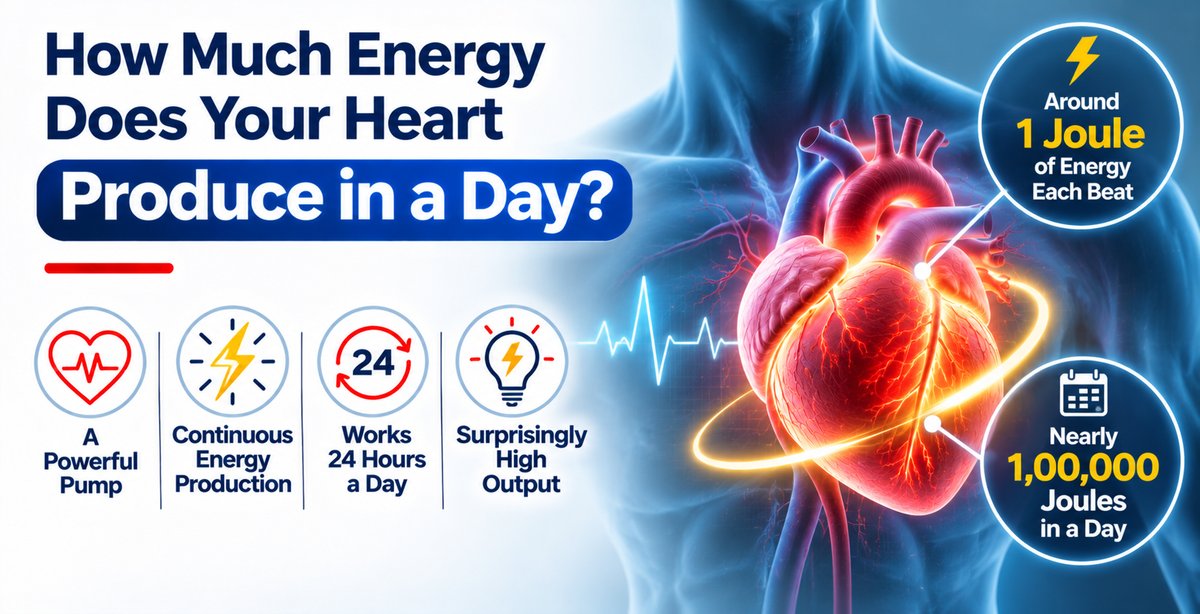
Quick answer: The most useful facts about the heart are simple: at a resting rate of about 70 beats a minute, an adult heart beats roughly 100,000 times a day and pumps about 7,000 litres of blood. It never rests, so protecting it with healthy habits and a regular lipid profile test matters.
An old fact card on this blog said the energy your heart produces in a day could drive a truck 32 km. It is a popular line, but the numbers do not add up. Below we correct it gently, share the heart facts that are well established, and explain how to keep this hard-working organ healthy.
Your heart is a muscular pump about the size of your fist, sitting slightly left of centre in your chest. In most adults it weighs roughly 250 to 350 grams, yet it works every second of your life without a break.
It has four chambers. The right side sends used blood to the lungs to pick up oxygen; the left side pumps oxygen-rich blood to every organ through the aorta. The "lub-dub" sound is the valves between chambers closing.
The heart has its own electrical system. A small cluster of cells called the sinoatrial (SA) node acts as a natural pacemaker, making the muscle contract in a coordinated wave.
A normal resting heart rate for adults is 60 to 100 beats per minute. At an average of about 70 beats a minute, that adds up to around 100,000 beats a day and well over 2.5 billion beats across a 70-year life.
Your rate rises with exercise, fever, stress, caffeine, dehydration and anaemia, and falls during sleep. Athletes often rest below 60 because each beat pumps more blood.
Sit quietly for five minutes, place two fingers on the inside of your wrist below the thumb, count the beats for 30 seconds and multiply by two.
An adult body holds about 5 litres of blood. At rest, the heart pumps roughly that same 5 litres every minute, which is why your whole blood volume circulates around the body about once a minute.
Multiply that by the minutes in a day and you get about 7,000 litres of blood pumped daily, one of the most striking facts about the heart. During hard exercise, a healthy heart can pump several times its resting output.
The heart also feeds itself. About 5% of the blood it pumps goes straight back into the coronary arteries that supply the heart muscle. When these arteries narrow with cholesterol plaque, the heart is starved of oxygen, causing angina or a heart attack.
This claim (often quoted as "20 miles") appears on many fact websites, but it is not supported by the physics. Here is a simple way to see why:
So the heart's daily energy is a tiny fraction (far less than 1%) of what a truck needs for 32 km. The real wonder is not raw power but endurance: the heart does steady, efficient work 24 hours a day for decades without a single day off.
| Heart fact | Typical adult value | What it means for you |
|---|---|---|
| Resting heart rate | 60 to 100 beats per minute | Persistently above 100 or below 50 with symptoms needs a doctor's review |
| Beats per day | About 100,000 at 70 per minute | Stress, caffeine, fever and anaemia push this higher |
| Blood pumped at rest | About 5 litres per minute | Your entire blood volume circulates roughly once a minute |
| Blood pumped per day | About 7,000 litres | The heart needs a constant oxygen supply through healthy arteries |
| Size and weight | About a fist; 250 to 350 grams | An enlarged heart is a sign of strain, often from high blood pressure |
| Power output | About 1 to 1.5 watts | Modest power, but non-stop for a lifetime |
A hard-working heart copes well for decades, but some conditions make it work harder or damage its arteries:
Many of these cause no symptoms for years, which is why checking your numbers is one of the most practical facts about the heart to act on. Read more about the effects of an inactive lifestyle.
Aim for at least 150 minutes a week of moderate activity such as brisk walking, cycling or swimming, plus some strength exercise. If you are deciding where to start, see walking vs running.
Fill half your plate with vegetables, salads and fruit. Choose whole grains, dals, nuts and seeds, and limit fried snacks, sweets, maida, excess salt and pickles. Our post on white foods to avoid or limit has practical swaps.
Stopping smoking or chewing tobacco is one of the biggest single things you can do for your heart, and the benefits start soon after quitting.
Seven to eight hours of sleep, yoga or breathing exercises, and time with family help keep blood pressure and heart rate healthier.
Check blood pressure, blood sugar and cholesterol regularly from your 30s onward, or earlier if heart disease runs in your family.
Call 108 or go to the nearest emergency department immediately if you have:
Book a doctor's appointment soon if you notice a resting heart rate regularly above 100 or below 50 with dizziness, palpitations, swelling of the feet, breathlessness on mild exertion, or tiredness that keeps getting worse. Not all chest pain is cardiac; read is chest pain always a sign of a heart problem?
An ECG, echocardiogram or treadmill test is ordered by a doctor to look at the heart directly. Blood tests do not diagnose heart disease on their own, but they reveal the risk factors that damage the heart:
For a combined check, the heart attack risk profile brings these markers together in one visit.
At an average resting rate of about 70 beats per minute, the adult heart beats roughly 100,000 times a day. The exact number varies with activity, sleep, stress and fitness.
At rest the heart pumps about 5 litres of blood a minute, which works out to roughly 7,000 litres a day. During exercise it can pump several times more.
No, this is a popular myth. The heart produces only about 1 to 1.5 watts of pumping power, and its total daily energy use is a tiny fraction of the fuel a truck burns over 32 km. Its real strength is non-stop endurance.
For most adults, a normal resting heart rate is 60 to 100 beats per minute. Athletes may be lower. A rate regularly above 100 or below 50 with dizziness or breathlessness should be checked by a doctor.
No single blood test checks the whole heart. A lipid profile, HbA1c or fasting sugar, and hs-CRP together show key heart risk factors. Your doctor may add an ECG or other heart tests if you have symptoms.
Stay active for at least 150 minutes a week, eat more vegetables, whole grains and dals, avoid tobacco, limit alcohol, salt and fried food, and sleep well. Regular check-ups of blood pressure, sugar and cholesterol help catch problems early.
Knowing these facts about the heart is a good start; knowing your own numbers is better. VIP Labs, a trusted pathology lab in Ahmedabad, offers lipid, HbA1c, hs-CRP and complete health checkup packages. You can book online for home blood collection and receive reports digitally.
Disclaimer: This article is for general awareness only and is not a substitute for medical advice. Please consult a qualified doctor for diagnosis and treatment.