
Need Help?
+91 94294 10291
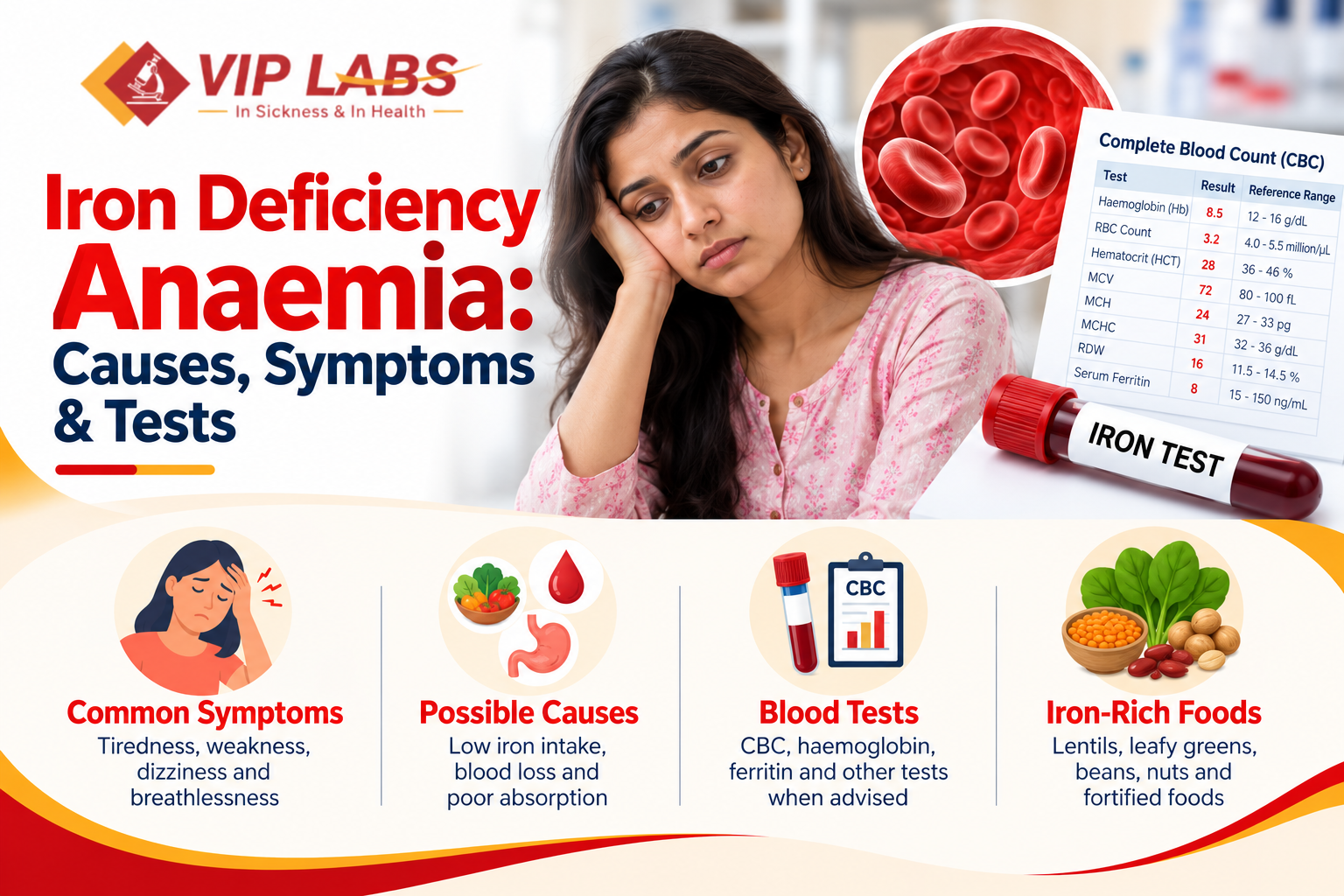
Iron is an essential mineral that helps the body produce haemoglobin, a protein in red blood cells that carries oxygen to different parts of the body. When the body does not have enough iron to produce adequate haemoglobin, it can lead to iron deficiency anaemia.
Iron deficiency anaemia can affect people of all ages, including children, teenagers, women, pregnant women and older adults. It may develop gradually, and some people may not notice symptoms in the early stages.
Understanding the causes, recognising the symptoms and getting the right blood tests can help identify iron deficiency early and support appropriate treatment.
Iron deficiency anaemia is a condition in which the body has insufficient iron to produce the haemoglobin needed for healthy red blood cells. As haemoglobin levels fall, the blood carries less oxygen to the body's tissues.
The condition may develop because of inadequate iron intake, poor iron absorption, increased iron requirements or blood loss.
Iron deficiency and anaemia are not exactly the same. A person may have low iron stores before their haemoglobin becomes low. This is why appropriate testing can be important even when symptoms are mild.
The symptoms of iron deficiency anaemia can vary depending on how low the haemoglobin level is and how quickly the condition develops.
Feeling tired even after adequate rest is one of the most common symptoms. People may experience low energy, reduced stamina and difficulty completing everyday activities.
The skin may appear paler than usual. Pallor can also be noticeable inside the lower eyelids, on the gums or on the palms, although these signs alone cannot confirm anaemia.
A person may feel breathless while walking, climbing stairs or performing routine physical activities because the body is receiving less oxygen than it needs.
Low haemoglobin may be associated with dizziness, light-headedness and recurring headaches. These symptoms can also occur for many other reasons.
The heart may beat faster or feel as though it is pounding, especially during physical activity. Persistent palpitations should be evaluated by a healthcare professional.
Some people may frequently feel cold in their hands and feet or experience reduced tolerance to cold temperatures.
Iron deficiency may contribute to increased hair shedding and fragile nails. However, these symptoms can also have other causes.
Some people develop a sore or smooth tongue, mouth ulcers or cracks at the corners of their lips.
Low iron levels and anaemia may contribute to difficulty concentrating, reduced alertness and problems with daily productivity.
Some people with iron deficiency develop cravings for non-food substances, such as ice, a condition known as pica. This symptom should be discussed with a healthcare professional.
Not everyone with iron deficiency anaemia experiences all these symptoms. Mild cases may cause few noticeable symptoms.
Iron deficiency anaemia can develop for several reasons. Identifying the underlying cause is important because improving the diet alone may not resolve every case.
A diet that regularly lacks iron-rich foods may gradually reduce the body's iron stores. This can happen when the diet has limited variety or does not provide enough iron for the person's needs.
Heavy or prolonged menstrual periods can lead to ongoing blood loss and increase the risk of iron deficiency, particularly when iron intake does not replace the amount lost.
During pregnancy, the body's iron requirements increase to support the growing baby and the expansion of maternal blood volume. Inadequate iron stores may contribute to anaemia.
Bleeding from the stomach or intestines may cause iron deficiency. Possible causes include ulcers, certain digestive conditions and other sources of internal bleeding.
Unexplained iron deficiency, especially in men and postmenopausal women, may require medical evaluation for a possible source of blood loss.
Certain digestive conditions or previous gastrointestinal surgeries can interfere with iron absorption. In these situations, eating more iron-rich food may not be sufficient on its own.
Children, teenagers and adolescents may need more iron during periods of rapid growth. If their intake does not meet these requirements, iron deficiency can develop.
Some groups have a higher risk of developing iron deficiency anaemia, including:
Having a risk factor does not necessarily mean that a person has anaemia. Appropriate assessment and testing help determine whether a problem is present.
Blood tests help identify anaemia, assess iron stores and guide further investigation. The tests required depend on the person's symptoms, medical history and initial results.
A Complete Blood Count (CBC) measures several blood components, including red blood cells and haemoglobin. It can help identify anaemia and show changes in red blood cell size.
A haemoglobin test measures the amount of haemoglobin in the blood. A low result may indicate anaemia, but interpretation depends on factors such as age, sex and pregnancy status.
Ferritin reflects the body's stored iron. A low ferritin level commonly supports a diagnosis of iron deficiency. However, ferritin can rise during inflammation or infection, so results may need to be interpreted alongside other findings.
Depending on the clinical situation, a healthcare professional may request serum iron, total iron-binding capacity (TIBC) and transferrin saturation to assess iron availability and help clarify the cause of abnormal results.
No single result should always be interpreted in isolation. A healthcare professional can determine which tests are appropriate and whether additional investigations are needed.
For related laboratory investigations, visit the VIP Labs Test Parameters Directory.
Treatment depends on the severity of the deficiency and its underlying cause.
A varied diet can help provide the iron the body needs. Suitable options include:
The amount of iron absorbed varies by food source and the body's needs.
Vitamin C can improve the absorption of iron from plant-based foods. Consider including foods such as oranges, guava, amla, tomatoes, capsicum or lemon with meals.
Tea and coffee can reduce the absorption of iron when consumed with iron-rich meals or iron supplements. Separating them from these meals or supplements may help improve absorption.
A healthcare professional may recommend oral iron supplements or, in selected cases, intravenous iron. The appropriate treatment and duration depend on test results, tolerance and the underlying cause.
Do not start high-dose iron supplements without appropriate medical advice. Excess iron can be harmful, and not every type of anaemia is caused by iron deficiency.
If anaemia is caused by heavy menstrual bleeding, digestive tract bleeding, poor absorption or another medical condition, that cause also needs attention. Treating the deficiency without addressing ongoing blood loss may not solve the problem.
Although not every case can be prevented through diet alone, the following habits may help:
Routine testing may be useful for people with symptoms or specific risk factors. The need and frequency of testing should be determined by a healthcare professional.
Arrange a medical assessment if you experience persistent fatigue, unusual weakness, pale skin, recurring dizziness, breathlessness during routine activity or frequent palpitations.
Seek urgent medical attention for severe breathlessness at rest, chest pain, fainting, significant bleeding or black, tarry stools, particularly if these symptoms are new or unexplained.
1. What is the most common symptom of iron deficiency anaemia?
Persistent tiredness and weakness are among the most common symptoms. Other symptoms can include dizziness, pale skin, headaches and shortness of breath.
2. Which blood test is used to detect iron deficiency anaemia?
A Complete Blood Count (CBC) and haemoglobin test can help identify anaemia. A serum ferritin test is commonly used to assess iron stores. Additional iron studies may be needed in some cases.
3. Can iron deficiency occur without anaemia?
Yes. Iron stores may become low before haemoglobin falls below the laboratory's reference range. A healthcare professional may recommend ferritin testing when appropriate.
4. Which foods are rich in iron?
Lentils, beans, chickpeas, leafy green vegetables, nuts, seeds, fortified cereals, meat and fish can provide iron. Vitamin C-rich foods can improve the absorption of iron from plant-based sources.
5. Can tea and coffee affect iron absorption?
Yes. Tea and coffee can reduce iron absorption when consumed with iron-rich meals or iron supplements. Separating them from these meals or supplements may help.
6. Is iron deficiency anaemia dangerous?
The effects depend on its severity, duration and cause. Untreated anaemia can affect daily functioning and may cause complications in more severe cases. Identifying and treating the underlying cause is important.
7. Should I take iron tablets if I feel tired?
Not without appropriate assessment. Tiredness has many possible causes, and iron supplements are not suitable for everyone. Testing and medical advice can help determine whether iron treatment is needed.
8. Can iron deficiency anaemia return after treatment?
Yes. It may recur if the underlying cause, such as ongoing blood loss or poor absorption, is not addressed. Follow-up testing may be recommended to check whether treatment has worked and iron stores have recovered.
Iron deficiency anaemia is a common and treatable condition, but its symptoms can be easy to overlook. Persistent tiredness, weakness, pale skin, headaches, dizziness and breathlessness may be signs that the body is not receiving enough oxygen because of low haemoglobin.
Blood tests such as CBC, haemoglobin and serum ferritin can help identify iron deficiency and guide further evaluation. A balanced diet, appropriate treatment and investigation of the underlying cause are important steps towards better health.
If you have symptoms or risk factors for iron deficiency, consult a healthcare professional to determine whether testing is appropriate. For information about laboratory investigations, explore the VIP Labs Test Parameters Directory.