
Need Help?
+91 94294 10291
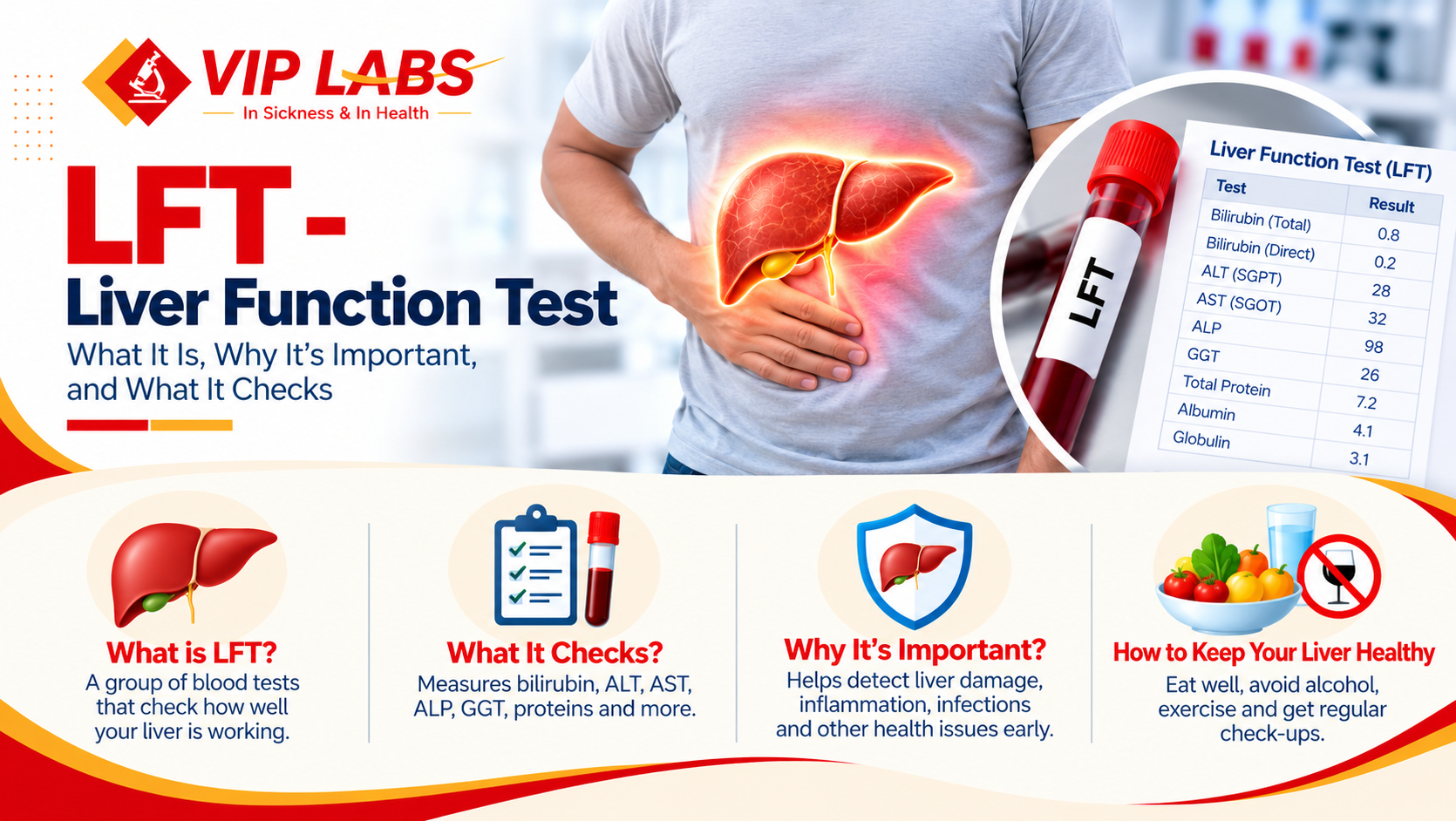
The liver is one of the most important organs in the human body. It helps process nutrients, produces bile for digestion, processes medicines, and supports the removal of waste products from the body. Keeping the liver healthy is essential for overall well-being.
An LFT (Liver Function Test) is a group of blood tests used to assess liver health and identify signs of liver cell injury, inflammation, or problems with bile flow. These tests can also help doctors monitor certain liver conditions and evaluate changes over time.
Understanding the purpose of an LFT, the parameters included in the test, and the meaning of abnormal results can help you make informed decisions about your health.
A Liver Function Test is a group of blood tests that measures substances such as liver enzymes, bilirubin, and proteins in the blood. These results help healthcare professionals assess different aspects of liver health.
Although the test is commonly called a liver function test, not every parameter directly measures how well the liver performs its functions. Some markers mainly indicate liver cell injury, while others help assess bile flow or the liver's ability to produce certain proteins.
An LFT may be recommended during a routine health check-up, when symptoms suggest a liver problem, or when monitoring an existing medical condition.
An LFT can provide useful information about liver health and help guide further medical evaluation.
Abnormal results may indicate liver cell injury, inflammation, or problems involving bile flow. Further tests may be needed to determine the cause.
Doctors may recommend repeated LFTs for people with known liver conditions to assess changes over time and monitor their response to treatment.
Symptoms such as yellowing of the skin or eyes, dark urine, persistent abdominal discomfort, or unexplained itching may lead a healthcare professional to recommend liver-related blood tests.
Some medicines can affect liver enzymes. An LFT may be recommended before or during treatment when clinically appropriate.
Liver-related tests may be included in selected health check-ups, depending on the package and the person's health needs. Testing should be chosen according to individual risk factors and medical advice.
You can explore the VIP Labs Test Parameters Directory for information about laboratory investigations.
The exact components of an LFT panel can vary between laboratories and test packages. Common parameters include the following.
ALT is an enzyme found mainly in liver cells. When liver cells are injured, ALT can enter the bloodstream and its level may increase.
Higher ALT levels may be associated with conditions such as fatty liver disease, viral hepatitis, medicine-related liver injury, and other causes of liver inflammation.
AST is an enzyme found in the liver as well as in muscles, the heart, and other tissues. An increased AST level can occur with liver injury, but it is not specific to the liver.
Doctors may interpret AST alongside ALT and other findings to understand the possible cause of an abnormal result.
ALP is an enzyme found in the liver, bile ducts, bones, and other tissues. Increased ALP may be associated with problems involving bile flow, but bone-related conditions can also increase its level.
Additional tests may help identify the source of an elevated ALP result.
GGT is an enzyme that may increase in several liver and bile duct conditions. It can help healthcare professionals interpret an elevated ALP level and investigate possible liver-related causes.
GGT may also be affected by alcohol use, certain medicines, and other factors.
Bilirubin is a yellow substance produced when red blood cells break down. The liver processes bilirubin so that it can be eliminated from the body.
Increased bilirubin may cause jaundice, which can appear as yellowing of the skin and the whites of the eyes. Abnormal bilirubin levels may result from liver conditions, bile duct obstruction, increased red blood cell breakdown, or other causes.
Total protein measures the combined amount of major proteins in the blood, including albumin and globulins.
Abnormal levels can occur for several reasons, including liver conditions, nutritional problems, inflammation, kidney disorders, and other medical conditions.
Albumin is a protein produced by the liver. A low albumin level can occur in some chronic liver conditions, but it can also be associated with kidney disease, inflammation, nutritional problems, and other causes.
Albumin is therefore interpreted alongside the person's medical history and other test results.
Globulins are a group of proteins involved in various functions, including immune responses. The albumin-to-globulin (A/G) ratio compares the levels of albumin and globulins.
These measurements may provide additional information when evaluating certain liver conditions and other medical problems.
LFT reference ranges can differ between laboratories because of the testing method, equipment, and other factors. Some results may also vary according to age, sex, pregnancy status, and the person's clinical circumstances.
The table below provides an overview of common parameters, not a universal set of reference ranges.
| Feature | SGPT / ALT | SGOT / AST |
|---|---|---|
| Full name | Alanine aminotransferase | Aspartate aminotransferase |
| Main distribution | Found mainly in the liver | Found in the liver, muscles, heart, and other tissues |
| Clinical use | Helps assess possible liver cell injury | Helps assess liver injury but can also rise due to injury in other tissues |
| Interpretation | Considered with other tests and clinical findings | Considered alongside ALT and other relevant findings |
Important: Always compare your result with the reference range printed on your own laboratory report. A value outside the range does not automatically confirm a specific disease, and a result within the range does not rule out every liver condition.
Abnormal LFT results can occur for many reasons. The pattern of the results, the degree of change, symptoms, medical history, and other investigations help guide further evaluation.
Common possible causes include:
Fat accumulation in the liver, including metabolic dysfunction-associated steatotic liver disease (MASLD), can be associated with elevated liver enzymes. It may occur alongside excess body weight, diabetes, high blood lipids, or other metabolic risk factors.
Certain viral infections, including hepatitis A, B, and C, can cause inflammation of the liver and affect liver-related blood test results.
Alcohol can affect liver health, and ongoing excessive consumption may lead to liver inflammation or other liver conditions.
Some prescription medicines, over-the-counter products, and herbal supplements can affect the liver. Do not stop prescribed medicines on your own; discuss abnormal results and possible medicine-related effects with your healthcare professional.
Conditions affecting the bile ducts, including obstruction, may cause increases in ALP, GGT, and bilirubin.
Liver-related results may also be affected by autoimmune conditions, inherited disorders, infections, muscle injury, and other medical problems. The cause cannot be determined from a single abnormal value alone.
Some people with liver conditions have no noticeable symptoms, particularly in the early stages. When symptoms occur, they may include:
These symptoms can have several causes. Seek medical advice if they persist or are unexplained.
Seek urgent medical care for new confusion, vomiting blood, black tarry stools, severe abdominal pain, or jaundice accompanied by significant illness or rapidly worsening symptoms.
An LFT is generally performed using a blood sample collected from a vein, usually in the arm.
The sample is sent to a laboratory, where the requested parameters are measured. Results are then reviewed in the context of symptoms, medical history, and other investigations.
The blood collection process usually takes only a few minutes. Some people may experience brief discomfort or bruising at the collection site.
Fasting is not always necessary for an LFT performed on its own. However, fasting may be required if the doctor has ordered other tests at the same time or if the laboratory has provided specific preparation instructions.
Before your appointment:
Following the correct preparation instructions helps ensure that the testing process is appropriate for the investigations requested.
Healthy habits can support liver health and reduce certain risk factors.
Include vegetables, fruits, whole grains, pulses, and other nutritious foods in your regular diet. Limit excess added sugar and highly processed foods.
For people with excess body weight, gradual and sustainable weight management may help reduce the risk of metabolic fatty liver disease.
Regular physical activity supports metabolic health. Choose activities that suit your fitness level and medical circumstances.
Avoiding alcohol is important for people with alcohol-related liver disease and may be advised in other liver conditions. Ask your healthcare professional what is appropriate for your situation.
Take medicines only as directed, and avoid unnecessary supplements or unverified remedies that may affect the liver.
Ask your healthcare professional about hepatitis vaccination where appropriate, safe practices to reduce infection risk, and testing based on your individual health history.
If your LFT results are abnormal, follow the recommended medical advice. Repeat testing or additional investigations may be needed to understand the cause.
An LFT may be recommended for people who:
Whether testing is appropriate depends on individual circumstances. A healthcare professional can advise which tests are needed.
1. What is an LFT blood test?
An LFT is a group of blood tests that measures substances such as liver enzymes, bilirubin, and proteins to help assess liver health.
2. Why is an LFT recommended?
An LFT may be recommended to investigate symptoms, assess possible liver injury, monitor an existing liver condition, or check for medicine-related effects when appropriate.
3. Which parameters are included in an LFT?
Common parameters include ALT (SGPT), AST (SGOT), ALP, GGT, bilirubin, albumin, and total protein. The exact panel can vary between laboratories.
4. Does an abnormal LFT mean liver disease?
Not necessarily. Abnormal results can have several causes, and some may be temporary. A healthcare professional interprets the results alongside symptoms, medical history, and other tests.
5. Is fasting required before an LFT?
Fasting is not always required for an LFT alone. Follow your laboratory's instructions, especially if other blood tests are being performed at the same time.
6. Can an LFT detect fatty liver?
LFT results may show abnormalities associated with fatty liver disease, but they cannot confirm or exclude fatty liver on their own. Clinical assessment and sometimes imaging or other investigations may be needed.
7. How often should an LFT be done?
There is no single testing schedule for everyone. The frequency depends on symptoms, risk factors, existing conditions, medicines, and medical advice.
8. Can I improve abnormal LFT results naturally?
Healthy eating, appropriate physical activity, avoiding alcohol when advised, and maintaining a healthy weight may help in certain situations. However, treatment depends on the underlying cause, so abnormal results should be reviewed by a healthcare professional.
A Liver Function Test is an important group of blood investigations that helps assess liver health and identify possible signs of liver cell injury, inflammation, or problems with bile flow. Parameters such as ALT, AST, ALP, GGT, bilirubin, albumin, and total protein provide different pieces of information.
Abnormal LFT results do not always mean that a person has serious liver disease. Their significance depends on the pattern of results, symptoms, medical history, and any additional investigations required.
Maintaining healthy lifestyle habits and following medical advice can support liver health. If you have symptoms or risk factors, speak with a healthcare professional about whether an LFT is appropriate.
For information about laboratory investigations, visit the VIP Labs Test Parameters Directory or explore VIP Labs health checkup packages.