
Need Help?
+91 94294 10291
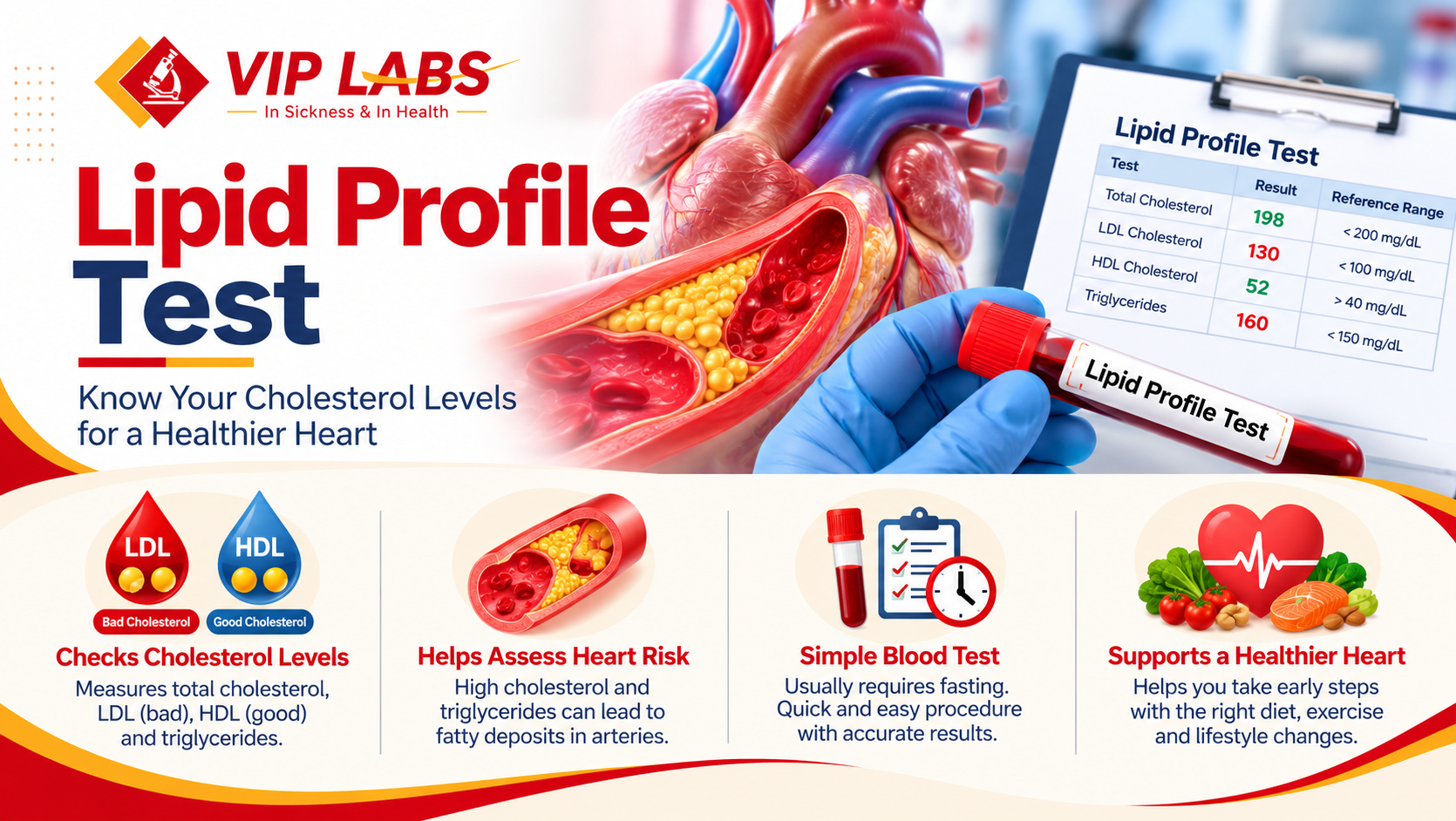
Heart health is closely connected to the levels of fats circulating in the blood. Cholesterol and triglycerides are essential for several body functions, but abnormal levels can increase the risk of cardiovascular diseases over time.
A Lipid Profile Test, also known as a lipid panel or cholesterol test, is a blood test that measures different types of fats in the blood. It helps healthcare professionals assess cholesterol levels, evaluate cardiovascular risk, and monitor the effectiveness of lifestyle changes or treatment.
Understanding the Lipid Profile Test, its components, preparation, and results can help you take informed steps towards better heart health.
A Lipid Profile Test is a blood investigation that measures cholesterol and other lipids in the bloodstream. It commonly includes total cholesterol, HDL cholesterol, LDL cholesterol, and triglycerides. Depending on the laboratory and test panel, other calculated values may also be reported.
The test helps identify unhealthy lipid levels that may contribute to the gradual buildup of fatty deposits in the arteries. This process can increase the risk of heart disease, heart attack, and stroke.
High cholesterol often causes no noticeable symptoms. A person may feel completely healthy even when their LDL cholesterol or triglyceride levels are elevated. This is one reason why appropriate screening and regular health assessments are important.
A Lipid Profile Test provides useful information about cardiovascular health and can help healthcare professionals make decisions about prevention and treatment.
High LDL cholesterol can contribute to plaque buildup in the arteries. Over time, this may narrow the arteries and increase the risk of cardiovascular disease.
Lipid results are considered alongside factors such as age, blood pressure, diabetes, smoking, family history, and existing medical conditions.
The test can identify high LDL cholesterol, low HDL cholesterol, elevated total cholesterol, and high triglycerides, even when there are no obvious symptoms.
For people taking cholesterol-lowering medicines or making lifestyle changes, repeat testing can help assess how their lipid levels are responding.
High triglyceride levels may be associated with diabetes, excess alcohol intake, certain medicines, metabolic conditions, and other factors. Very high triglyceride levels can increase the risk of acute pancreatitis.
A lipid profile may be recommended as part of an individual cardiovascular risk assessment or a preventive health check-up. The appropriate timing depends on a person's age, health history, and risk factors.
A standard Lipid Profile Test commonly measures four main parameters.
Total cholesterol represents the overall amount of cholesterol in the blood, including cholesterol carried by different lipoproteins.
Cholesterol is necessary for producing hormones, vitamin D, and substances that help digest food. However, an elevated total cholesterol level may indicate an increased cardiovascular risk, depending on the balance of different cholesterol components and other risk factors.
LDL cholesterol is commonly called bad cholesterol because elevated levels can contribute to plaque buildup in the arteries.
High LDL cholesterol is an important risk factor for heart attack and stroke. The appropriate LDL target depends on an individual's overall cardiovascular risk, including whether they already have cardiovascular disease or certain other medical conditions.
HDL cholesterol is commonly called good cholesterol because it helps transport cholesterol from tissues towards the liver for processing and removal.
Low HDL cholesterol may be associated with increased cardiovascular risk. However, HDL is only one part of the overall lipid profile, and a high HDL level does not automatically eliminate the risks associated with elevated LDL cholesterol.
Triglycerides are a type of fat that the body uses for energy. Extra calories, particularly when consumed in excess of the body's needs, can be converted into triglycerides and stored in fat cells.
Elevated triglycerides may be associated with diabetes, insulin resistance, excess body weight, alcohol intake, certain medicines, genetic factors, and other medical conditions.
Very high triglyceride levels require prompt medical assessment because they can increase the risk of pancreatitis.
Lipid results should be interpreted according to the laboratory's reference information and the person's overall health. The following are commonly used general adult guideposts, not universal treatment targets.
Total cholesterol: Below 200 mg/dL is generally considered desirable for adults.
LDL cholesterol: Below 100 mg/dL is often considered optimal for many adults, but lower targets may be recommended for people at higher cardiovascular risk.
HDL cholesterol: Levels of 40 mg/dL or higher in men and 50 mg/dL or higher in women are commonly used as general reference points. Higher HDL does not guarantee protection from heart disease.
Triglycerides: Below 150 mg/dL is generally considered normal for adults.
Your healthcare professional may recommend different targets depending on your medical history, diabetes status, existing heart disease, and other risk factors. Children and teenagers also have different reference ranges.
An abnormal result does not automatically mean that you have heart disease. It indicates that the findings should be considered in the context of your overall cardiovascular risk.
Abnormal lipid levels can develop due to a combination of lifestyle, genetic, and medical factors.
Frequent consumption of foods high in saturated fat, trans fat, and excess calories may contribute to unhealthy cholesterol levels.
Examples include certain fried foods, commercially baked products, and foods containing high amounts of saturated fat.
A sedentary lifestyle can contribute to unhealthy lipid levels and other cardiovascular risk factors. Regular physical activity supports overall metabolic health.
Excess body weight, particularly around the abdomen, may be associated with high triglycerides, lower HDL cholesterol, and other metabolic changes.
Diabetes and insulin resistance can contribute to elevated triglycerides and other abnormal lipid patterns. Managing blood glucose and other risk factors is an important part of cardiovascular prevention.
Smoking damages blood vessels and increases cardiovascular risk. It may also be associated with lower HDL cholesterol.
Some people inherit conditions that cause high cholesterol or triglycerides. Familial hypercholesterolaemia, for example, can lead to very high LDL cholesterol from an early age.
A family history of premature heart disease or unusually high cholesterol may indicate a need for earlier assessment.
Conditions such as hypothyroidism, kidney disease, and some liver or metabolic disorders can affect lipid levels. Certain medicines may also influence cholesterol or triglycerides.
A healthcare professional may recommend additional investigations when results are unexpectedly abnormal.
A Lipid Profile Test is usually performed using a blood sample collected from a vein in the arm.
The process generally involves the following steps:
Blood collection usually takes only a few minutes. Some people may experience mild discomfort or temporary bruising at the collection site.
Fasting is not always required before a Lipid Profile Test. Many lipid profiles can be performed without fasting, depending on the reason for testing and the healthcare professional's instructions.
However, fasting may be requested in certain situations, particularly when triglycerides need to be assessed more accurately or when other fasting blood tests are being performed at the same time.
Before your test:
Following the correct preparation instructions helps ensure that the test is suitable for its intended purpose.
Healthy lifestyle changes can improve lipid levels and support cardiovascular health. The most appropriate approach depends on your current results, medical conditions, and overall risk.
Include vegetables, fruits, whole grains, pulses, beans, nuts, and seeds in your regular diet.
Foods containing soluble fibre, such as oats, beans, and some fruits, can help reduce LDL cholesterol as part of a balanced eating pattern.
Limit foods containing high amounts of saturated fat and avoid industrial trans fats. Choose unsaturated fat sources, such as nuts, seeds, and appropriate vegetable oils, in suitable portions.
Regular physical activity can help improve triglyceride levels, support weight management, and benefit overall cardiovascular health.
Adults are generally encouraged to aim for at least 150 minutes of moderate-intensity aerobic activity each week, or an equivalent amount of vigorous activity, if appropriate for their health and fitness level.
For people who have excess body weight, gradual and sustainable weight management may help improve triglycerides and other metabolic risk factors.
Alcohol can raise triglyceride levels, particularly when consumed in excess. People with high triglycerides may be advised to avoid alcohol.
Stopping smoking improves cardiovascular health and reduces the risk of heart disease and stroke.
Lifestyle changes are important, but they may not be sufficient for everyone. A healthcare professional may recommend cholesterol-lowering medicines, such as statins, depending on LDL levels and overall cardiovascular risk.
Do not start, stop, or change prescribed medicines without medical advice.
A Lipid Profile Test may be recommended for adults as part of routine cardiovascular risk assessment or for people with specific risk factors, including:
The appropriate age to begin testing and the frequency of repeat tests depend on individual circumstances and local clinical recommendations.
If your report shows high LDL cholesterol, elevated triglycerides, or another abnormal value, discuss the results with a healthcare professional.
Depending on the findings, the next steps may include:
Do not judge your cardiovascular risk using total cholesterol alone. The individual lipid components and your broader medical history are important.
1. What is a Lipid Profile Test?
A Lipid Profile Test is a blood test that measures cholesterol and triglycerides. It helps healthcare professionals assess cardiovascular risk and monitor the response to lifestyle changes or treatment.
2. What are the four main components of a Lipid Profile Test?
The four main components are total cholesterol, LDL cholesterol, HDL cholesterol, and triglycerides. Some laboratory panels may include additional calculated measurements.
3. Is fasting necessary before a Lipid Profile Test?
Not always. Many lipid profiles can be performed without fasting, but fasting may be requested in certain situations. Follow your doctor's or laboratory's instructions.
4. What is a normal total cholesterol level?
A total cholesterol level below 200 mg/dL is generally considered desirable for adults. However, total cholesterol should be interpreted alongside LDL, HDL, triglycerides, and individual cardiovascular risk.
5. What does high LDL cholesterol mean?
High LDL cholesterol can contribute to plaque buildup in the arteries, increasing the risk of heart attack and stroke over time. The appropriate LDL target depends on a person's overall cardiovascular risk.
6. Can high cholesterol occur without symptoms?
Yes. High cholesterol usually does not cause noticeable symptoms. A blood test is needed to measure cholesterol levels.
7. Can exercise and diet reduce cholesterol?
Yes. A balanced diet, regular physical activity, weight management, and stopping smoking can improve lipid levels and overall cardiovascular health. Some people also need medication.
8. How often should a Lipid Profile Test be done?
The frequency depends on age, risk factors, previous results, existing medical conditions, and treatment. Your healthcare professional can recommend an appropriate testing schedule.
9. Can a Lipid Profile Test detect heart disease directly?
No. The test measures blood lipids and helps assess cardiovascular risk, but it does not directly diagnose blocked arteries or confirm heart disease. Additional evaluation may be needed when indicated.
10. Where can I get a Lipid Profile Test in Ahmedabad?
You can explore the VIP Labs website for information about available laboratory services and test-booking options. Confirm the specific test availability and preparation requirements before your appointment.
A Lipid Profile Test is an important blood investigation that helps assess cholesterol and triglyceride levels. It commonly measures total cholesterol, LDL cholesterol, HDL cholesterol, and triglycerides, providing valuable information about cardiovascular risk.
Because high cholesterol often has no noticeable symptoms, appropriate screening can help identify abnormal levels before complications develop. Healthy eating, regular physical activity, avoiding smoking, and following medical advice can support better heart health.
If your lipid profile is abnormal or you have risk factors for cardiovascular disease, consult a healthcare professional to understand your results and determine the most appropriate next steps.