
Need Help?
+91 94294 10291
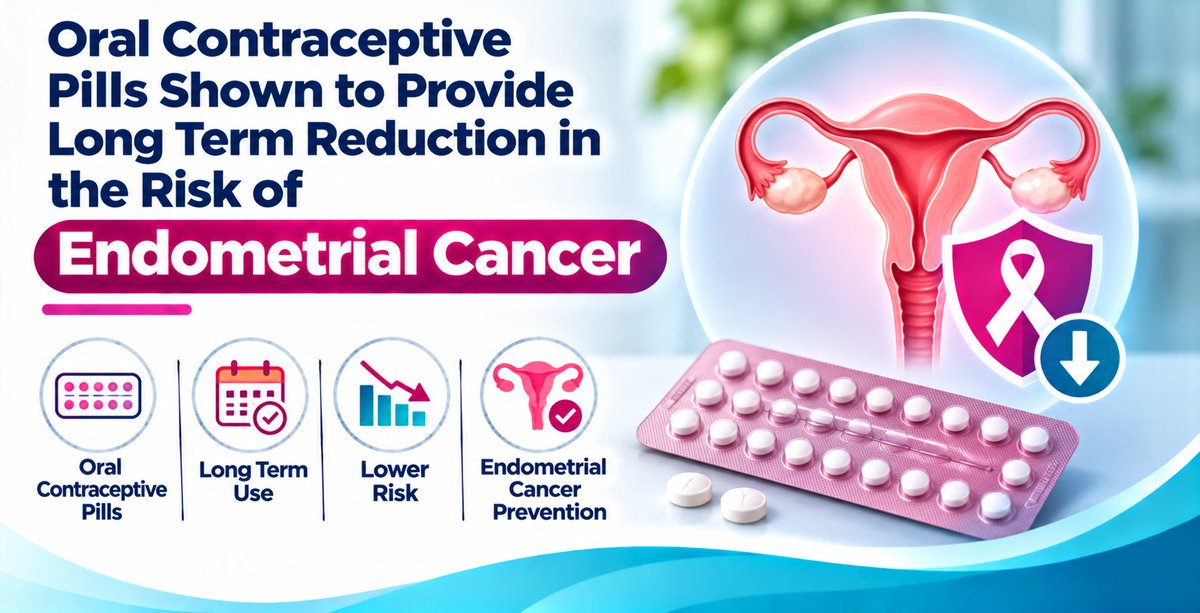
Quick answer: Research on birth control pills and endometrial cancer shows that the combined oral contraceptive pill lowers the risk of endometrial (uterine) cancer, by roughly a quarter for every 5 years of use, and the protection lasts for decades after stopping. The pill also has risks, so decide with a gynaecologist and get baseline checks such as a lipid profile test if advised.
Many Indian women use oral contraceptive pills (OCPs) for family planning, irregular periods or PCOD (PCOS). Many worry the pill causes cancer, yet for cancer of the womb lining the evidence points the other way. Here is what the research on birth control pills and endometrial cancer found, the pill's other risks, and the symptoms every woman should know.
The strongest evidence comes from a large pooled analysis published in The Lancet Oncology in 2015 by the Collaborative Group on Epidemiological Studies on Endometrial Cancer, coordinated from the University of Oxford. It combined data from 36 studies: 27,276 women with endometrial cancer and over 100,000 women without it.
The key findings were:
These are observational data, not a trial, but the link is strong, consistent and fits how hormones affect the womb lining.
Endometrial cancer starts in the endometrium, the inner lining of the uterus that thickens and sheds each month during periods. It is the most common type of uterine cancer, so people often search for it as "uterine cancer". It mostly affects women after menopause, usually after age 50.
The main driver is long exposure to oestrogen not balanced by progesterone. Oestrogen makes the lining grow and progesterone makes it shed; when this balance is lost for years, the lining can overgrow (hyperplasia) and sometimes turn cancerous.
Combined pills contain an oestrogen and a progestin (synthetic progesterone). The progestin keeps the endometrium thin and stable, so the lining has much less chance to overgrow.
Progestin-only methods such as the hormonal IUD are also linked to lower risk. The 2015 analysis studied combined pills. Non-hormonal pills such as centchroman (ormeloxifene), widely available in India, work differently and were not part of this research.
The pill does not lower every cancer risk. A balanced view of oral contraceptive pills and cancer risk looks like this:
| Cancer or condition | Effect of combined pill use | What it means for you |
|---|---|---|
| Endometrial (uterine) cancer | Risk lowered; protection grows with years of use and lasts decades | A real long-term benefit |
| Ovarian cancer | Risk lowered; protection also lasts many years | Another long-term benefit |
| Colorectal (bowel) cancer | Modestly lower risk in several studies | Possible benefit; evidence less strong |
| Breast cancer | Small increase in risk during use and for some years after; returns towards normal about 10 years after stopping | Absolute risk is low in young women; discuss family history |
| Cervical cancer | Higher risk with long-term use (5 years or more); falls after stopping | HPV is the main cause; keep up Pap or HPV screening |
| Blood clots (DVT, PE) and stroke | Increased risk, highest in the first year and in smokers, obese women and those over 35 | The most important safety issue; screen risk factors |
Doctors do not prescribe the pill only to prevent endometrial cancer; the protection is an extra benefit of using it for contraception or period problems.
Early side effects such as spotting, nausea, breast tenderness, headache and mood changes often settle within three months. Blood pressure should be checked regularly.
Combined pills are usually not advised if you:
A gynaecologist can suggest safer options, such as progestin-only methods or a copper IUD. Do not start, stop or switch pills without medical advice.
Factors linked to higher risk include:
Pregnancy, breastfeeding, a healthy weight, regular exercise and use of the pill or a hormonal IUD are all linked to lower risk. Read more about practical ways to reduce your cancer risk.
Endometrial cancer usually gives an early warning sign, abnormal vaginal bleeding, so most cases are found at a treatable stage. Watch for:
Non-cancerous causes include uterine fibroids, polyps or hormonal imbalance, but these symptoms always need checking. See also the general warning signs of cancer.
See a gynaecologist promptly if you have:
If you take the pill, go to an emergency department straight away for pain or swelling in one leg, sudden breathlessness or chest pain, coughing blood, sudden severe headache, weakness on one side of the body, or loss of vision. These can be signs of a blood clot or stroke.
There is no blood test that screens for or diagnoses endometrial cancer. Diagnosis needs a pelvic examination, a transvaginal ultrasound to measure the lining and, if needed, an endometrial biopsy. Tumour markers are not used to detect it early (see what tumour markers can and cannot do).
Blood tests are still useful for checking pill safety and the risk factors behind endometrial cancer:
For a broad yearly check covering sugar, cholesterol, thyroid, liver and kidney, compare our health checkup packages.
Learn about another common hormone-linked womb condition in our guide to endometriosis symptoms, causes and treatment.
Combined birth control pills lower the risk of endometrial cancer, the most common uterine cancer. A large 2015 Lancet Oncology analysis found the risk fell by about a quarter for every 5 years of use. They reduce risk but do not guarantee prevention, so abnormal bleeding still needs checking.
The protection lasts for decades. In the 2015 pooled analysis, women who had used the pill still had a lower risk of endometrial cancer more than 30 years after stopping.
Current or recent pill use is linked to a small increase in breast cancer risk that fades about 10 years after stopping, and long-term use is linked to a higher risk of cervical cancer. At the same time, the pill lowers the risk of endometrial and ovarian cancer. Discuss your personal and family history with your doctor.
The most common first sign is abnormal vaginal bleeding, especially any bleeding after menopause. Bleeding between periods, very heavy periods after 40 and unusual watery discharge are other early signs.
Combined pills are usually avoided by women who smoke and are 35 or older, have had a blood clot, stroke or heart attack, get migraine with aura, have uncontrolled high blood pressure, or have breast cancer or serious liver disease. A gynaecologist can suggest safer alternatives.
No. There is no reliable blood test to screen for or diagnose endometrial cancer. Doctors use a pelvic examination, transvaginal ultrasound and endometrial biopsy. Blood tests such as CBC, blood sugar and a PCOD profile help assess bleeding and risk factors.
Whether you are starting the pill, managing PCOD or keeping track of your risk factors, VIP Labs, a best pathology lab in Ahmedabad run by MD pathologists, offers CBC, blood sugar, lipid, thyroid and PCOD profile tests. You can book online for home blood collection or visit a lab test near me centre, and share your reports with your gynaecologist to decide about birth control pills and endometrial cancer risk.
Disclaimer: This article is for general awareness only and is not a substitute for medical advice. Please consult a qualified doctor for diagnosis and treatment.