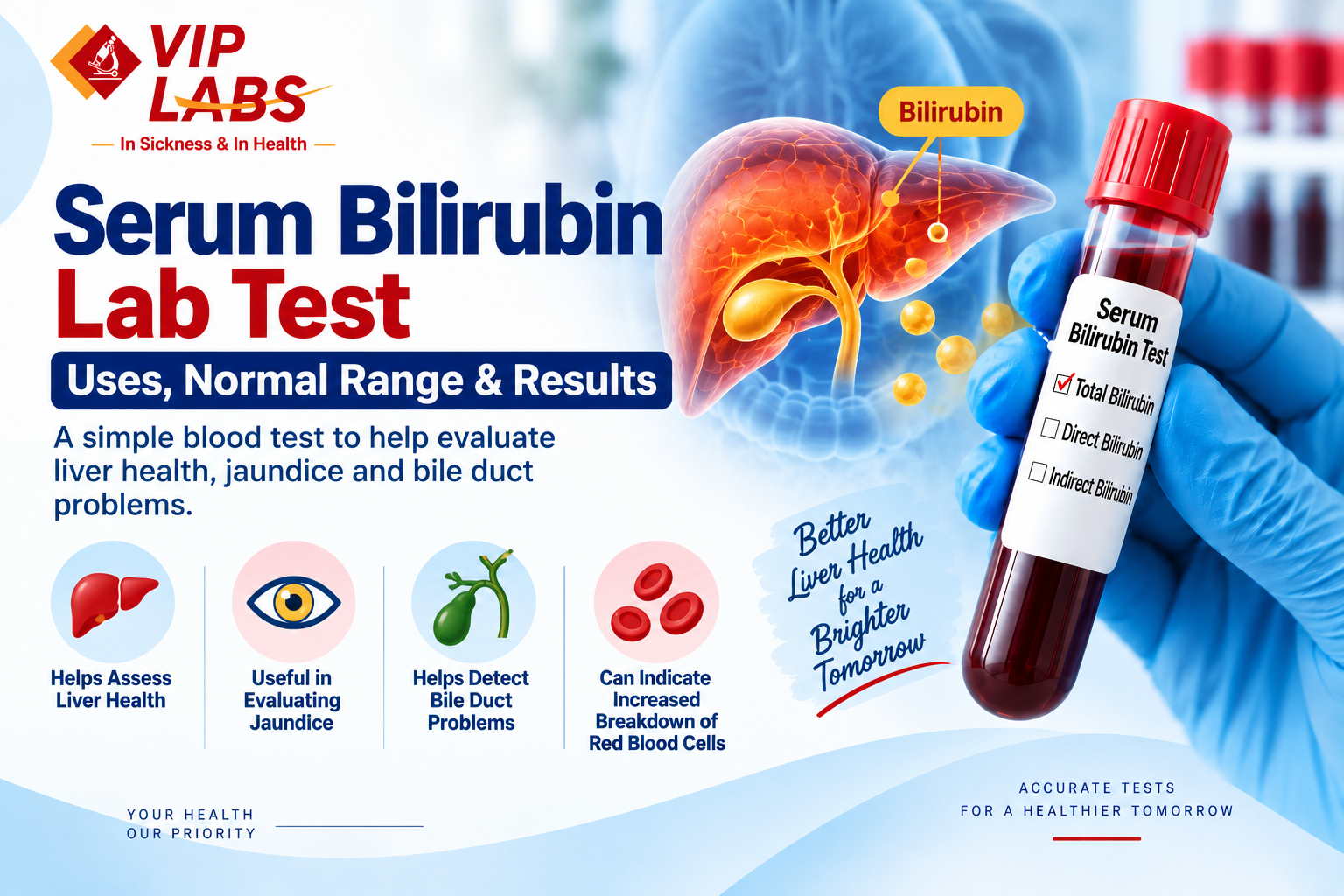
Serum Bilirubin Lab Test
The Serum Bilirubin Lab Test is a commonly performed blood test used to measure the amount of bilirubin in the blood. Bilirubin is a yellowish substance produced when old red blood cells are broken down. The liver processes bilirubin and helps remove it from the body through bile.
What Is Bilirubin?
Bilirubin is a yellow pigment formed as part of the normal breakdown of old red blood cells. It travels to the liver, where it is processed and eventually eliminated through bile. If bilirubin builds up in the blood, it can cause jaundice, which may make the skin and whites of the eyes appear yellow.
What Is a Serum Bilirubin Lab Test?
A Serum Bilirubin Test measures bilirubin levels in a blood sample.
Depending on the laboratory and the test ordered, bilirubin may be reported as:
- Total Bilirubin
- Direct Bilirubin (Conjugated Bilirubin)
- Indirect Bilirubin (Unconjugated Bilirubin)
These measurements can help healthcare professionals understand how bilirubin is being produced, processed and removed from the body.
Why Is a Bilirubin Blood Test Done?
A healthcare provider may recommend a bilirubin test for several reasons.
1. To Evaluate Jaundice
Yellowing of the skin or eyes is one of the common reasons for checking bilirubin levels. Elevated bilirubin can contribute to jaundice.
2. To Assess Liver Health
Bilirubin is commonly included in liver-related laboratory testing. Abnormal bilirubin levels may provide clues about liver or bile duct problems, although bilirubin alone cannot diagnose a specific liver disease.
3. To Investigate Bile Duct Problems
Bilirubin levels can increase when the normal flow of bile is obstructed, including with certain gallbladder or bile duct conditions.
4. To Evaluate Increased Red Blood Cell Breakdown
Increased breakdown of red blood cells can produce more bilirubin and may lead to elevated levels in the blood.
5. To Evaluate Newborn Jaundice
Bilirubin testing is also commonly used to evaluate jaundice in newborns.
Types of Bilirubin Tests
| Bilirubin Test |
What It Means |
| Total Bilirubin |
Measures the total amount of bilirubin in the blood |
| Direct Bilirubin |
Measures conjugated bilirubin that has been processed by the liver |
| Indirect Bilirubin |
Refers to unconjugated bilirubin, generally calculated from total and direct bilirubin |
Direct bilirubin is also called conjugated bilirubin, while indirect bilirubin is also called unconjugated bilirubin.
What Is the Normal Bilirubin Level?
Reference ranges can vary between laboratories and may also differ according to age and other factors.
One commonly cited reference range for adults is:
- Total Bilirubin: approximately 0.1–1.2 mg/dL
- Direct Bilirubin: generally less than 0.3 mg/dL
These are example reference ranges; the reference range printed on your laboratory report should be used when interpreting your result.
Newborn bilirubin levels have different reference considerations, so results in infants should be interpreted according to age and clinical circumstances.
What Does High Bilirubin Mean?
A high bilirubin level is called hyperbilirubinemia.
Elevated bilirubin can occur for different reasons, including:
- Liver disease or liver injury
- Bile duct obstruction
- Gallbladder or biliary conditions
- Increased breakdown of red blood cells
- Certain medications
- Some inherited conditions
High bilirubin does not automatically mean that a person has liver disease. The result needs to be interpreted along with symptoms, medical history and other laboratory findings.
What Are the Symptoms of High Bilirubin?
Depending on the underlying cause, elevated bilirubin may be associated with symptoms such as:
- Yellow skin
- Yellowing of the whites of the eyes
- Dark-colored urine
- Light or clay-colored stools
- Abdominal discomfort
- Fatigue
- Nausea or loss of appetite
Jaundice is particularly associated with increased bilirubin levels.
What Does Low Bilirubin Mean?
Low bilirubin levels are generally less concerning than elevated levels and often do not indicate a significant health problem. Some medicines and other factors can influence bilirubin measurements.
Your healthcare provider should interpret the result based on your overall clinical picture.
Serum Bilirubin and Liver Function Tests
Bilirubin is often measured along with other Liver Function Tests (LFTs).
These may include:
Different liver tests provide different types of information, so healthcare professionals generally look at the overall pattern rather than relying on a single result.
Is Fasting Required for a Bilirubin Test?
Fasting is not always required for a bilirubin blood test. However, your healthcare provider may instruct you not to eat or drink for several hours before the test, particularly when bilirubin is being tested along with other laboratory tests.
Always follow the preparation instructions provided by your doctor or laboratory.
How Is the Serum Bilirubin Test Performed?
The test requires a small blood sample.
A healthcare professional usually:
- Cleans the skin over a vein.
- Inserts a small needle.
- Collects blood into a test tube.
- Removes the needle.
- Applies pressure to the collection site.
The sample is then sent to the laboratory for analysis.
What Other Tests May Be Done With Bilirubin?
Depending on the symptoms and suspected condition, a healthcare provider may recommend additional tests such as:
- Liver Function Tests
- ALT and AST
- ALP and GGT
- Complete Blood Count (CBC)
- Blood tests for hepatitis
- Urine tests
- Abdominal ultrasound
- Other imaging tests
The appropriate tests depend on the patient's symptoms and medical history.
Frequently Asked Questions
1. What is a Serum Bilirubin Lab Test?
A Serum Bilirubin Lab Test measures the amount of bilirubin in the blood. It is commonly used to evaluate jaundice and as part of liver-related testing.
2. What are direct and indirect bilirubin?
Direct bilirubin refers to conjugated bilirubin, which has been processed by the liver. Indirect bilirubin refers to unconjugated bilirubin.
3. What causes high bilirubin?
High bilirubin may occur due to liver problems, bile duct obstruction, increased breakdown of red blood cells and some other conditions.
4. Is fasting required for a bilirubin blood test?
Not always. Your healthcare provider may recommend fasting depending on the specific testing being performed.
5. What is the normal total bilirubin range?
A commonly cited adult reference range is approximately 0.1–1.2 mg/dL, but ranges can vary between laboratories. Always check the reference range on your report.
6. Does high bilirubin always mean liver disease?
No. Elevated bilirubin can have several causes, including increased red blood cell breakdown and bile duct problems. Other liver tests and clinical information may be needed to determine the cause.
Conclusion
The Serum Bilirubin Lab Test is an important laboratory investigation used to measure bilirubin levels and assist in the evaluation of jaundice, liver-related conditions, bile duct problems and certain blood disorders.
Because bilirubin results can have different causes, the result should not be interpreted by itself. Healthcare professionals may evaluate total, direct and indirect bilirubin together with other liver tests, symptoms and medical history.