
Need Help?
+91 94294 10291
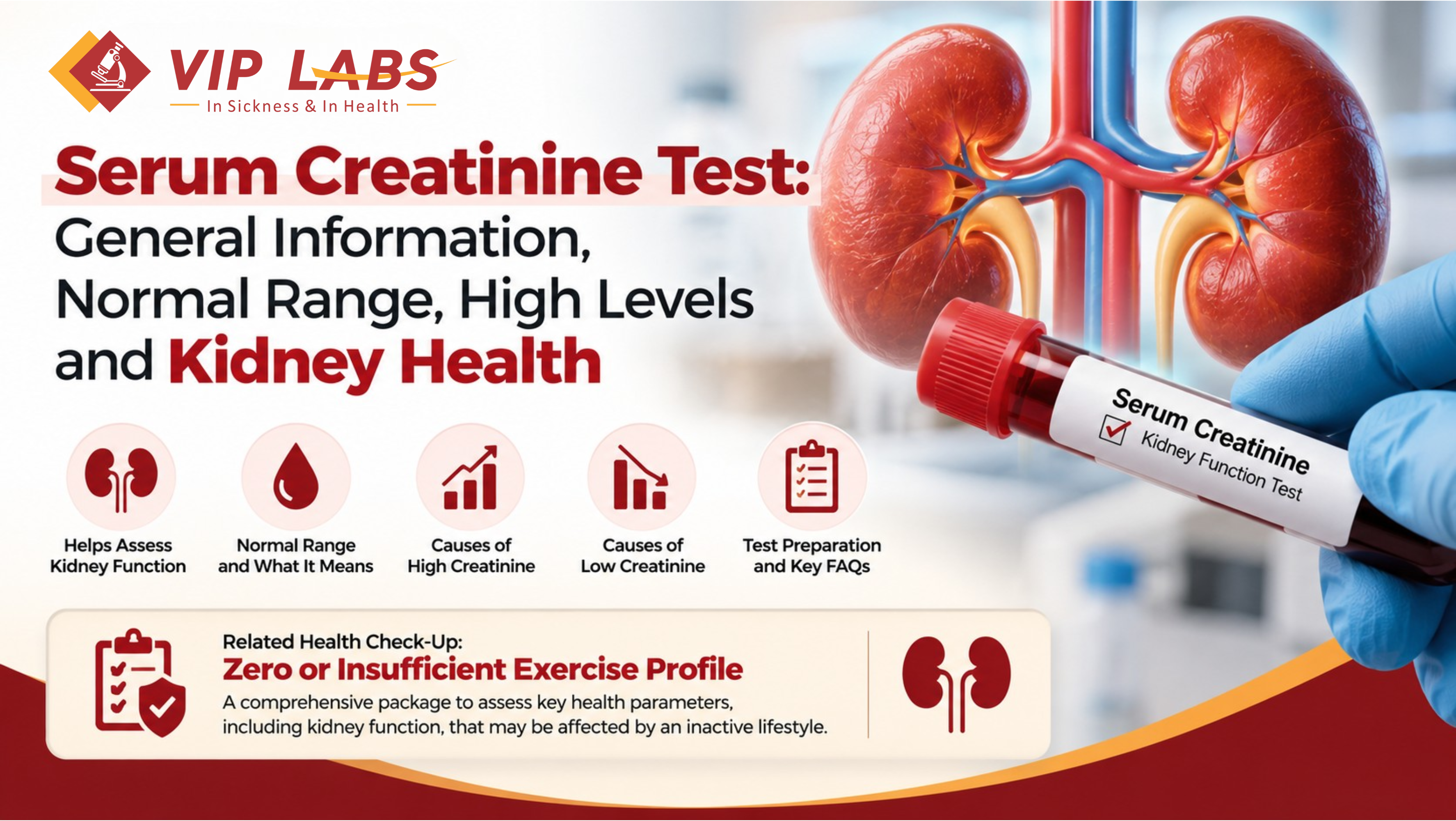
The Serum Creatinine Test is a common laboratory blood test used to assess kidney function. It measures the amount of creatinine present in your blood and helps doctors understand how effectively your kidneys are filtering waste from the body.
Your kidneys play an essential role in removing waste products, balancing fluids and maintaining the body's chemical balance. When kidney function is affected, creatinine levels in the blood may increase. This makes the serum creatinine test an important part of evaluating kidney health.
Whether your doctor has recommended this test as part of a routine health check-up or to investigate a possible kidney problem, understanding its purpose and results can help you make informed decisions about your health.
Creatinine is a waste product formed naturally when your muscles use energy and muscle tissue breaks down. A small amount is continuously produced by the body and enters the bloodstream.
Healthy kidneys filter creatinine from the blood and remove it through urine. When the kidneys are not filtering effectively, creatinine may accumulate in the bloodstream.
The Serum Creatinine Test measures this amount through a blood sample. Doctors use the result alongside other clinical information to evaluate kidney function and determine whether additional investigations may be needed.
Creatinine levels can vary depending on age, sex, muscle mass, diet and physical activity. Therefore, a result should always be interpreted using the laboratory's reference range and the patient's overall health information.
Doctors may recommend a serum creatinine test for several reasons.
The primary purpose of this test is to assess how well your kidneys are filtering waste from your blood. An elevated creatinine level may indicate that kidney function has been reduced.
The test can support the evaluation of conditions such as acute kidney injury and chronic kidney disease. However, creatinine alone cannot confirm a diagnosis.
People diagnosed with kidney disease may need regular creatinine measurements to monitor changes in kidney function and help their doctors evaluate treatment.
Diabetes and high blood pressure can increase the risk of kidney damage. Doctors may recommend kidney function tests for people with these conditions as part of their ongoing health monitoring.
Certain medicines can affect kidney function or influence creatinine measurements. Doctors may request this test when starting, adjusting or monitoring specific treatments.
Serum creatinine may be included in a kidney function profile or a broader group of blood tests. It can provide useful information about kidney health, especially when considered with other relevant measurements.
The normal range of serum creatinine can vary depending on the laboratory, the testing method, age, sex and muscle mass.
The following values are examples of commonly used adult reference ranges:
| Test Information | Details |
|---|---|
| Test Name | Serum Creatinine Test |
| Sample Required | Blood sample |
| Purpose | Helps assess kidney function |
| Common Adult Reference Range | Approximately 0.7–1.3 mg/dL for men and 0.6–1.1 mg/dL for women |
| Fasting | Usually not required for a standalone test. Follow the laboratory's instructions, especially if other tests are included. |
| Result Interpretation | Depends on the laboratory reference range, age, muscle mass and other clinical factors. eGFR may also be used to assess kidney function. |
These are general examples and are not universal diagnostic cut-offs. Your laboratory may use a different reference range, so always refer to the range printed on your report.
A creatinine result within the reference range does not always rule out early kidney disease. Likewise, an elevated result does not automatically mean that you have permanent kidney damage.
Doctors may also consider estimated glomerular filtration rate (eGFR), urine albumin testing and other findings to understand kidney health more accurately.
A high serum creatinine level means that more creatinine than expected is present in the blood. This may occur when the kidneys are not filtering waste effectively, although other factors can also affect the result.
A high result should be evaluated in context. Your doctor may recommend repeating the test, checking eGFR, examining your urine or performing additional investigations depending on your medical history and symptoms.
A low serum creatinine level is generally less common as a sign of kidney disease. It may be associated with lower muscle mass or reduced muscle production of creatinine.
Possible reasons include:
A low result does not automatically indicate a health problem. Your doctor will interpret it according to your physical condition, nutritional status and other test findings.
The serum creatinine test is a routine blood test that usually takes only a few minutes.
The process generally involves the following steps:
You may experience brief discomfort or mild bruising at the collection site. Serious complications from routine blood collection are uncommon.
Fasting is not always required for a serum creatinine test performed on its own. However, if the test is included in a larger blood test package, you may need to fast depending on the other investigations ordered.
Food intake, particularly a recent meat-heavy meal, and certain supplements may influence creatinine measurements. Your doctor or laboratory may provide specific preparation instructions based on the tests being performed.
Tell your healthcare professional about any medicines or supplements you take. Do not stop prescribed medicines unless your doctor advises you to do so.
Serum creatinine and estimated glomerular filtration rate (eGFR) are closely related but measure different things.
Serum creatinine measures the amount of creatinine in your blood.
eGFR estimates how effectively your kidneys filter waste from your blood. It is calculated using serum creatinine and other information, including age and sex, depending on the equation used.
Doctors often use eGFR alongside serum creatinine because it provides additional information about kidney function. Urine albumin testing may also be recommended to check for signs of kidney damage.
A single creatinine result does not provide a complete picture of kidney health. Trends over time and other test results can be important when assessing kidney function.
Your doctor may recommend this test if you:
Kidney disease can sometimes develop without obvious symptoms during its early stages. If you have risk factors, discuss an appropriate testing schedule with your healthcare professional.
Healthy habits can support kidney health and help reduce the risk of certain conditions that damage the kidneys.
Drink an appropriate amount of water for your needs. Fluid requirements vary depending on your health, climate and activity level. People with certain kidney or heart conditions may need specific fluid instructions from their doctor.
High blood pressure and diabetes are important risk factors for kidney disease. Follow your treatment plan and attend recommended check-ups to monitor these conditions.
Choose a balanced diet with suitable portions of vegetables, fruits, whole grains and other nutritious foods. If you have kidney disease, ask your healthcare professional whether you need specific dietary changes.
Regular physical activity supports overall health and can help with weight management, blood pressure and blood sugar control.
Some medicines, including certain pain relievers, may affect kidney function, especially when used frequently or inappropriately. Ask your doctor or pharmacist about safe use and avoid taking medicines without appropriate guidance.
If you have kidney disease risk factors, follow your clinician's advice about serum creatinine, eGFR, urine albumin and other relevant tests.
If your doctor has recommended a serum creatinine test, choosing a diagnostic laboratory that follows appropriate sample collection and testing procedures is an important part of the process.
VIP LABS provides laboratory testing services to help people assess and monitor different aspects of their health.
You can explore the following resources:
If you are arranging a serum creatinine test, confirm its availability, preparation requirements and report timing with VIP LABS before booking.
If you have a sedentary lifestyle or get very little regular physical activity, monitoring your overall health can be an important part of preventive care. Along with maintaining a balanced diet and staying physically active, appropriate laboratory tests can help assess selected health parameters.
VIP LABS offers the Zero or Insufficient Exercise Profile for people who want to monitor relevant aspects of their health. Depending on the tests included in the package, it may help assess selected health markers as part of a broader health check-up.
If you are concerned about kidney function or have risk factors such as diabetes or high blood pressure, speak with your healthcare professional about whether a serum creatinine test, eGFR or urine albumin test is appropriate for you.
Remember that laboratory results should be interpreted alongside your medical history and other clinical findings. Your doctor can explain what your creatinine level means and whether further evaluation is required.
1. What is the Serum Creatinine Test used for?
The Serum Creatinine Test measures creatinine in the blood and helps doctors assess kidney function. It may be used to investigate possible kidney problems, monitor existing kidney disease or check kidney health in people with conditions such as diabetes and high blood pressure.
2. What is the normal serum creatinine level?
Common adult reference examples are approximately 0.7–1.3 mg/dL for men and 0.6–1.1 mg/dL for women. The appropriate range varies by laboratory and individual factors, so check the reference range on your report.
3. Does high serum creatinine always mean kidney disease?
No. High creatinine may be associated with kidney disease, dehydration, intense exercise, muscle injury, certain foods or supplements and some medicines. Your doctor may recommend additional tests to determine the cause.
4. Is fasting required for the Serum Creatinine Test?
Fasting is not always required when serum creatinine is measured alone. If it is part of a larger test package, fasting may be necessary for other tests. Follow the preparation instructions provided by your doctor or laboratory.
5. What is the difference between serum creatinine and eGFR?
Serum creatinine measures the amount of creatinine in the blood, while eGFR estimates how effectively the kidneys filter waste. Doctors often interpret both measurements together to assess kidney function.
6. Can serum creatinine be normal in the early stages of kidney disease?
Yes. Creatinine levels can remain within a laboratory's reference range in some people with early kidney disease. Depending on your risk factors, your doctor may also recommend eGFR and urine albumin testing.
The Serum Creatinine Test is an important laboratory investigation that helps doctors assess kidney function and monitor possible kidney problems. It measures a natural waste product in the blood and provides useful information when interpreted alongside eGFR, urine tests and other clinical findings.
A high or low result does not automatically confirm a disease. Factors such as muscle mass, diet, hydration, medicines and medical history can influence creatinine levels.
If your doctor recommends a serum creatinine test, follow the laboratory's preparation instructions and discuss the results with your healthcare professional. Regular monitoring when appropriate, healthy lifestyle habits and timely medical advice can help you take better care of your kidney health.