
Need Help?
+91 94294 10291
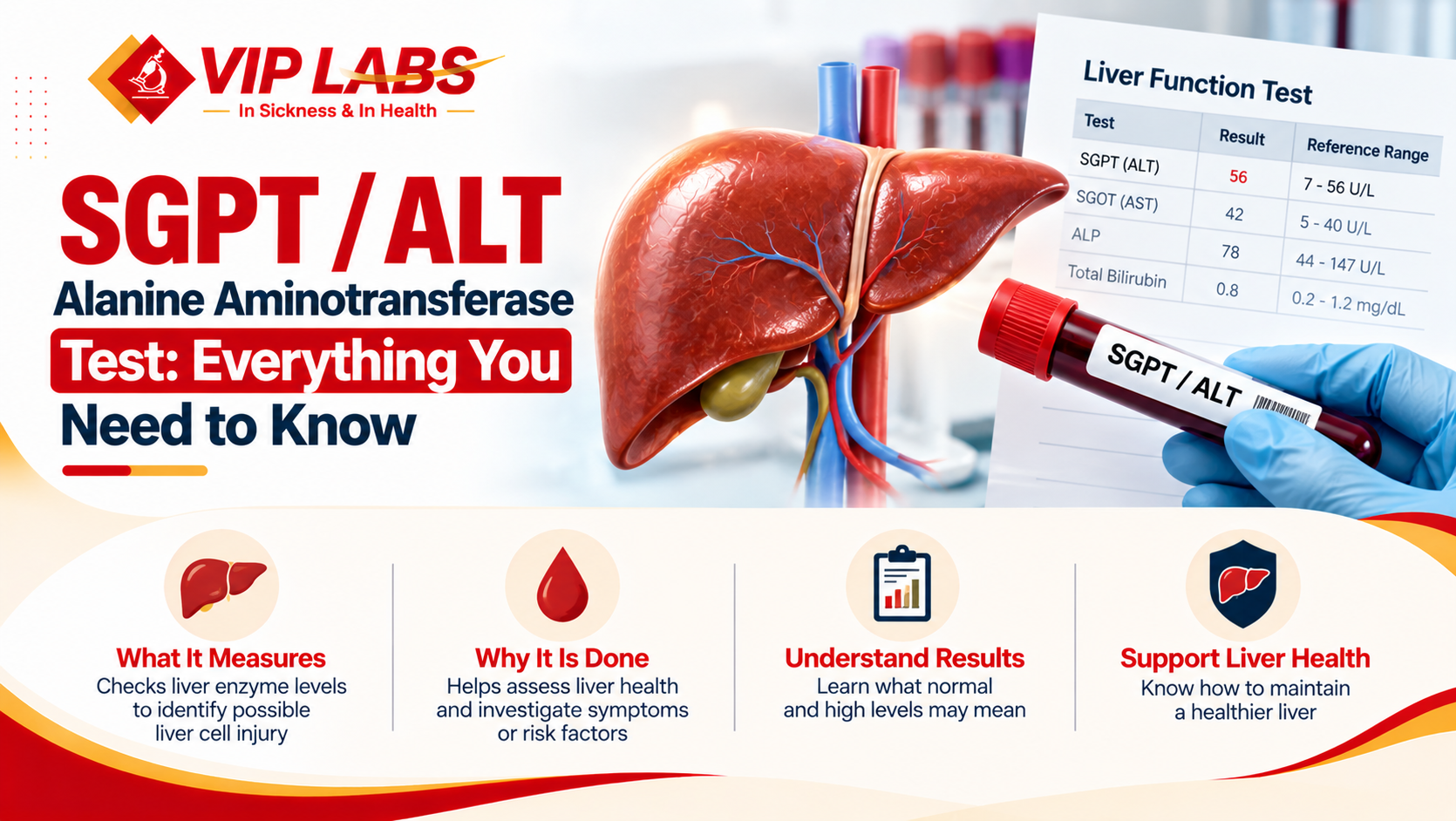
The liver plays a vital role in maintaining overall health. It helps process nutrients, metabolise medicines, produce bile, and remove waste products from the body. Monitoring liver health is important because some liver conditions can develop without noticeable symptoms in their early stages.
The SGPT / ALT test is a commonly used blood test that helps doctors identify possible liver cell injury. It may be recommended during routine health checkups, when symptoms suggest a liver problem, or to monitor an existing medical condition.
But what is the SGPT test? What is the difference between SGPT and ALT? What does a high ALT level mean, and how should you prepare for the test?
In this article, we explain the important facts about the SGPT / ALT / Alanine Aminotransferase laboratory test, including its purpose, preparation, reference ranges, and interpretation of results.
The SGPT / ALT test measures the level of an enzyme called alanine aminotransferase (ALT) in your blood.
SGPT stands for Serum Glutamic-Pyruvic Transaminase. It is an older name for the enzyme now commonly called ALT, or alanine aminotransferase.
ALT is found mainly in liver cells. When liver cells become damaged or inflamed, this enzyme can leak into the bloodstream, causing its level to increase.
The test helps doctors assess possible liver cell injury. However, an ALT result alone cannot identify the exact cause of an abnormality or confirm a specific liver disease.
The SGPT / ALT test provides useful information about liver health and may be recommended for several reasons.
ALT testing helps identify possible liver cell injury. Doctors may include it in routine health assessments or a group of tests used to investigate liver-related concerns.
A doctor may recommend the test if you experience unexplained fatigue, nausea, loss of appetite, abdominal discomfort, or yellowing of the skin or eyes.
Fat accumulation in the liver can sometimes cause elevated ALT levels. Testing may help assess possible liver injury, particularly in people with metabolic risk factors such as diabetes or excess body weight.
Certain viral infections, including hepatitis, can inflame liver cells and increase ALT levels. Additional tests may be required to identify the cause.
Doctors may use ALT testing to follow changes in liver enzyme levels over time or monitor people taking medicines that can affect the liver.
ALT is generally interpreted alongside other tests and clinical findings rather than used as a standalone measure of overall liver function.
Some liver conditions cause no obvious symptoms during their early stages. When symptoms occur, they may include:
These symptoms can have several possible causes. A healthcare professional can determine whether ALT testing or other investigations are appropriate.
Seek prompt medical assessment if you develop jaundice. Severe abdominal pain, confusion, or vomiting blood requires emergency medical attention.
The normal SGPT / ALT range varies between laboratories because testing methods and reference populations may differ.
Some laboratories use an upper reference limit around 35–40 U/L, but this is not a universal range. Always compare your result with the reference interval printed on your laboratory report.
| SGPT / ALT result | What it may mean |
|---|---|
| Within the laboratory reference range | No elevation is detected, but some liver conditions can still be present |
| Mildly elevated | May occur with fatty liver, certain medicines, recent strenuous exercise, or other conditions |
| Moderately elevated | May require further evaluation based on symptoms and other test results |
| Markedly elevated | May indicate significant liver cell injury and requires prompt medical assessment |
These descriptions are general and are not diagnostic categories with fixed numerical boundaries. The significance of a result depends on the degree of elevation, the laboratory's reference range, other test results, and the person's medical history.
A normal ALT result does not guarantee that the liver is completely healthy. Similarly, a high result does not automatically mean that a person has a serious liver disease.
What Does a High SGPT / ALT Level Mean?
An elevated SGPT / ALT level means that more ALT than expected is present in the bloodstream. This can occur when liver cells are irritated, inflamed, or damaged.
Common possible causes include:
Fat accumulation in the liver may be associated with elevated ALT. Risk factors can include insulin resistance, diabetes, excess body weight, and certain metabolic conditions.
Hepatitis infections can cause inflammation of the liver. Depending on the suspected infection, a doctor may recommend specific hepatitis blood tests.
Excessive or prolonged alcohol consumption can damage liver cells and affect liver enzyme levels.
Some prescription medicines, over-the-counter products, and herbal supplements can affect the liver. Tell your healthcare professional about everything you take, and do not stop prescribed medication without medical advice.
Intense physical activity can sometimes influence liver enzyme results. Your doctor may consider your recent exercise history when assessing an unexpected result.
Certain infections, reduced blood flow to the liver, autoimmune liver conditions, and other medical problems can also cause ALT elevations.
If your ALT level is high, your doctor may recommend repeat testing, additional liver blood tests, hepatitis testing, or imaging such as an ultrasound, depending on the suspected cause.
The seriousness of an elevated SGPT level depends on its cause, the degree of elevation, other test results, and whether symptoms are present.
A mild increase may be temporary, while a persistent or substantial increase may need more detailed investigation. Very high ALT levels can occur in serious conditions, including acute hepatitis and medication-related liver injury.
Do not judge liver health using SGPT alone. A doctor may consider other tests, including:
If you have an abnormal liver test alongside jaundice, severe abdominal pain, persistent vomiting, or confusion, seek prompt medical assessment.
The SGPT / ALT test is a routine blood test that usually takes only a few minutes.
The process generally involves the following steps:
A trained professional cleans the skin over a vein, usually in your arm.
A small blood sample is collected using a sterile needle.
The sample is sent to the laboratory for analysis.
The report provides your ALT level in units per litre (U/L), along with the laboratory's reference range.
You may feel a brief sting during blood collection or notice minor bruising afterward. Serious complications from routine blood collection are uncommon.
The SGPT / ALT test alone generally does not require fasting. However, if it is ordered alongside other blood tests, such as certain glucose or lipid tests, fasting may be required for those tests.
Before your test:
If you are unsure about fasting requirements, confirm them before visiting the laboratory.
SGPT / ALT and SGOT / AST are both enzymes measured through blood tests. They are often assessed together when investigating possible liver injury.
| Feature | SGPT / ALT | SGOT / AST |
|---|---|---|
| Full name | Alanine aminotransferase | Aspartate aminotransferase |
| Main distribution | Found mainly in the liver | Found in the liver, muscles, heart, and other tissues |
| Clinical use | Helps assess possible liver cell injury | Helps assess liver injury but can also rise due to injury in other tissues |
| Interpretation | Considered with other tests and clinical findings | Considered alongside ALT and other relevant findingsz |
ALT is more closely associated with liver cells than AST, but neither test can independently confirm a specific liver disease.
Comparing both results can help doctors decide whether additional investigations are needed.
Healthy daily habits can support overall liver health and may reduce the risk of some liver conditions.
Include vegetables, whole fruits, whole grains, pulses, and suitable protein sources. Limit excessive intake of highly processed foods and sugar-sweetened drinks.
If you have excess body weight or metabolic risk factors, gradual and sustainable weight management may help reduce the risk of fatty liver disease.
Regular physical activity supports metabolic health. Choose activities that suit your fitness level and medical needs.
Alcohol can contribute to liver injury. If you have elevated liver enzymes or a diagnosed liver condition, discuss alcohol avoidance with your healthcare professional.
Take medicines as prescribed. Avoid unnecessary supplements and unverified liver-detox products, as some can themselves cause liver injury.
If you have diabetes, obesity, a history of hepatitis, or other liver disease risk factors, ask your healthcare professional whether liver testing is appropriate.
These measures support liver health but do not replace evaluation or treatment when liver enzymes are abnormal.
1. Is SGPT the same as ALT?
Yes. SGPT is an older name for alanine aminotransferase, commonly abbreviated as ALT. Both terms refer to the same enzyme measured in a blood test.
2. What is the normal SGPT / ALT range?
The reference range varies between laboratories. Some laboratories use an upper limit around 35–40 U/L, but you should use the range printed on your own report.
3. Does a high SGPT level always mean liver disease?
No. An elevated level can have several causes, including liver conditions, certain medicines, and strenuous exercise. A healthcare professional must interpret the result in context.
4. Do I need to fast before an SGPT test?
The SGPT test alone generally does not require fasting. However, fasting may be needed when other tests are performed at the same time. Follow your laboratory's instructions.
5. Can SGPT levels return to normal?
Yes, depending on the cause. Levels may return to the reference range when a temporary cause resolves or an underlying condition is appropriately managed. Follow-up testing may be needed.
6. Can liver disease be present when SGPT is normal?
Yes. Some liver conditions can occur even when ALT is within the reference range. Doctors may consider other blood tests, imaging, symptoms, and risk factors.
7. Which other tests may be performed with SGPT?
Depending on your medical situation, a doctor may recommend SGOT / AST, bilirubin, ALP, GGT, albumin, hepatitis tests, or imaging such as an ultrasound.
8. How often should I get an SGPT test?
There is no single testing schedule for everyone. The frequency depends on your medical history, symptoms, risk factors, previous results, and your healthcare professional's advice.
The SGPT / ALT / Alanine Aminotransferase test is a useful blood test for assessing possible liver cell injury. It may be recommended during routine health assessments, when symptoms suggest a liver problem, or when monitoring an existing condition.
A high ALT result does not automatically mean that you have a serious liver disease, and a normal result does not rule out every liver condition. Your result should be interpreted alongside your symptoms, medical history, laboratory reference range, and other relevant investigations.
Understanding the SGPT / ALT test can help you make informed decisions about your health. If your result is abnormal or you have symptoms that may suggest liver disease, consult a healthcare professional for appropriate evaluation and follow-up.