
Need Help?
+91 94294 10291
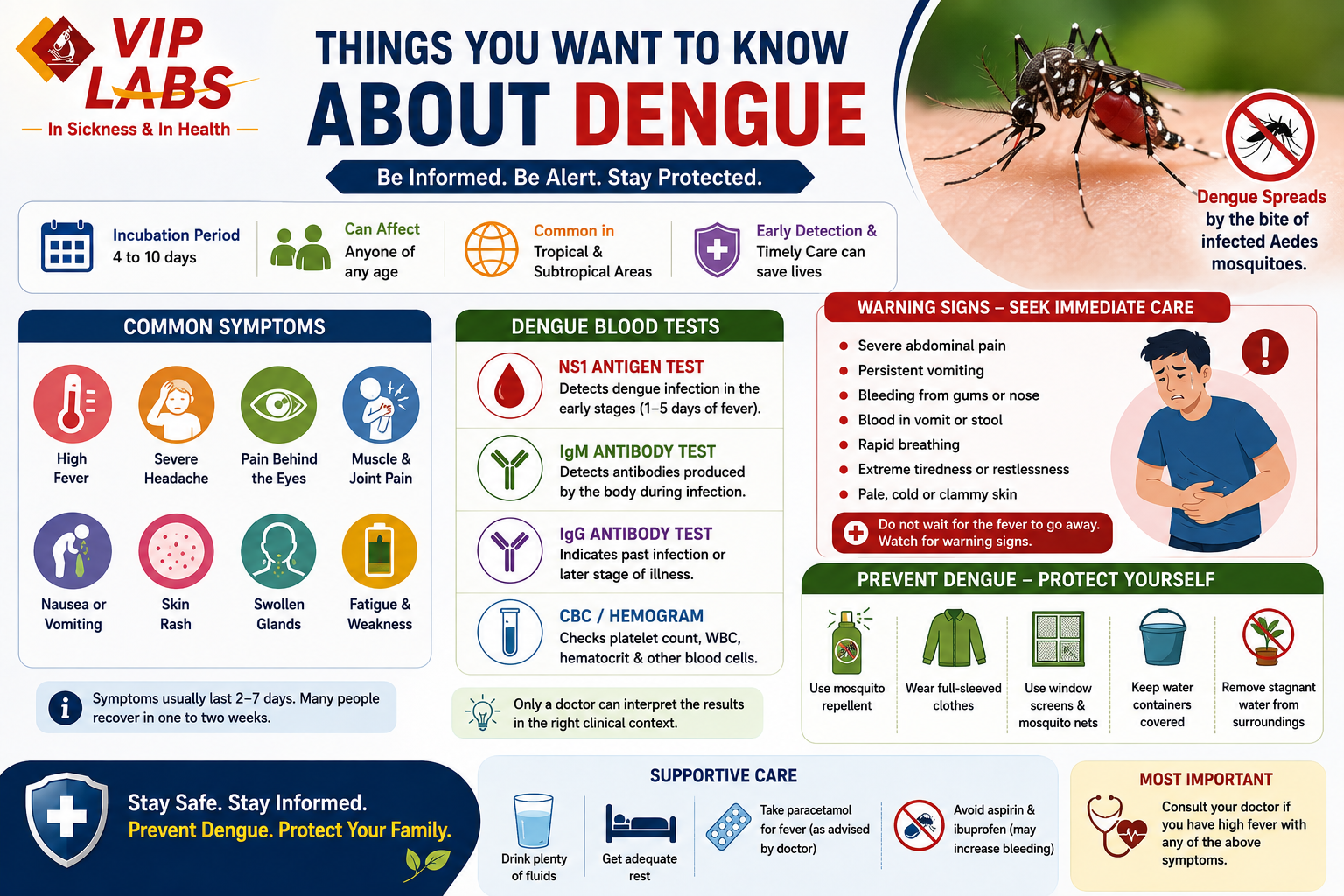
Dengue is a mosquito-borne viral infection that is common in tropical and subtropical regions, including India. It is caused by the dengue virus (DENV) and is mainly transmitted through the bite of infected *Aedes* mosquitoes. While many people experience mild illness and recover within one to two weeks, some cases can progress to severe dengue, which requires urgent medical attention.
Understanding the symptoms of dengue, dengue blood tests, warning signs, treatment and prevention can help you recognize the illness early and seek appropriate medical care.
Dengue is a viral infection transmitted primarily by infected female Aedes aegypti mosquitoes. These mosquitoes can be active during the daytime and commonly breed in containers or areas where water collects.
There are four main dengue virus serotypes: DENV-1, DENV-2, DENV-3 and DENV-4. Infection with one serotype provides long-term immunity to that particular serotype, but subsequent infection with a different serotype can increase the risk of severe dengue.
Dengue spreads when an infected mosquito bites a person. The mosquito becomes infected after feeding on a person carrying the dengue virus and can subsequently transmit the virus to another person through its bite.
Dengue does not normally spread directly from person to person like a common cold or flu. However, an infected person can infect mosquitoes that bite them, which can then transmit the virus to others.
Dengue symptoms usually appear around 4–10 days after infection. Many infections cause no symptoms or only mild illness.
Common dengue symptoms may include:
Symptoms commonly last around 2–7 days, and many people recover within one to two weeks.
Because dengue symptoms can resemble other infections, laboratory testing and medical evaluation may be necessary.
One of the most important things to know about dengue is that a person can become more seriously ill around the time the fever goes away. A reduction in fever does not always mean the person is recovering.
Warning signs can include:
These symptoms require immediate medical attention because severe dengue can cause serious bleeding, shock, fluid accumulation, or organ impairment.
If you develop a high fever along with symptoms that could indicate dengue, consult a healthcare professional. Your doctor may recommend a Dengue blood test based on your symptoms, the duration of illness, local dengue activity and other clinical factors.
Laboratory testing can help confirm dengue because its symptoms can overlap with other infections such as malaria and chikungunya.
Different dengue tests are useful at different stages of infection.
NS1 Antigen Test
The Dengue NS1 antigen test can help detect dengue infection during the early phase of illness. NS1 is a protein associated with the dengue virus and can be detected during the acute stage.
Dengue IgM Test
An IgM antibody test can help detect the body's immune response to dengue. The timing of antibody production means its usefulness can vary depending on when the test is performed.
Dengue IgG Test
IgG antibodies can provide information about previous or current dengue infection, depending on the timing and clinical context. Interpretation should be done by a healthcare professional.
CBC / Hemogram
A Complete Blood Count (CBC or Hemogram) may also be recommended during dengue evaluation and monitoring. It provides information about blood cells, including Platelet Count and white blood cell count.
However, platelet count alone cannot confirm dengue. Dengue diagnosis should be based on clinical assessment and appropriate laboratory testing.
Platelets are blood components involved in clotting. During dengue infection, platelet counts can decrease in some patients.
However, a low Platelet Count does not automatically mean that a person has dengue because thrombocytopenia can occur with other infections and medical conditions.
Similarly, platelet count should not be used alone to determine whether a person has recovered from dengue. Doctors consider symptoms, clinical condition, CBC results and other relevant findings.
Currently, there is no specific antiviral treatment for dengue. Treatment generally focuses on managing symptoms, maintaining adequate fluid intake, monitoring the patient's condition, and identifying warning signs early. Severe dengue may require hospitalization.
Paracetamol (acetaminophen) may be used for fever and pain when appropriate. Aspirin and medicines such as ibuprofen should generally be avoided in suspected dengue because they can increase the risk of bleeding. Always follow medical advice regarding medication.
Fever, vomiting and reduced food or fluid intake can contribute to dehydration.
People with dengue are generally advised to maintain adequate fluid intake unless their healthcare professional has given different instructions.
Seek medical advice if there is persistent vomiting, difficulty drinking fluids, severe weakness, reduced urination or other concerning symptoms.
The best way to reduce the risk of dengue is to avoid mosquito bites and prevent mosquito breeding.
Protect Yourself From Mosquito Bites:
Prevent Mosquito Breeding
Aedes mosquitoes can breed in relatively small amounts of stagnant water.
To reduce breeding areas:
Seek urgent medical attention if a person with suspected or confirmed dengue develops:
Severe dengue can become life-threatening and requires prompt medical management.
Dengue is a common mosquito-borne viral infection that can range from mild illness to severe disease. Knowing the symptoms of dengue, warning signs, dengue blood tests, platelet count, treatment options and prevention methods can help you take timely action.
If you develop symptoms that may indicate dengue, consult a healthcare professional and get the appropriate diagnostic tests when recommended. Do not rely on platelet count alone to diagnose dengue or determine recovery.
Stay alert, prevent mosquito breeding, protect yourself from mosquito bites and seek medical care promptly when warning signs appear.