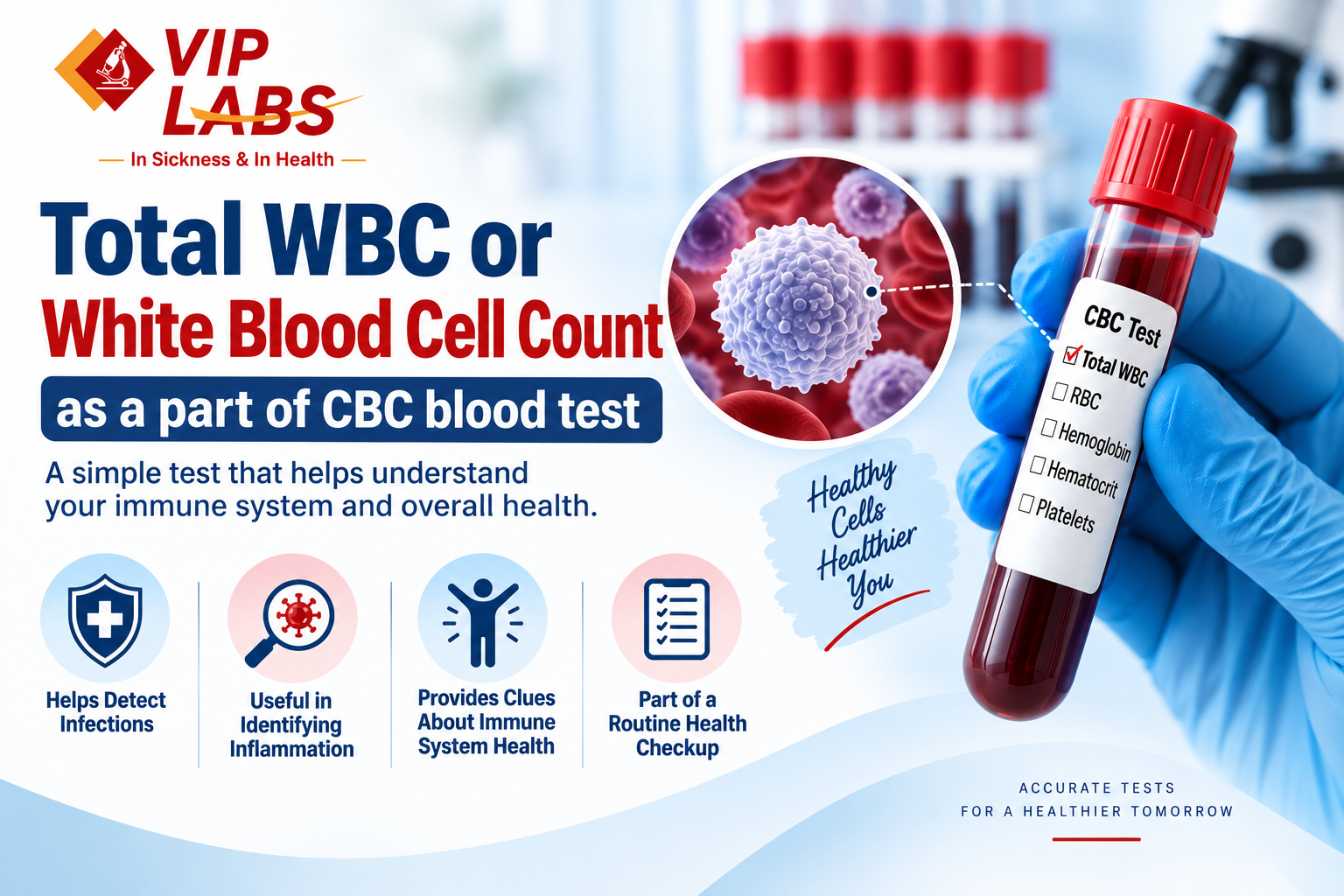
Total WBC or White Blood Cell Count as a part of hemogram or CBC blood test
A
Total WBC Count (White Blood Cell Count) is an important part of a Complete Blood Count (CBC) or hemogram. It measures the total number of white blood cells, also called leukocytes, present in the blood. White blood cells are an important part of the immune system and help the body respond to infections and other diseases.
What Is a Total WBC Count?
The Total WBC Count measures the overall number of white blood cells in a blood sample. White blood cells are produced mainly in the bone marrow and help protect the body against infections and other harmful conditions.
A CBC usually includes the total WBC count along with other measurements such as red blood cells, hemoglobin, hematocrit and platelets.
There are five major types of white blood cells:
- Neutrophils
- Lymphocytes
- Monocytes
- Eosinophils
- Basophils
A WBC differential is a separate measurement that reports the number or percentage of each type of white blood cell.
Why Is the WBC Count Included in a CBC Test?
A WBC count can provide useful information about the body's immune response. Healthcare professionals may use it to help evaluate or monitor:
- Infections
- Inflammation
- Autoimmune conditions
- Allergic reactions
- Some blood and bone marrow disorders
- Certain cancers affecting blood cells
- Conditions or treatments that can affect the immune system
A WBC count alone cannot confirm a specific disease. It is interpreted together with symptoms, medical history and other blood test results.
What Is the Normal WBC Count?
The reference range for WBCs can vary depending on the laboratory, age and other individual factors.
A commonly used adult reference range is approximately 4,500 to 11,000 cells per microliter (cells/µL). Some laboratories use slightly different ranges, so it is important to compare your result with the reference range provided on your laboratory report.
- WBC Count General Interpretation
- Below the laboratory reference range Low WBC count (Leukopenia)
- Within the laboratory reference range Generally within the expected range
- Above the laboratory reference range High WBC count (Leukocytosis)
Note: These categories are general. Your healthcare professional should interpret the result based on your age, symptoms, medical history and other test results.
What Does a High WBC Count Mean?
A high WBC count is called leukocytosis. It can occur when the body is responding to an infection, inflammation or another condition.
Possible causes include:
- Bacterial or viral infections
- Inflammatory conditions
- Allergic reactions
- Physical or emotional stress
- Certain medicines
- Tissue injury
- Some blood disorders and cancers
A high WBC count does not automatically mean that a person has an infection. Additional information and testing may be needed to identify the cause.
What Does a Low WBC Count Mean?
A low WBC count is called leukopenia. It means that the number of white blood cells is below the laboratory's expected range.
Possible causes can include:
- Certain infections
- Bone marrow disorders
- Some medicines
- Chemotherapy
- Certain autoimmune conditions
- Some conditions affecting the immune system
The significance of a low WBC count depends on which white blood cells are affected and the person's overall health.
What Are the Five Types of White Blood Cells?
Neutrophils are the most common type of white blood cell and play an important role in the body's defense against infections.
Lymphocytes include B cells and T cells and are involved in immune responses against infections and other threats.
Monocytes help remove certain germs, damaged cells and cellular debris and participate in the immune response.
Eosinophils are involved in responses to parasites and allergic reactions.
Basophils participate in allergic and inflammatory reactions.
How Is the Total WBC Count Test Performed?
The WBC count is usually measured from a blood sample collected from a vein in the arm. The sample is then analyzed in the laboratory as part of the CBC or hemogram.
The blood collection generally takes only a few minutes. Mild pain or bruising at the collection site may occur temporarily.
When Should You Consider a CBC or WBC Test?
A healthcare professional may recommend a CBC when checking general health or when evaluating symptoms that could be associated with infection, inflammation, anemia, immune disorders or other conditions.
Symptoms that may lead to evaluation can include:
- Fever or chills
- Persistent cough
- Frequent infections
- Unexplained weakness or fatigue
- Body aches
- Signs of inflammation
The appropriate testing depends on the individual's symptoms and medical history.
Can WBC Count Diagnose an Infection?
A WBC count can provide information that may support the evaluation of an infection, but it cannot diagnose an infection by itself.
For example, both infections and several non-infectious conditions can cause changes in WBC levels. Healthcare professionals may consider the WBC count together with the differential count, symptoms, physical examination and other tests.
Frequently Asked Questions
1. What is a Total WBC Count?
A Total WBC Count measures the total number of white blood cells in your blood. It is commonly included as part of a CBC or hemogram.
2. What is the normal WBC count?
A commonly used adult range is around 4,500–11,000 cells/µL, although reference ranges vary between laboratories.
3. What does a high WBC count indicate?
A high WBC count, or leukocytosis, can occur with infections, inflammation, allergies, stress, certain medicines and other conditions. Further evaluation may be required to determine the cause.
4. What does a low WBC count indicate?
A low WBC count, or leukopenia, can be associated with certain infections, medicines, chemotherapy, bone marrow disorders and other conditions.
5. Is WBC Count part of a CBC?
Yes. The total WBC count is one of the measurements included in a Complete Blood Count (CBC).
Get Your CBC or Hemogram Blood Test
A CBC or Hemogram provides information about several important blood components, including white blood cells, red blood cells, hemoglobin and platelets.
If your doctor has recommended a CBC or WBC test, you can contact Symbion VIP Diagnostics for information about available laboratory testing.
If your WBC result is higher or lower than the laboratory reference range, discuss the result with your healthcare professional. A single abnormal result does not necessarily indicate a specific disease.