
Need Help?
+91 94294 10291
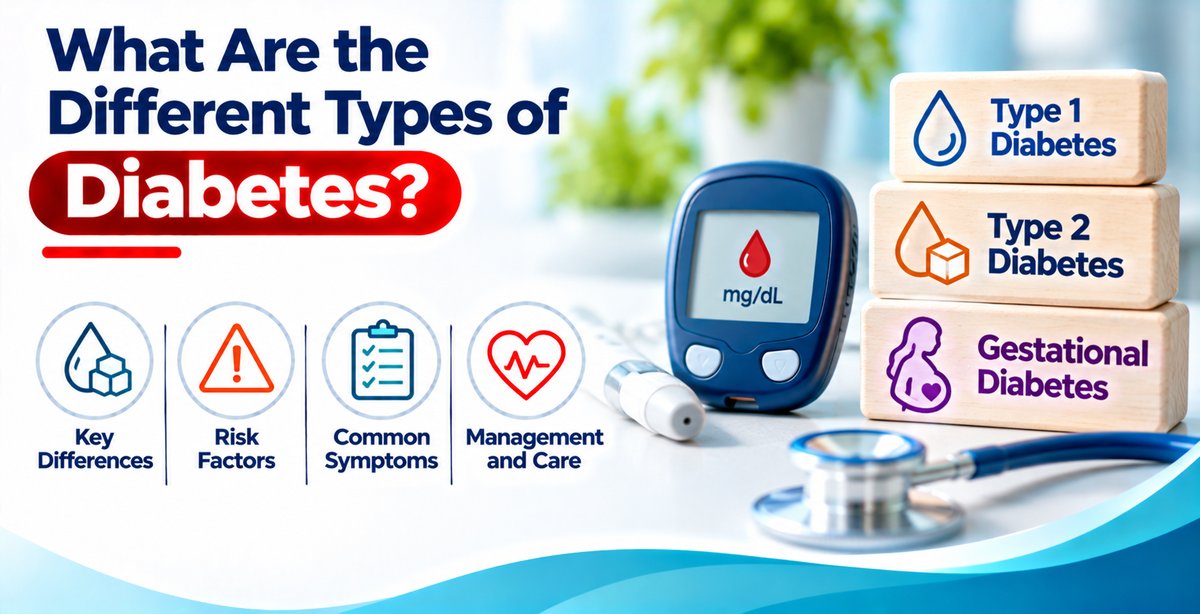
Quick answer: The main types of diabetes are type 1 (the body makes little or no insulin), type 2 (the body resists insulin and makes too little over time), and gestational diabetes (first found in pregnancy). Less common types include LADA, MODY and secondary diabetes. Diagnosis needs blood tests such as the fasting blood sugar test and HbA1c.
The word "diabetes" covers several conditions. All cause high blood sugar, but for different reasons, which changes treatment. Knowing the types of diabetes helps you avoid one common mistake: assuming every adult with high sugar has type 2.
Diabetes mellitus, the "sugar" diabetes most people mean, happens when the hormone insulin is missing or does not work well. Insulin moves glucose from the blood into cells for energy. If you are new to the topic, start with our explainer on what diabetes is and how insulin works.
Doctors group the types of diabetes mellitus as follows, based on the American Diabetes Association (ADA) and World Health Organization (WHO) classifications:
There is also diabetes insipidus, which has nothing to do with blood sugar despite the similar name. It is explained further down.
Type 1 diabetes is an autoimmune condition. The immune system destroys the insulin-producing beta cells in the pancreas, so the body makes little or no insulin. It is not caused by eating sugar.
LADA is a slowly progressing form of autoimmune (type 1) diabetes that starts in adulthood, usually after 30. It is often mistaken for type 2 because tablets work at first. Clues include a lean build and sugar that stops responding to tablets within a few years. Diabetes-specific antibody tests at a specialist centre confirm it; most people with LADA need insulin sooner than those with type 2.
Type 2 diabetes accounts for about 90 to 95% of all diabetes. It develops when the body's cells stop responding well to insulin (insulin resistance) and the pancreas gradually cannot make enough extra insulin to keep up.
Type 2 diabetes is usually preceded by prediabetes (impaired glucose tolerance), a stage where sugar is higher than normal but not yet diabetes. Prediabetes is not a type of diabetes, but it is the best time to act. Read how to stop prediabetes from progressing.
Gestational diabetes (GDM) is high blood sugar first found during pregnancy, usually in the second or third trimester. Pregnancy hormones increase insulin resistance, and some women cannot make enough insulin to cope.
MODY is caused by a change in a single gene and runs strongly in families, often across three generations. It usually starts before 25 in a slim person who does not need much insulin. Some forms are treated with tablets rather than insulin, and one common form often needs no treatment at all, so the correct diagnosis matters. Genetic testing at a specialist centre confirms it.
Here, another disease or medicine causes high sugar:
In 2025, the International Diabetes Federation recognised malnutrition-related diabetes, proposed as "type 5", in lean young people with a history of undernutrition in low- and middle-income countries, including India. It is still being studied and is not yet in the ADA or WHO classification.
| Type | Main cause | Usual age at start | Typical treatment |
|---|---|---|---|
| Type 1 | Autoimmune destruction of insulin-making cells | Childhood to young adulthood (any age possible) | Insulin from diagnosis |
| LADA | Slow autoimmune damage to insulin-making cells | Adults, usually over 30 | Tablets at first, insulin within a few years |
| Type 2 | Insulin resistance plus falling insulin output | Adults, increasingly young adults | Lifestyle change, tablets, injections or insulin |
| Gestational | Pregnancy hormones raising insulin resistance | During pregnancy | Diet, activity, insulin or doctor-chosen medicine |
| MODY | Single gene change, strong family pattern | Usually before 25 | Depends on the gene: none, tablets or insulin |
| Secondary (e.g. pancreatic, steroid) | Another disease or medicine | Any age | Treat the cause; tablets or insulin |
Diabetes insipidus is a rare condition in which the kidneys pass large amounts of dilute urine, causing extreme thirst. It happens because of a problem with the hormone vasopressin (antidiuretic hormone): either the brain makes too little, or the kidneys do not respond to it. Blood sugar is normal. It has recently been renamed arginine vasopressin deficiency or resistance to avoid confusion. Tests include urine and blood concentration, serum sodium and specialist water deprivation tests.
Get your sugar tested if you notice:
Go to an emergency department straight away for vomiting, abdominal pain, deep fast breathing, fruity-smelling breath, drowsiness or confusion in anyone with high sugar or suspected type 1 diabetes. These can be signs of diabetic ketoacidosis.
Blood sugar tests show whether you have diabetes. They do not by themselves show which type. Your doctor uses age, symptoms, weight, family history and sometimes extra tests to decide the type. For the exact cut-offs, see our blood sugar levels chart for diabetes diagnosis.
Antibody, C-peptide and genetic tests are specialist tests your diabetologist may order. For preparation tips, read our guide to the diabetes test in Ahmedabad, or choose a full body checkup in Ahmedabad that includes sugar, kidney and lipid tests.
There are three main types of diabetes: type 1, type 2 and gestational diabetes. Less common types include LADA, MODY and secondary diabetes caused by pancreatic disease, hormone disorders or medicines such as steroids. Diabetes insipidus is a separate condition that does not involve blood sugar.
In type 1 diabetes, the immune system destroys the cells that make insulin, so insulin is needed from diagnosis. In type 2 diabetes, the body resists insulin and gradually makes too little; it is linked to weight, inactivity and family history and is first treated with lifestyle change and tablets.
Type 2 diabetes is by far the most common, making up about 90 to 95% of all cases. It is very common in India and often starts at a younger age and lower body weight than in many other populations.
No. They are different diseases. However, some adults first labelled as type 2 actually have LADA, a slow form of autoimmune diabetes, and need insulin sooner. People with long-standing type 2 diabetes may also need insulin as insulin production falls, but that does not make it type 1.
Gestational diabetes usually goes away after delivery, but it greatly raises the mother's risk of type 2 diabetes later in life. A sugar test after delivery and regular checks after that are recommended.
Routine tests like fasting sugar and HbA1c confirm diabetes but not its type. Doctors judge the type from your age, symptoms, weight and family history, and may order specialist tests such as diabetes antibodies, C-peptide or genetic tests when the type is unclear.
Whatever the type, early diagnosis and regular monitoring prevent most diabetes complications. Looking for the best pathology lab in Ahmedabad for diabetes tests? VIP Labs offers sugar, HbA1c, insulin and kidney tests with pathologist-reviewed reports. Book online for home sample collection, explore other options for a blood test in Ahmedabad, or save on regular monitoring with a health checkup membership.
Disclaimer: This article is for general awareness only and is not a substitute for medical advice. Please consult a qualified doctor for diagnosis and treatment.