
Need Help?
+91 94294 10291
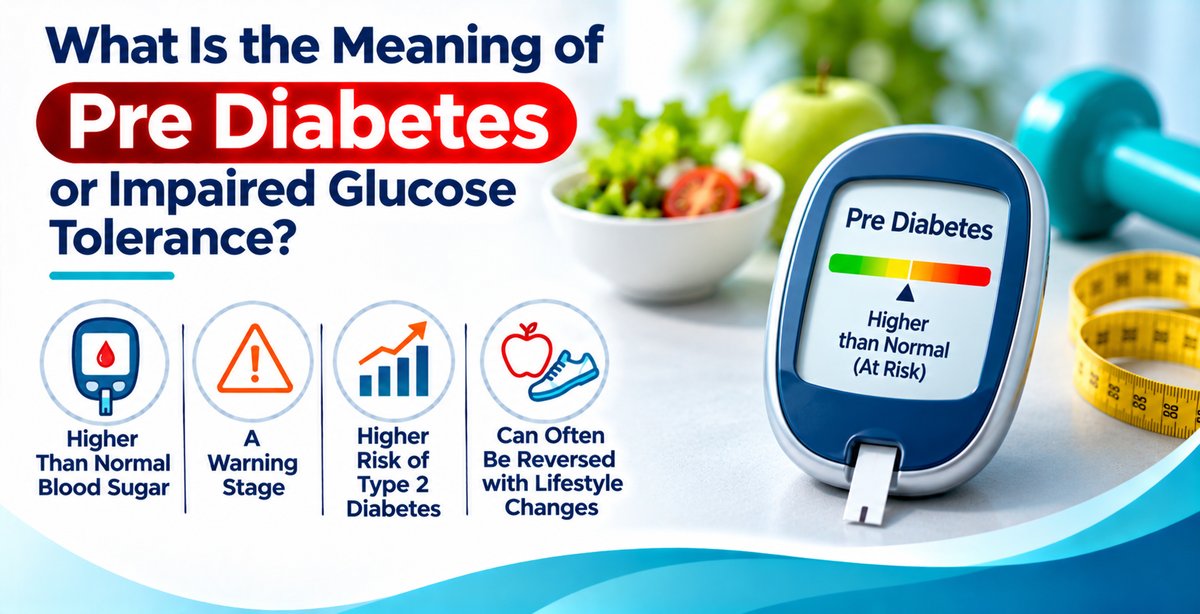
Quick answer: Prediabetes means your blood sugar is higher than normal but not yet in the diabetes range: fasting glucose 100–125 mg/dL, a 2-hour glucose test result of 140–199 mg/dL, or HbA1c 5.7–6.4%. It usually causes no symptoms, so it is found only on a blood test such as the HbA1c test. With weight loss and regular exercise, it can often be reversed.
Prediabetes is extremely common in India. The large ICMR-INDIAB study, published in 2023, estimated that about 136 million Indians have prediabetes, more than the roughly 101 million who already have diabetes. Most of them do not know it. This guide explains what prediabetes means, the exact ranges used by doctors, who should get tested, and the practical steps that bring sugar back to normal.
Prediabetes is a stage in which your body is starting to struggle to control blood glucose. Usually the cells of your muscles, liver and fat respond less well to insulin (insulin resistance), and the pancreas cannot fully make up for it. Sugar levels creep up, but not high enough to be called diabetes.
Doctors describe prediabetes in three ways, depending on which test is abnormal:
You can have one, two or all three. Prediabetes is not a type of diabetes, but it is the main warning stage before type 2 diabetes. To understand the condition it can lead to, read what diabetes means and how insulin works.
The table below uses American Diabetes Association (ADA) cut-offs, which most Indian labs and doctors follow. One difference: the World Health Organization (WHO) starts impaired fasting glucose at 110 mg/dL instead of 100 mg/dL, and does not use HbA1c to define prediabetes.
| Test | Normal | Prediabetes | Diabetes |
|---|---|---|---|
| Fasting plasma glucose (8+ hours without food) | Below 100 mg/dL (5.6 mmol/L) | 100–125 mg/dL (5.6–6.9 mmol/L); WHO: 110–125 mg/dL | 126 mg/dL (7.0 mmol/L) or higher |
| 2-hour glucose after 75 g OGTT | Below 140 mg/dL (7.8 mmol/L) | 140–199 mg/dL (7.8–11.0 mmol/L) | 200 mg/dL (11.1 mmol/L) or higher |
| HbA1c | Below 5.7% | 5.7–6.4% | 6.5% or higher |
A single borderline result is usually repeated or confirmed with a second test. A random sugar reading alone cannot diagnose prediabetes. For the full chart, including random sugar and what the numbers mean for diabetes diagnosis, see our blood sugar levels chart.
Note that a routine post-meal (PP) sugar test is not the same as a standard OGTT, because meals differ in how much carbohydrate they contain. A PP value of 140 mg/dL or more is a reason to discuss proper testing with your doctor, not a diagnosis by itself.
Most people with prediabetes feel completely normal. That is why it is called a silent condition. Some clues that your body may be developing insulin resistance include:
Classic diabetes symptoms such as heavy thirst, frequent urination, blurred vision and unexplained weight loss usually mean sugar has already risen into the diabetes range.
Indians tend to develop insulin resistance at a younger age and a lower body weight than many other populations. Your risk is higher if you have:
The ADA advises screening all adults from age 35, and earlier for anyone who is overweight and has at least one other risk factor. If your results are normal, repeat the tests at least every three years. If you have prediabetes, get retested at least once a year, or as your doctor advises, so that any move into diabetes is caught early.
Anyone with prediabetes should also have a lipid profile test and a blood pressure check, because prediabetes raises the risk of heart disease even before diabetes develops.
Yes, in many people prediabetes can be reversed, meaning sugar levels return to the normal range. It is not guaranteed, and the earlier you act the better your chances. Two landmark trials show what is possible:
Even if your numbers do not fully normalise, lifestyle changes delay diabetes by years. Reversal also does not mean the risk is gone forever; regular testing must continue.
For a person weighing 80 kg, that is 4 to 6 kg. Fat around the liver and abdomen falls first, which improves insulin sensitivity quickly.
Brisk walking for 30 minutes on five days a week counts. Add muscle-strengthening exercise two or three times a week, and break up long sitting with a short walk every 30 to 60 minutes. A 10 to 15 minute walk after meals helps lower post-meal sugar.
Cut sugary drinks, sweets and refined flour, and reduce large portions of white rice; see our list of white foods to avoid or limit. Fill half the plate with vegetables, add dal, pulses, eggs, paneer or other protein, and choose whole grains and millets in smaller amounts.
Aim for seven to eight hours of sleep, manage stress and stop smoking. All three affect insulin resistance. For a short action plan, read 3 steps to prevent prediabetes turning into diabetes.
Some people at very high risk, especially younger adults with obesity or women with past gestational diabetes, may be prescribed metformin by their doctor. Do not start any medicine or supplement on your own.
See a doctor to confirm and plan follow-up if any test is in the prediabetes range. Seek prompt medical care if you have:
Prediabetes is diagnosed only with blood tests. These are the most useful:
For preparation tips and test types, see our guide to the diabetes test in Ahmedabad.
Prediabetes is diagnosed when fasting blood sugar is 100–125 mg/dL, the 2-hour glucose tolerance test result is 140–199 mg/dL, or HbA1c is 5.7–6.4%. These are ADA cut-offs. The WHO uses 110–125 mg/dL for fasting glucose and does not use HbA1c to define prediabetes.
Yes, in many people. Losing 5–7% of body weight, exercising for at least 150 minutes a week, eating fewer refined carbohydrates and sleeping well can bring blood sugar back to normal. The earlier you start, the better the chance, but yearly testing should continue.
There is no fixed timeline. HbA1c reflects about the last two to three months, so improvement usually shows on repeat tests after about three months of steady changes. Some people normalise within months, while others take longer or stay in the prediabetes range but delay diabetes.
Yes. An HbA1c of 6.0% falls in the prediabetes range of 5.7–6.4%, and values closer to 6.4% carry a higher risk of developing diabetes. Your doctor may confirm it with a fasting sugar test and will advise lifestyle changes and a repeat test.
No. Many people with prediabetes never develop type 2 diabetes, especially if they lose weight and stay active. Without changes, however, a large share go on to develop diabetes over the following years, which is why regular testing matters.
Most people do not. Lifestyle change is the main treatment and works better than medicine in trials. A doctor may prescribe metformin for some people at very high risk, but you should never start it, or any supplement, on your own.
Finding prediabetes early gives you the best chance of keeping diabetes away. VIP Labs is a trusted pathology lab in Ahmedabad for fasting sugar, PPBS and HbA1c tests, with reports reviewed by qualified pathologists. Choose home blood collection in Ahmedabad or visit a pathology lab near you.
Disclaimer: This article is for general awareness only and is not a substitute for medical advice. Please consult a qualified doctor for diagnosis and treatment.