
Need Help?
+91 94294 10291
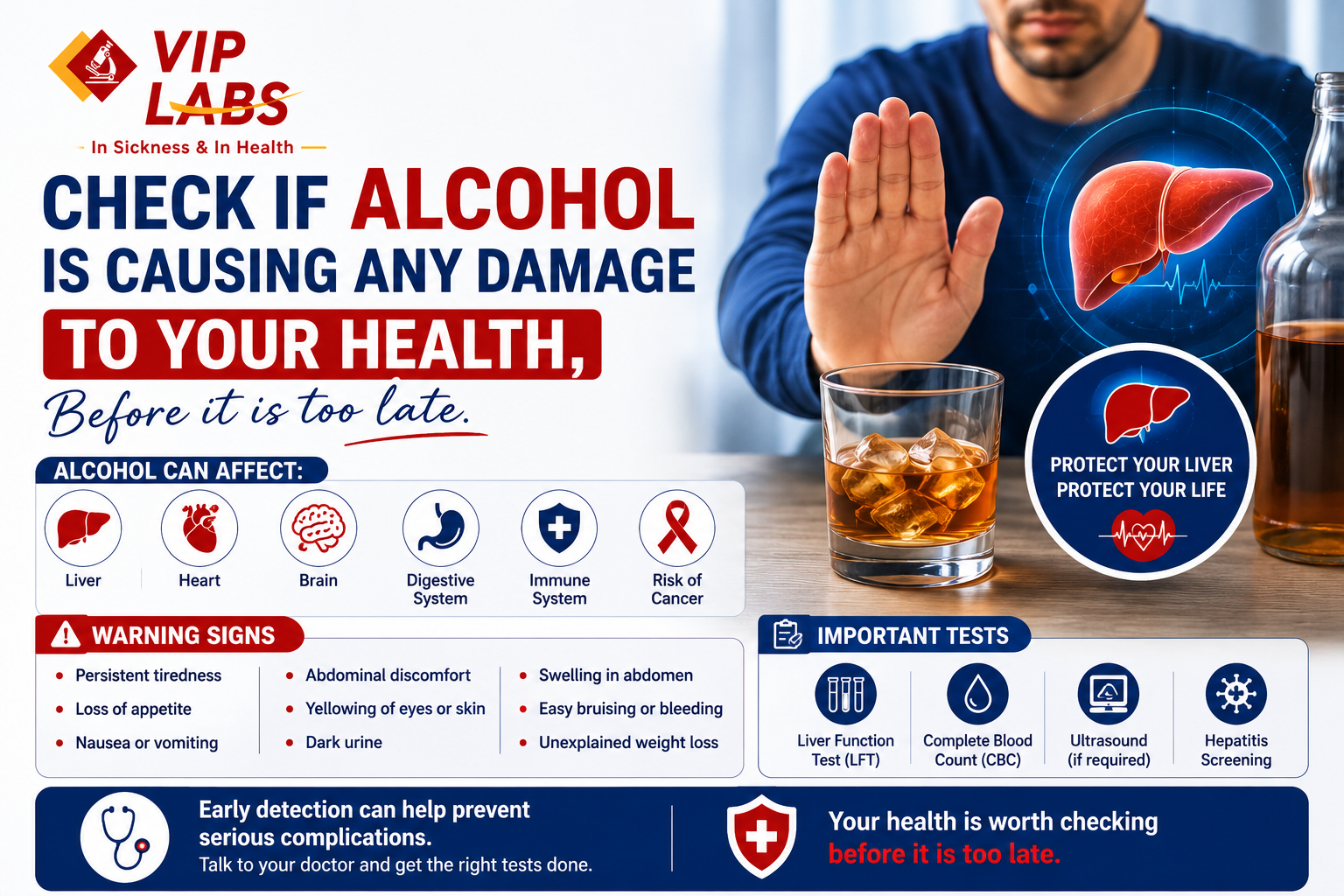
Alcohol consumption is common in many social settings, but regular or heavy drinking can affect much more than the liver. **Alcohol can impact the liver, heart, brain, digestive system, mental health, immune system and increase the risk of several cancers.** The World Health Organization (WHO) states that alcohol is causally linked to more than 200 diseases, injuries and health conditions.
The important point is that alcohol-related health damage may develop silently. A person may feel completely healthy while changes are already occurring inside the body. This is why understanding your drinking pattern, recognizing warning signs and discussing appropriate health tests with a healthcare professional can be important.
Alcohol is a psychoactive and toxic substance. Its effects depend on factors such as how much you drink, how frequently you drink, your overall health and individual risk factors. WHO notes that the risk generally increases as alcohol consumption increases.
Alcohol can affect several parts of the body, including:
NIAAA notes that alcohol affects the whole body rather than only the liver.
The liver is one of the organs most affected by alcohol because it metabolizes most of the alcohol absorbed by the body.
Long-term or heavy alcohol consumption can contribute to a spectrum of alcohol-associated liver conditions, including:
1. Fatty Liver
Fat can accumulate in the liver in association with alcohol use. This may not cause obvious symptoms, particularly in the early stages.
2. Alcohol-Associated Hepatitis
Continued alcohol exposure can cause inflammation and injury to the liver. Some people may develop symptoms such as abdominal discomfort, loss of appetite, nausea, weakness or jaundice.
3. Liver Fibrosis
Repeated liver injury can lead to the formation of scar tissue, known as fibrosis.
4. Cirrhosis
Advanced scarring can lead to **cirrhosis**, in which the liver becomes permanently damaged and its ability to function properly can be affected.
5. Liver Cancer
Alcohol consumption is an established risk factor for liver cancer.
Alcohol-associated liver disease can progress from fat accumulation to inflammation, fibrosis, cirrhosis and, in some cases, liver cancer.
Yes.
One of the biggest concerns is that liver disease may not cause noticeable symptoms in its early stages. Someone may continue their normal routine without realizing that liver injury is developing.
This is why people who drink regularly—particularly those with heavy drinking patterns or other liver risk factors—should discuss their health and appropriate screening with a doctor.
Symptoms that may require medical evaluation include:
These symptoms can have many causes and do not necessarily mean alcohol has caused liver damage. However, they should not be ignored.
Jaundice, significant abdominal swelling, vomiting blood, black stools, severe confusion or severe abdominal pain require prompt medical attention.
If your doctor believes you may be at risk of alcohol-related liver disease, they may recommend blood tests and, depending on the situation, imaging or other investigations.
Common laboratory tests may include:
Liver Function Tests (LFT)
An LFT may include several markers that provide information about liver health, such as:
These tests can help identify patterns of liver injury or impaired liver function.
A CBC may provide additional information about blood cells and can be part of a broader health evaluation.
Other Tests
Depending on your symptoms and medical history, a doctor may recommend:
Alcohol-related health risks may be particularly important for people who:
If you are concerned about your alcohol consumption, speak confidentially with a qualified healthcare professional.
Can alcohol damage the liver?
Yes. Long-term or heavy alcohol consumption can contribute to fatty liver, alcohol-associated hepatitis, fibrosis, cirrhosis and liver cancer.
What blood tests can check for alcohol-related liver damage?
Doctors may use liver-related blood tests such as ALT (SGPT), AST (SGOT), ALP, GGT, bilirubin and albumin, depending on the clinical situation. Additional tests or imaging may also be needed.
Can I have liver damage without symptoms?
Yes. Liver disease may have few or no noticeable symptoms in its early stages. This is one reason why people with significant risk factors should discuss appropriate evaluation with a healthcare professional.
Does a normal SGPT/ALT mean my liver is completely healthy?
Not necessarily. ALT is only one marker of liver health, and a single normal result cannot exclude every type or stage of liver disease. Your doctor may consider additional tests and your overall health history.
Does alcohol increase cancer risk?
Yes. Alcohol is an established cause of several cancers, including cancers of the mouth, throat, larynx, oesophagus, liver, colorectum and breast.
Is there a completely safe amount of alcohol?
There is no amount of alcohol that can guarantee zero health risk. WHO states that even low levels carry some risk, with risk generally increasing as consumption increases.
Which test is best for checking liver health?
There is no single “best” test for every person. Doctors may use a combination of liver blood tests, medical history, physical examination and, when appropriate, imaging or other investigations.
Should I stop drinking alcohol immediately?
If you drink heavily or regularly, do not assume that suddenly stopping is always safe. Alcohol withdrawal can be medically serious for some people. Speak with a healthcare professional about a safe plan.
Alcohol-related health damage can develop silently, so waiting for symptoms may not be the best approach. Alcohol can affect the liver as well as the heart, brain, digestive system and other organs, and it increases the risk of several cancers.
If you drink regularly or are concerned about the effect alcohol may be having on your body, talk to a healthcare professional about your individual risk and whether you need appropriate blood tests or other health checks.
Your health is worth checking before it is too late.