
Need Help?
+91 94294 10291
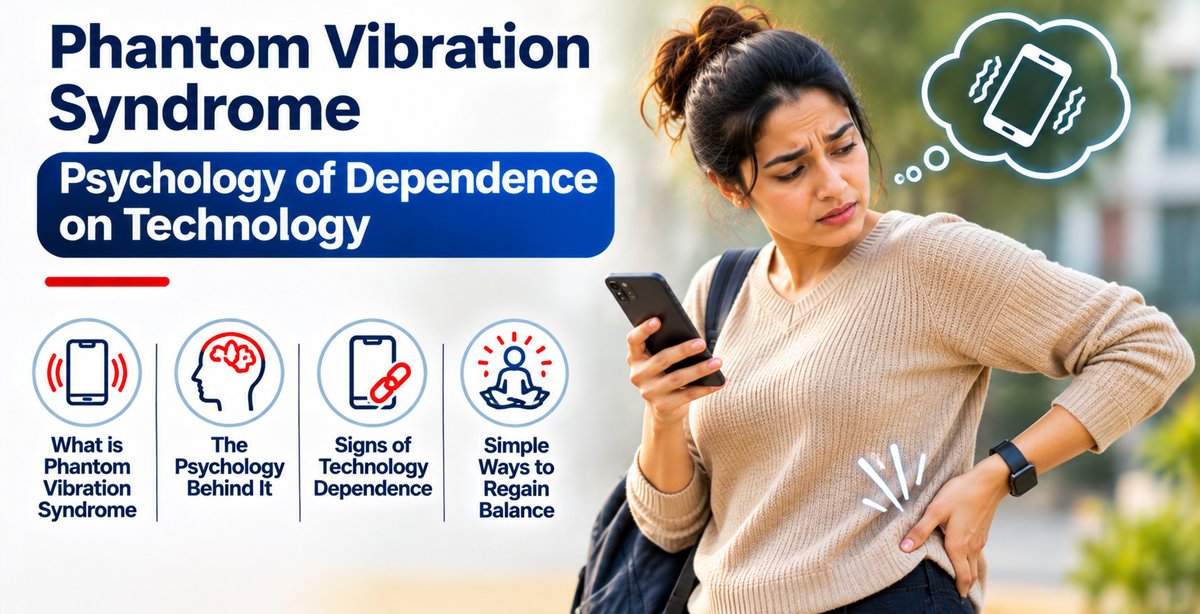
Quick answer: Phantom vibration syndrome is the false feeling that your phone is vibrating or ringing when it is not. It is common, harmless and not a disease: the brain is primed to expect alerts. Less phone dependence, better sleep and screen breaks reduce it. If you feel real tingling or numbness without a phone, ask about a vitamin B12 test.
You feel a buzz in your pocket, reach for your phone and find no call, no message, nothing. Most smartphone users have had this experience. This guide explains what phantom vibration syndrome is, why it happens, what it says about your relationship with your phone, and simple steps to protect your sleep, eyes, posture and mental wellbeing.
Phantom vibration syndrome (also called phantom ringing or "ringxiety") is the sensation of a phone vibrating, or the sound of it ringing, when no alert has arrived. Despite the name, it is not a medical syndrome or a mental illness. It is a normal perception error that has become common because phones are with us almost all day.
People usually feel it in the place they keep their phone: a trouser pocket, shirt pocket or bag. Some people notice it even when the phone is on the table or in another room.
Surveys suggest that most regular phone users have felt phantom vibrations at least once. In a well-known study of US college students by psychologist Dr Michelle Drouin and colleagues, around nine in ten students reported phantom vibrations, typically about once every two weeks. A minority (roughly one in eleven) found them bothersome; most were not troubled.
Earlier surveys of hospital staff who carried pagers and phones found similar results: a large majority had felt phantom vibrations, and some felt them daily. Students who reacted more strongly to text messages, and those who relied heavily on texting, tended to report phantom vibrations more often.
Your brain constantly filters signals from the body and decides which ones matter. When you are waiting for a message, your brain sets a low threshold for anything that feels like a buzz. A muscle twitch, clothing rubbing on skin or a small change in pressure then gets "read" as a vibration. Psychologists call this a false alarm in signal detection: the brain prefers to check wrongly than to miss an important call.
Every time a real notification brings a message, a like or news, your brain learns that the buzz is worth attention. The more often you check, the more alert your brain stays for the next buzz.
Phantom vibrations are reported more often during busy, stressful periods, such as exam time, a new job or when waiting for important news. Anxiety and poor sleep make the brain more vigilant, so harmless body sensations are more likely to be misread.
Feeling an occasional phantom buzz does not mean you are addicted to your phone. But frequent phantom vibrations can be a useful nudge to look at your phone habits. "Smartphone addiction" is not an official diagnosis, yet problematic phone use is real and is linked with poorer sleep, lower mood and anxiety in many studies.
| Health area | What can happen | Simple fix |
|---|---|---|
| Sleep | Late-night scrolling delays sleep; alerts wake you up | No phone for 30–60 minutes before bed; charge it outside the bedroom |
| Eyes | Digital eye strain: dry, tired eyes, blurred vision, headache | 20-20-20 rule: every 20 minutes, look 20 feet away for 20 seconds |
| Neck and back | "Text neck" from looking down for hours; back and shoulder pain | Hold the phone at eye level; stretch and change position often |
| Mood and focus | Constant alerts fragment attention and raise stress | Turn off non-essential notifications; batch-check messages |
| Activity | Long sitting and less physical activity | Walk while on calls; set movement reminders |
For posture tips, see our guide to correct sitting, standing and sleeping posture. If long screen hours have also made you less active, read about the effects of an inactive lifestyle.
There is no medicine for phantom vibration syndrome, and none is needed. The following changes reduce how often it happens and also improve your overall digital wellbeing.
Keep the phone in a bag or on the desk instead of your pocket. Switch off vibration and use a soft ringtone, or change the vibration pattern. In surveys of hospital staff, simply moving the phone to a different place or turning off vibrate helped many people.
Turn off alerts from shopping, games and most social media apps. Keep only calls and messages from important contacts. Fewer real buzzes means your brain stops expecting one every few minutes.
Try phone-free meals, a phone-free first hour of the morning, and a fixed "screens off" time at night. Most phones have built-in screen time, focus mode and bedtime settings that make this easier.
Poor sleep and high stress make phantom sensations more likely. A regular sleep schedule, daily physical activity, breathing exercises and time outdoors calm the nervous system. Our tips for healthy sleep and quick tips to reduce anxiety can help.
Constant checking breaks concentration. Working in focused blocks with the phone out of sight is one of the simplest ways to improve concentration.
Phantom vibration syndrome is a brief, buzz-like feeling linked to where you keep your phone. It is different from tingling, burning, pins and needles or numbness that you feel in your hands or feet whether or not you carry a phone. Those symptoms can come from nerve problems, and common treatable causes include vitamin B12 deficiency, diabetes and thyroid disorders.
Phantom vibrations alone do not need treatment. See a doctor or mental health professional if:
No blood test can diagnose phantom vibration syndrome or phone addiction. But if you have real nerve symptoms, tiredness or low mood, a doctor may suggest tests to rule out common physical causes:
If you sit at a screen most of the day and rarely exercise, the insufficient exercise health profile or the young adult body profile gives a broader picture.
No. Phantom vibration syndrome is not a mental illness or a formal diagnosis. It is a common perception error in which the brain misreads a small body sensation as a phone alert. It can, however, be a sign of heavy phone dependence or stress.
Your brain learns to expect alerts and sets a low threshold for anything that feels like a buzz. A muscle twitch or clothing moving against your skin is then interpreted as a vibration. Stress, anxiety and waiting for an important message make this more likely.
Carry your phone in a bag instead of your pocket, turn off vibration or change the vibration pattern, and switch off non-essential notifications. Phone-free times, better sleep and lower stress also help. For most people the sensation becomes less frequent within weeks.
Not on its own, because most regular phone users feel it sometimes. Frequent phantom vibrations, along with anxiety when you cannot check your phone and loss of sleep or work time to scrolling, suggest problematic phone use worth addressing.
Phantom phone vibrations are not a nerve problem. But tingling, numbness or pins and needles in the hands or feet that occur without any phone link can be due to nerve damage from vitamin B12 deficiency, diabetes or thyroid disease, and should be checked by a doctor.
Phantom ringing, sometimes called ringxiety, is hearing your ringtone or notification sound when the phone has not rung. It often happens in noisy places like near a fan, in traffic or in the shower, and has the same causes as phantom vibrations.
Long screen hours, little sleep and little movement can quietly affect your health. VIP Labs, a trusted pathology lab in Ahmedabad, offers vitamin B12, vitamin D, thyroid, blood sugar and CBC tests along with health checkup packages. You can book online for home blood collection and get reports digitally.
Disclaimer: This article is for general awareness only and is not a substitute for medical advice. Please consult a qualified doctor for diagnosis and treatment.