
Need Help?
+91 94294 10291
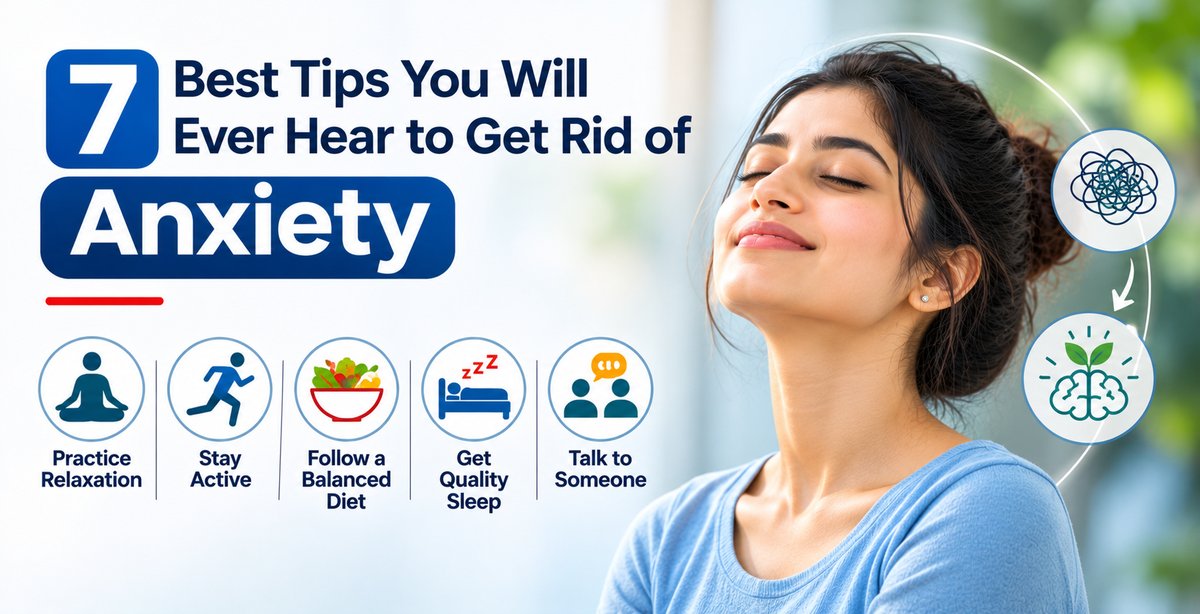
Quick answer: How to reduce anxiety in the moment: slow your breathing (try box breathing), ground yourself with your senses, step outside, sip water and eat if you skipped meals. Long term, exercise, good sleep and therapy help most. If anxiety comes with palpitations or fatigue, a thyroid test can rule out a physical cause.
Everyone feels anxious sometimes: before an exam, an interview or a doctor's report. Anxiety becomes a problem when it is frequent, out of proportion or stops you from living normally. This practical guide explains how to reduce anxiety with simple steps you can use today, what to avoid, and when anxiety needs professional help or a medical check-up.
Anxiety is your body's alarm system. When the brain senses a threat, it releases stress hormones such as adrenaline. Your heart beats faster, breathing becomes quick and shallow, muscles tighten and your stomach may churn.
This "fight or flight" response can switch on for everyday worries too, but the body can also switch it off. Most quick tips on how to reduce anxiety work by slowing your breathing, relaxing your muscles or pulling your attention back to the present.
Breathe in through your nose for a count of 4, hold for 4, breathe out slowly for 4, and hold for 4. Repeat for 4–6 rounds. Making the out-breath slightly longer than the in-breath is especially calming.
If holding your breath feels uncomfortable, simply breathe in for 4 and out for 6.
Name 5 things you can see, 4 you can touch, 3 you can hear, 2 you can smell and 1 you can taste. A shorter version, the 3-3-3 rule, asks you to name 3 things you see, 3 sounds you hear and move 3 parts of your body.
A short brisk walk, climbing stairs or even stretching uses up some of the stress hormones in your system.
Mild dehydration can cause a fast heartbeat, dizziness and tiredness that feel like anxiety. Drink a glass of water first.
The original version of this post suggested a hot beverage. Warmth is soothing, but tea, coffee, colas and energy drinks contain caffeine, which can trigger palpitations, jitteriness and worse anxiety in sensitive people. Warm milk, chamomile or other herbal teas, or plain warm water with lemon are better choices.
Low blood sugar can cause shakiness, sweating, irritability and a racing heart, which are easily confused with anxiety. If you have not eaten for hours, have a balanced snack such as fruit with a handful of nuts, or roasted chana.
People with diabetes who take insulin or certain tablets should check their sugar if these symptoms appear, because low sugar needs prompt treatment.
A warm hug, holding hands or simply sitting with someone you trust can make you feel safer.
Anxious minds produce quick, automatic negative thoughts such as "I'll fail" or "Something is wrong with my health". Write the thought down and ask: what is the evidence? What would I tell a friend who thought this? What is a more balanced view?
This is a core skill of cognitive behavioural therapy (CBT).
Spend 10 minutes writing down everything on your mind, then sort it into "can act on" and "can't control". Pick one small action for today. Expressing emotions instead of bottling them up eases mental load.
Your phone can help or hurt. Breathing and meditation apps can guide relaxation; endless scrolling and late-night news usually raise anxiety. Turn off non-essential alerts and keep the phone out of the bedroom.
Regular physical activity is one of the most reliable ways to reduce anxiety over weeks. Aim for about 150 minutes of moderate activity a week, such as brisk walking, cycling, swimming, dancing or yoga.
Poor sleep and anxiety feed each other. Keep fixed sleep and wake times, avoid caffeine after lunch and screens in the last hour before bed. Our guide to tips for healthy sleep has more ideas.
Alcohol may relax you for an hour, but anxiety often rebounds the next day. Nicotine and caffeine are stimulants. Reducing all three is one of the simplest changes for steadier moods.
The original post recommended magnesium supplements. Research on magnesium for anxiety is limited and mixed, and supplements are not right for everyone. Magnesium can interact with some medicines and may be unsafe in kidney disease.
Food sources are safer: nuts, seeds, whole grains, pulses, green leafy vegetables and bananas. Take any supplement, including magnesium, ashwagandha or herbal products, only after talking to your doctor.
| Technique | How to do it | Best for |
|---|---|---|
| Box breathing | In 4, hold 4, out 4, hold 4; repeat 4–6 times | Racing heart, sudden anxiety, before a meeting |
| 5-4-3-2-1 grounding | Name what you see, touch, hear, smell, taste | Spiralling thoughts, early panic |
| Water and a snack | Glass of water, fruit with nuts | Shakiness after skipped meals or in heat |
| Thought challenging | Write the thought, check the evidence, find a balanced view | Repeated worries, "what if" thinking |
| Regular exercise and sleep | About 150 minutes of activity a week, fixed sleep times | Long-term reduction in anxiety |
| Therapy (CBT) and medical care | Psychologist or psychiatrist | Anxiety lasting weeks or affecting daily life |
A panic attack is a sudden rush of intense fear with a pounding heart, breathlessness, chest tightness, trembling, sweating, tingling or a feeling of losing control. It usually peaks within about 10 minutes and then settles.
During an attack, remind yourself "this is panic, it will pass", slow your out-breath, and use grounding. Do not breathe into a paper bag; it is no longer recommended.
Panic and heart problems can feel alike, so never assume. Call 112 or 108, or go to the nearest emergency department, if chest pain:
Read more in is chest pain always a sign of a heart problem?
Self-help tips on how to reduce anxiety work well for mild, occasional worry. Speak to a doctor, psychologist or psychiatrist if:
In India you can call the free, 24x7 Tele-MANAS mental health helpline on 14416 (or 1-800-891-4416) to talk to a trained counsellor in your language. In an emergency, call 112.
Anxiety disorders are common and treatable. Treatment may include CBT, other talking therapies and, when needed, medicines prescribed and monitored by a doctor. Never start or stop anxiety medicines on your own. To understand the different types, read our article on anxiety disorders facts.
No blood test can diagnose anxiety. Diagnosis is based on a clinical assessment. However, some medical conditions cause symptoms that look like anxiety, and your doctor may check for them, especially if symptoms are new:
If you prefer one visit, a full body checkup package covers many of these together. Normal reports help you and your doctor focus on treating the anxiety itself.
Slow your breathing first: breathe in for 4 counts and out for 6, or use box breathing. Then ground yourself by naming things you can see, hear and touch, step into fresh air, and sip water. Most anxious surges ease within minutes once breathing slows.
The 3-3-3 rule is a simple grounding exercise: name 3 things you can see, 3 sounds you can hear, and move 3 parts of your body. It shifts attention away from worrying thoughts to the present moment. It is a coping tool, not a treatment for an anxiety disorder.
Water does not cure anxiety, but dehydration can cause a fast heartbeat, dizziness and tiredness that feel like anxiety or make it worse. Drinking enough water through the day, especially in hot weather, is a simple step that helps your body feel steadier.
Limit tea, coffee, colas and energy drinks, because caffeine can cause palpitations and jitteriness. Alcohol may seem to relax you, but anxiety often rebounds afterwards. Water, warm milk and caffeine-free herbal teas are better choices.
You cannot always tell at home. Panic attacks usually peak within about 10 minutes and often come with fear and tingling, while heart attack pain is often a pressure or heaviness that may spread to the arm, jaw or back and come with sweating or nausea. If in doubt, call 112 or go to an emergency department straight away.
No. Anxiety is diagnosed by a doctor or mental health professional through a clinical assessment. Blood tests such as TSH, CBC, blood sugar and vitamin B12 help rule out physical conditions that can cause anxiety-like symptoms.
If your doctor wants to rule out thyroid, anaemia, blood sugar or vitamin problems behind your anxiety symptoms, VIP Labs, the best pathology lab in Ahmedabad for many families since 1997, can help. Choose from our blood test in Ahmedabad options, book online for home sample collection, or visit a lab test near me centre. Reports are shared online so you can discuss them with your doctor quickly.
Disclaimer: This article is for general awareness only and is not a substitute for medical advice. Please consult a qualified doctor for diagnosis and treatment.