
Need Help?
+91 94294 10291
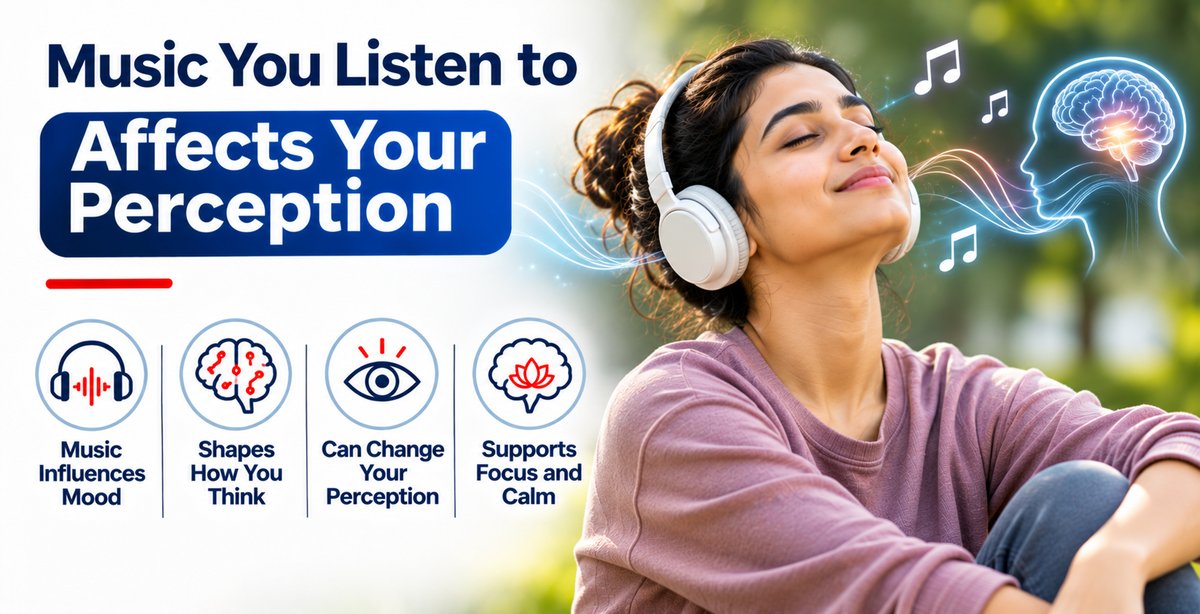
Quick answer: How music affects mood depends on what you listen to and why. Music can lift or lower your mood, ease stress, help relaxation and sleep, distract from pain and make exercise feel easier. It supports health but does not replace treatment. If low mood comes with fatigue, ask about a thyroid (TSH) test.
Most of us pick songs to match or change how we feel: devotional bhajans in the morning, upbeat tracks for a workout, soft music to wind down. Research on how music affects mood shows this is more than habit. This guide explains how music affects mood and perception, what research says about music for stress, sleep, pain, exercise and blood pressure, and how to use music wisely for your wellbeing.
When you hear music you enjoy, several brain areas work together. The auditory cortex processes sound, while emotion and memory areas such as the amygdala and hippocampus link the music to feelings and past experiences. Brain imaging studies show that pleasurable music activates the reward system and releases dopamine, the same chemical involved in food and other rewards.
Music also affects the body directly. Slow, calm music tends to slow breathing and heart rate, while fast, loud music raises arousal and energy. Tempo is a big part of how music affects mood: the same song can feel soothing at night and energising in the morning, depending on its tempo and your state.
The "goosebumps" or chills you feel at a powerful moment in a song are linked to a surge in reward-system activity. These peaks often come with an unexpected change in melody, harmony or volume, which the brain finds especially rewarding.
This was the point of our original post. In a 2011 study published in PLoS ONE, researchers Jacob Jolij and Maaike Meurs at the University of Groningen in the Netherlands played happy or sad music to volunteers. The volunteers then looked for simple happy or sad faces hidden in visual noise.
People detected faces that matched their music-induced mood more accurately. Even more interesting, when no face was shown at all, they sometimes "saw" one anyway, and the emotion of that imagined face tended to match their mood. The researchers concluded that mood does not just colour how we interpret things; it can shape what we perceive in the first place.
This was a small laboratory experiment, so it does not mean one sad song will change your whole outlook. But it supports a broader finding in psychology: our mood acts like a filter, making us notice things that fit how we already feel. Keep this in mind when you are low; the world can look worse than it really is.
| Area | What research suggests | How to use it |
|---|---|---|
| Stress and anxiety | Calm music can lower feelings of stress and anxiety, including before medical procedures | Slow, familiar music for 15–30 minutes; pair with slow breathing |
| Low mood | Music therapy added to usual care can help symptoms of depression | Use uplifting music you love; do not rely only on sad songs when low |
| Sleep | Relaxing music at bedtime may improve sleep quality in some adults | Soft, slow music at low volume; set a timer; avoid earphones all night |
| Pain | Music can reduce perceived pain and anxiety around surgery and in chronic pain | Music you choose yourself tends to work best |
| Exercise | Upbeat music can make workouts feel easier and more enjoyable | Match tempo to your pace; keep volume safe outdoors |
| Blood pressure and heart rate | Relaxing music may modestly lower heart rate and blood pressure in the short term | A helpful add-on, never a replacement for BP medicines or lifestyle change |
Listening to calm music can lower physical signs of stress such as fast breathing and heart rate. Many people find that singing, humming or chanting also helps, partly because it slows and deepens breathing. If stress often leaves you anxious, try our practical tips to reduce anxiety alongside music.
Because of how music affects mood, it can lift spirits, encourage movement and help people express emotions they find hard to put into words. Structured music therapy, delivered by a trained therapist, has shown benefit as an add-on to usual treatment for depression. Music alone is not a cure for depression; see our guide on ways to beat depression and seek professional help if low mood persists.
A bedtime routine with slow, gentle music can help you relax and fall asleep more easily. Choose instrumental music without sudden changes, keep the volume low, and use a speaker or a sleep timer instead of earphones all night. More ideas are in our healthy sleep tips.
Background music helps some people concentrate on repetitive tasks, while songs with lyrics can distract during reading or study. Learning an instrument or singing in a group challenges memory, coordination and attention, which is good exercise for the brain at any age. See our steps to improve brain health.
Upbeat music can distract from tiredness and help you keep a steady rhythm while walking, running or cycling. It is a simple way to make movement a habit; read about the advantages of walking daily.
Music therapy is a clinical approach in which a trained music therapist uses listening, singing, playing instruments or songwriting to meet health goals. It is used in hospitals, rehabilitation centres, schools and elder care. Research supports its use for anxiety, low mood, pain, dementia care and stroke rehabilitation, and for helping children with autism communicate.
Music therapy is different from simply listening to a playlist, though both draw on how music affects mood. It is tailored to each person and has measurable goals, and it is usually given alongside, not instead of, medical treatment.
Music is a helpful self-care tool, but it is not enough if you have a mental health condition. Speak to a doctor or mental health professional if:
No blood test can measure your mood or diagnose depression. But some physical conditions cause tiredness, poor sleep and low mood, and a doctor may suggest checking them:
For a complete picture, a Fit India basic body profile covers many of these tests together.
Music activates the brain's emotion, memory and reward systems and can release dopamine. Fast, upbeat music tends to raise energy, while slow, calm music tends to relax the body. Your personal memories and preferences also strongly shape how a song makes you feel.
Yes, to some extent. In a 2011 University of Groningen study, people who listened to happy or sad music were better at spotting faces that matched their mood, and sometimes imagined mood-matching faces in random noise. Mood acts like a filter on what we notice.
Slow, calm music that you personally like usually works best, often instrumental music with a steady rhythm. Familiar devotional or classical music helps many people. Combining it with slow breathing for 15 to 30 minutes increases the relaxing effect.
Not usually. Many people find sad music comforting and it can help process emotions. But if you are depressed and keep listening to sad music while dwelling on negative thoughts, it may deepen low mood, so balance it with uplifting music and other support.
Relaxing music as part of a bedtime routine may help some adults fall asleep faster and sleep better. Choose soft, slow music at low volume and use a timer or speaker instead of earphones all night to protect your ears.
Music therapy delivered by a trained therapist can reduce symptoms of depression when added to usual care, such as counselling or medicines. It is not a stand-alone cure. Anyone with persistent low mood should see a doctor or mental health professional.
If low mood, poor sleep or tiredness persist, it is worth ruling out physical causes. VIP Labs, the best pathology lab in Ahmedabad for many families, offers thyroid, vitamin B12, vitamin D and diabetes tests plus a full body checkup in Ahmedabad. Visit a lab test centre near me or book home blood collection in Ahmedabad.
Disclaimer: This article is for general awareness only and is not a substitute for medical advice. Please consult a qualified doctor for diagnosis and treatment.