
Need Help?
+91 94294 10291
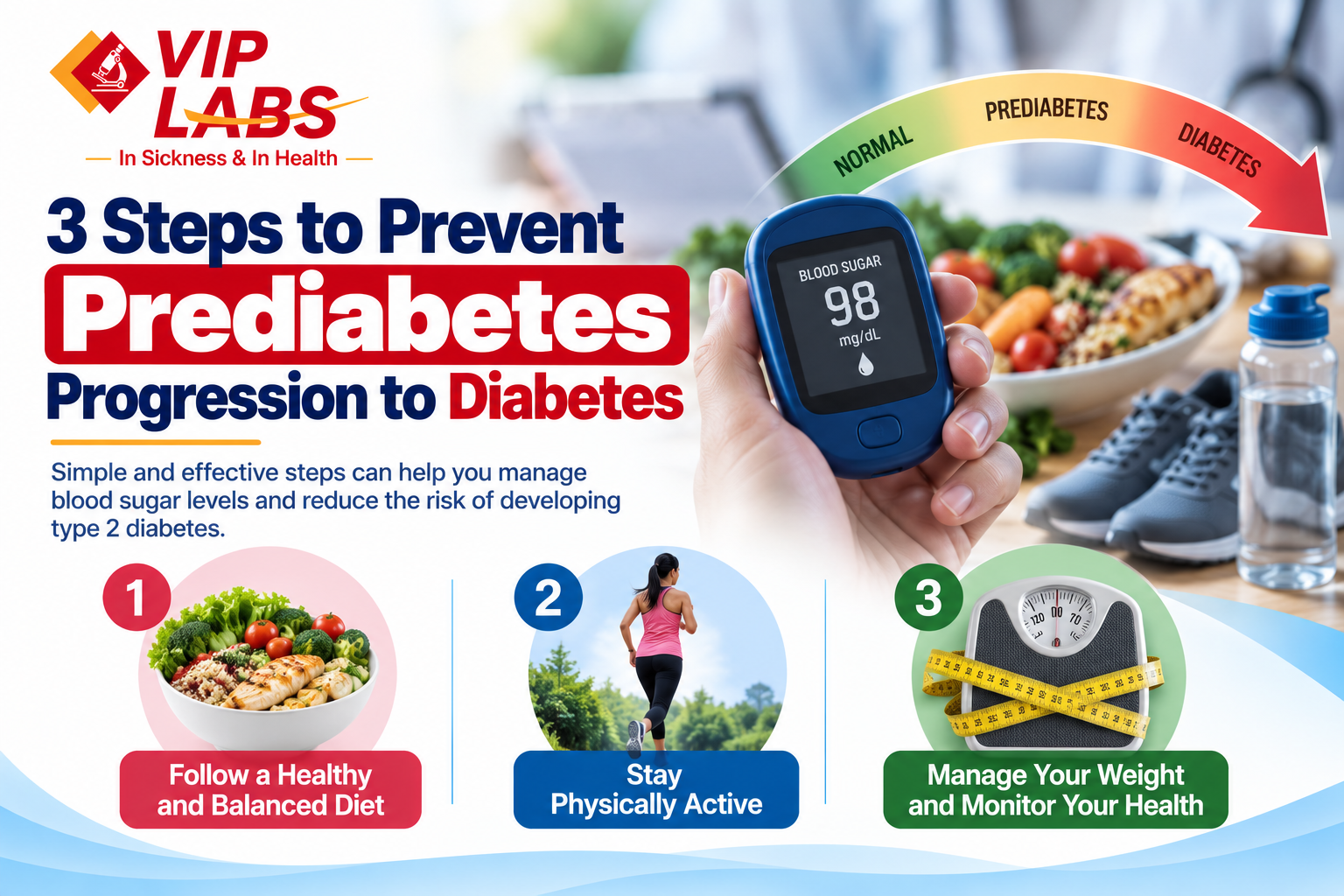
Quick answer: How to reverse prediabetes: eat a balanced, lower-sugar diet with controlled portions, do at least 150 minutes of brisk activity a week, and lose 5–7% of your body weight if you are overweight. Then recheck your HbA1c level or fasting sugar as your doctor advises. These steps can bring sugar back to normal or delay type 2 diabetes.
Prediabetes means your blood glucose is higher than normal but not yet high enough to be called diabetes. It raises your risk of type 2 diabetes, heart disease and stroke, but it is also an opportunity: small, consistent lifestyle changes can make a big difference. If you have prediabetes, focusing on diet, physical activity, weight and regular medical follow-up puts you back in control of your health.
This guide explains how to reverse prediabetes, or at least stop it from progressing, in three practical steps, plus the tests used to track your progress.
Prediabetes is a warning stage, not a diagnosis of diabetes. Without changes, many people with prediabetes go on to develop type 2 diabetes within a few years. With changes, many do not.
The best-known evidence comes from the US Diabetes Prevention Program, in which people at high risk who lost about 7% of their body weight and walked briskly for 150 minutes a week cut their risk of developing type 2 diabetes by about 58% over three years. Similar lifestyle studies in India and China showed comparable benefits. Lifestyle change worked better than medicine alone in that trial.
For people at high risk, structured diabetes prevention programmes, run by doctors, dietitians or diabetes educators, can provide extra support with nutrition, activity, weight management and keeping the changes going long term. You can read more about the condition itself in our guide to what prediabetes means.
What you eat plays a central role in managing blood sugar and body weight. Instead of extreme or crash diets, focus on sustainable eating habits that you can follow for years.
Eating fewer calories and choosing better-quality foods supports weight loss and helps prevent or delay type 2 diabetes. You do not need to cut out a whole food group. The goal is a balanced eating pattern that supports your overall health and that you can keep up consistently. Our post on white foods to avoid or limit gives more practical swaps.
Regular physical activity is the second key step in preventing prediabetes from progressing to diabetes. Exercise helps your muscles use glucose more effectively, improves insulin sensitivity and supports healthy weight management, even before you lose any weight.
The commonly recommended goal for people with prediabetes, used by the US CDC and WHO, is at least 150 minutes of moderate physical activity a week, such as brisk walking. That works out to about 30 minutes a day, five days a week. Adding muscle-strengthening exercise (bodyweight squats, resistance bands, yoga postures that build strength) on two days a week gives extra benefit.
If you are currently inactive, you do not need to reach this goal immediately. Start with what you can manage, such as 10 minutes after each meal, and build up gradually.
The most useful form of exercise is the one you can do safely and keep doing regularly. Read more about the advantages of walking and the effects of an inactive lifestyle. If you have heart disease, joint problems or another medical condition, or have not exercised for a long time, ask your doctor what type and amount of activity is right for you.
If you are overweight and have prediabetes, even modest weight loss can lower your risk of type 2 diabetes. Research on diabetes prevention shows that losing around 5% to 7% of your starting body weight, together with more physical activity, significantly reduces diabetes risk in people at high risk.
For example, if you weigh 80 kg, losing about 4 to 5.6 kg would be 5% to 7% of your starting weight. Waist size matters too: Indian men with a waist above 90 cm and women above 80 cm carry extra risk even at a normal BMI, because South Asians tend to store fat around the abdomen.
Weight-loss goals should be individual. You do not need drastic changes or crash diets; gradual, sustainable changes of about half to one kilogram a week are more realistic and more likely to last.
Monitoring is a key part of how to reverse prediabetes, because it shows whether your efforts are working. Your doctor may recommend repeating an HbA1c (A1C) test or a fasting blood sugar test, usually every 6 to 12 months, depending on your situation. Regular follow-up shows whether your blood sugar is improving, staying stable or moving towards the diabetes range.
VIP Labs offers Fit India Body Profile packages that combine several health tests and body-composition measurements in one check-up. Options include the Fit India Mini, Basic, Essential and Advance Body Profiles, so you can choose a package based on your monitoring needs. The Fit India Mini Body Profile (66 tests, ₹999 at the time of writing), for example, includes blood sugar, cholesterol and lipid parameters, kidney and liver parameters, and body-composition measurements such as BMI, body fat, visceral fat, body water and muscle weight. For a wider panel, see the Fit India Basic Body Profile. Check the package page for the current list of tests and price.
Doctors use blood glucose tests to identify prediabetes and to monitor it. The common tests are the HbA1c test, the fasting blood sugar (FBS) test and the oral glucose tolerance test (OGTT). The HbA1c, or glycosylated haemoglobin test, estimates your average blood glucose over roughly the previous three months, so it does not need fasting.
| Test | Normal | Prediabetes | Diabetes |
|---|---|---|---|
| HbA1c test | Below 5.7% | 5.7% to 6.4% | 6.5% or higher |
| Fasting blood sugar (8–10 hours fasting) | Below 100 mg/dL | 100 to 125 mg/dL | 126 mg/dL or higher |
| 2-hour OGTT or post-prandial blood sugar | Below 140 mg/dL | 140 to 199 mg/dL | 200 mg/dL or higher |
A diagnosis of diabetes is usually confirmed with a repeat test unless symptoms are obvious, and it should be made by a qualified doctor. Some people also benefit from a fasting insulin test to look at insulin resistance, and a lipid profile, because prediabetes often comes with high triglycerides and low HDL. For a full explanation of sugar numbers, see our blood sugar levels guide. If you have been told you have prediabetes, discuss your results and follow-up schedule with your doctor.
Yes, often. Knowing how to reverse prediabetes is useful only if you act on it: prediabetes can return to a normal blood sugar range when people make effective lifestyle changes, although results vary from person to person. Age, family history, how long sugar has been raised and how much weight is lost all play a part.
Healthy eating, regular physical activity, weight management and medical follow-up improve blood sugar levels and lower the risk of type 2 diabetes. Even when your numbers do not fully normalise, these changes slow progression and protect your heart.
Keep up these habits even after your blood sugar improves. If you go back to old habits, sugar levels usually rise again. Some high-risk people may also be offered medicine by their doctor; lifestyle change remains the foundation.
See a doctor promptly if you have prediabetes or risk factors and notice any of the following:
Also get screened if you are over 30 to 35, overweight, have a family history of diabetes, high blood pressure, PCOS or a history of gestational diabetes, even if you feel well.
Start with small changes rather than trying to change everything at once. For example:
Prediabetes is an important warning sign, but it does not mean type 2 diabetes is unavoidable. To sum up the three key steps: follow a healthy, balanced diet; stay physically active; and manage your weight while monitoring your health regularly. Even modest changes make a meaningful difference. Work with your doctor to build a plan that suits your health, lifestyle and needs.
Many people see lower fasting sugar and HbA1c within three to six months of consistent diet change, regular exercise and weight loss. HbA1c reflects about three months of sugar levels, so doctors usually recheck it after three to six months. Results vary from person to person.
Yes. Without lifestyle changes, many people with prediabetes go on to develop type 2 diabetes. Progression can often be prevented or delayed by healthy eating, regular activity, weight loss and regular medical follow-up.
Aim for at least 150 minutes of moderate activity a week, such as brisk walking, which is about 30 minutes on five days. Adding strength exercises twice a week helps further. Start slowly if you are inactive and check with your doctor if you have other health problems.
Focus on an overall balanced pattern rather than banning single foods. Limit sugary drinks, sweets, refined flour (maida), large portions of white rice, fried snacks and highly processed foods, and eat more vegetables, dals, whole grains and protein.
An HbA1c of 5.7% to 6.4% is in the prediabetes range, below 5.7% is normal and 6.5% or higher is in the diabetes range. A fasting sugar of 100 to 125 mg/dL also indicates prediabetes. Your doctor should confirm the diagnosis.
Most doctors advise repeating HbA1c or fasting blood sugar every 6 to 12 months, or sooner after major lifestyle changes or if symptoms appear. The right schedule depends on your risk factors and previous results, so ask your doctor when to retest.
VIP Labs has served Ahmedabad since 1997 as a pathology lab in Ahmedabad, with 20+ centres across Ahmedabad and Gandhinagar and same-day reports for routine tests. You can compare full body checkup packages or book a blood test online with free home sample collection for tests above ₹500. Prefer to walk in? Find a lab test centre near you.
Disclaimer: This article is for general awareness only and is not a substitute for medical advice. Please consult a qualified doctor for diagnosis and treatment.