
Need Help?
+91 94294 10291
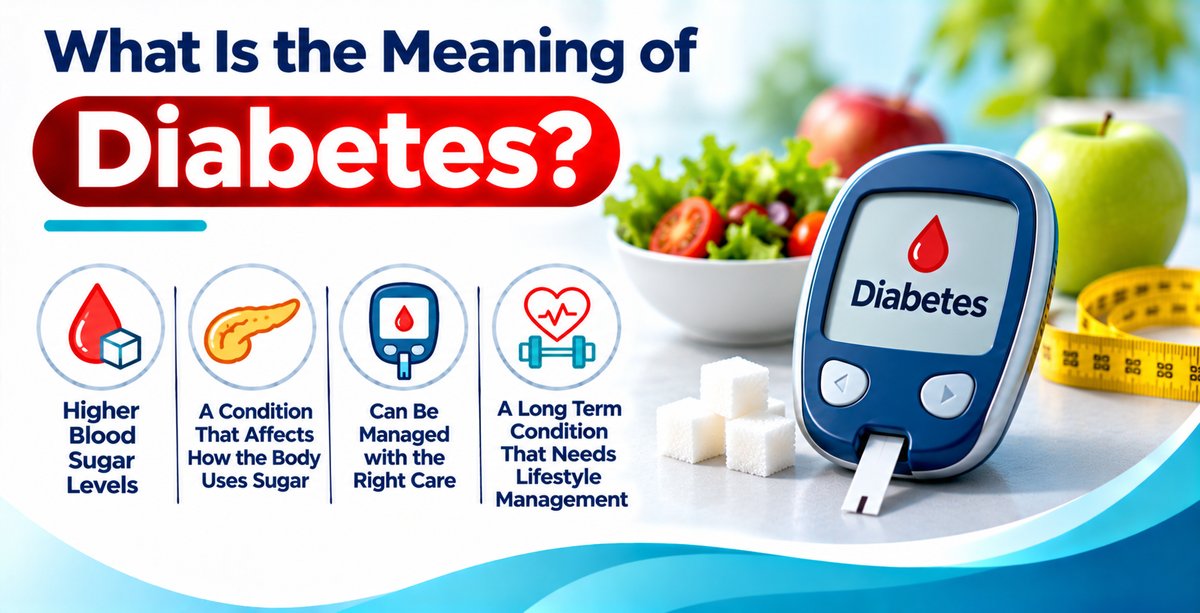
Quick answer: What is diabetes? Diabetes is a long-term condition in which blood sugar (glucose) stays too high because the pancreas makes too little insulin, or the body cannot use insulin properly. Over years, high sugar damages the heart, kidneys, eyes and nerves. It is diagnosed with simple blood tests such as HbA1c and fasting glucose, and it can be well controlled.
Diabetes (diabetes mellitus) is one of the most common long-term health problems in India. Many people have it for years without knowing, because early diabetes often causes no symptoms. This guide answers "what is diabetes" in simple words: how it works, early signs, complications, how it is diagnosed and what you can do to prevent or control it.
The food you eat, especially rice, roti, sweets and other carbohydrates, is broken down into glucose. Glucose enters the blood and is the main fuel for your cells.
Insulin is a hormone made by beta cells in the pancreas. It works like a key that lets glucose move from the blood into muscle, fat and liver cells. In diabetes, either the key is missing (too little insulin) or the lock does not work well (insulin resistance). Glucose then builds up in the blood instead of being used.
The word "mellitus" means "sweet", because untreated diabetes spills sugar into the urine. It is different from diabetes insipidus, a rare hormone condition that causes heavy urination but has nothing to do with blood sugar.
Short spells of high sugar after a meal are normal. When sugar stays high for months and years, it damages the lining of blood vessels and nerves. This is why diabetes is a leading cause of heart attack, stroke, kidney failure, blindness and leg amputation, and why early detection is so valuable.
The ICMR-INDIAB study, published in 2023, estimated that about 101 million Indians have diabetes and about 136 million more have prediabetes. Gujarat, like other urban and semi-urban regions, has a high burden.
Indians tend to develop type 2 diabetes at a younger age and at a lower body weight than Western populations, partly because of more abdominal (belly) fat. That is why screening is advised from a younger age in India.
There are several types of diabetes. The table gives a short overview; our detailed post on types of diabetes covers each one, including rarer forms such as LADA and MODY.
| Type | What happens | Who usually gets it |
|---|---|---|
| Type 1 diabetes | The immune system destroys insulin-making cells; insulin injections are essential | Often children and young adults, but can occur at any age |
| Type 2 diabetes | Insulin resistance plus gradually falling insulin output | Most adults with diabetes (about 9 in 10 cases); linked to weight, inactivity and family history |
| Gestational diabetes | High sugar first found in pregnancy | Pregnant women; raises later risk of type 2 for mother and child |
| Prediabetes | Sugar above normal but below the diabetes range | People at high risk; often reversible with lifestyle change |
If your sugar is in the borderline zone, read what prediabetes means and how it is managed.
To understand what is diabetes in your own case, it helps to know the cause. Type 1 diabetes is an autoimmune condition; it is not caused by eating sugar. Type 2 diabetes develops from a mix of genes and lifestyle. Common risk factors for type 2 diabetes include:
Many people with type 2 diabetes have no symptoms for years. When symptoms appear, the common ones are:
Type 1 diabetes usually starts more suddenly, over weeks, and can quickly lead to a serious state called diabetic ketoacidosis.
Good sugar control greatly lowers the risk of complications. Poorly controlled diabetes can lead to:
Knowing what is diabetes on paper is one thing; confirming it needs lab blood tests, not symptoms or a home glucometer alone. In brief, diabetes is confirmed by a fasting glucose of 126 mg/dL (7.0 mmol/L) or more, an HbA1c of 6.5% or more, or a 2-hour glucose tolerance value of 200 mg/dL (11.1 mmol/L) or more. Without symptoms, a second abnormal result is needed.
For the full table of normal, prediabetes and diabetes ranges, see our blood sugar levels chart.
Get tested if you have symptoms, or if you are over 30 and have any risk factor above. Adults without risk factors are commonly advised to start screening by 35–45. If results are normal, repeat at least every 3 years, or yearly if you are at high risk. Pregnant women are screened for gestational diabetes.
See a doctor soon if you notice the symptoms listed above or if a test shows high sugar. Seek emergency care (call 108) for:
These tests help diagnose diabetes and check how it is affecting your body:
Our diabetes test guide for Ahmedabad explains preparation in detail.
Type 1 diabetes always needs insulin. Type 2 diabetes is treated with lifestyle changes and, when needed, tablets, newer injectable medicines or insulin, as decided by your doctor. Never start, stop or change diabetes medicines on your own.
Diabetes control rests on four pillars: a balanced diet, regular physical activity, medicines when prescribed, and regular monitoring with HbA1c every 3–6 months plus yearly kidney, lipid, eye and foot checks. Some people with type 2 diabetes, especially soon after diagnosis, can bring sugar back to the normal range (remission) through significant weight loss, but they still need regular follow-up.
Type 1 diabetes is caused by the immune system destroying insulin-making cells in the pancreas. Type 2 diabetes, the most common type, is caused by insulin resistance combined with reduced insulin output, driven by genes, excess weight, inactivity and unhealthy diet.
The most common early signs are frequent urination, excessive thirst, increased hunger, unexplained weight loss, tiredness, blurred vision and slow-healing wounds. Many people with type 2 diabetes have no symptoms, so a blood test is the only reliable way to know.
There is no permanent cure for type 1 or type 2 diabetes yet. However, type 2 diabetes can sometimes go into remission with significant weight loss and lifestyle change, and both types can be controlled well enough to prevent most complications.
Eating sugar does not directly cause diabetes. But a diet high in sugar, sugary drinks and refined carbohydrates promotes weight gain and insulin resistance, which raises the risk of type 2 diabetes.
A normal fasting blood sugar is below 100 mg/dL (5.6 mmol/L), a normal value 2 hours after a glucose drink is below 140 mg/dL (7.8 mmol/L), and a normal HbA1c is below 5.7%. Values above these may indicate prediabetes or diabetes.
Fasting blood sugar and HbA1c are the most commonly used tests, and doctors often order them together. An oral glucose tolerance test (OGTT) is more sensitive and is used in pregnancy or when results are borderline.
If you have symptoms or risk factors, a simple blood test in Ahmedabad can tell you where you stand. Many families consider VIP Labs the best pathology lab in Ahmedabad for its MD pathologists and reliable reports. Choose from our health checkup packages, or book online for home blood collection in Ahmedabad.
Disclaimer: This article is for general awareness only and is not a substitute for medical advice. Please consult a qualified doctor for diagnosis and treatment.