
Need Help?
+91 94294 10291
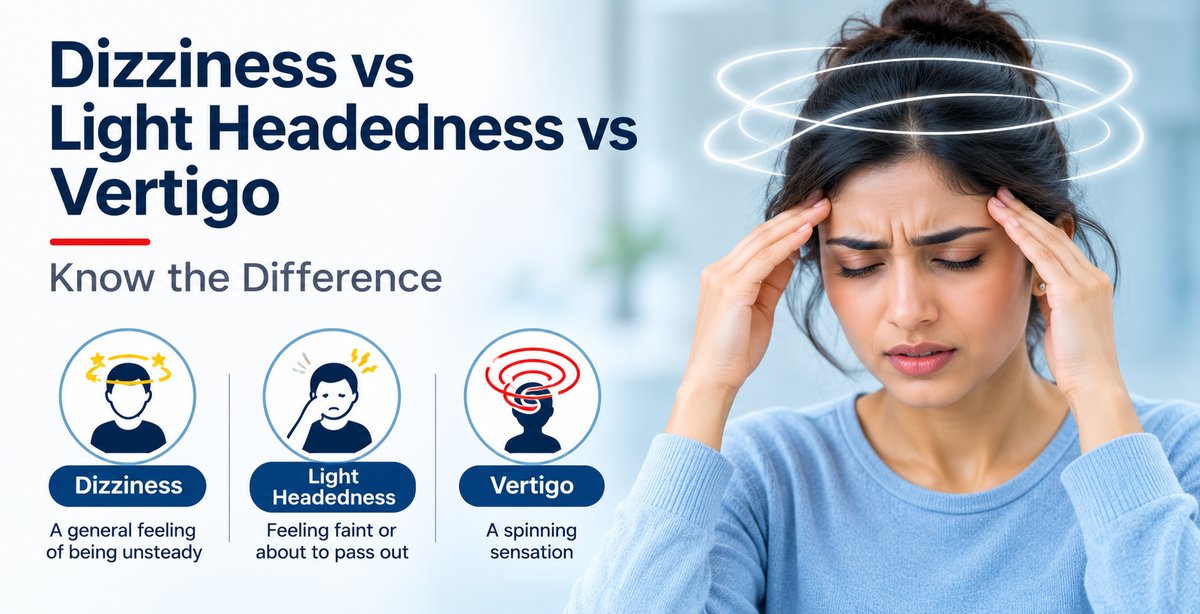
Quick answer: Vertigo vs dizziness comes down to one thing: vertigo is a false feeling that you or the room is spinning, while dizziness is a broad term that also covers feeling faint (light-headedness) and feeling unsteady (disequilibrium). Simple tests such as a CBC blood test and blood sugar can help find common causes.
People say "I feel dizzy" for very different feelings: the room whirling, nearly fainting, or feeling wobbly on their feet. Understanding vertigo vs dizziness helps you describe it correctly, which is the first step towards the right diagnosis and tests.
Dizziness is an umbrella word for feeling off-balance, woozy or faint. Vertigo is one specific type of dizziness in which you feel movement that is not really happening – usually spinning, tilting or swaying.
Doctors usually sort dizzy feelings into three groups: vertigo, light-headedness (pre-syncope, or feeling about to faint) and disequilibrium (unsteadiness while standing or walking).
Vertigo is an illusion of motion. It usually comes from a problem in the inner ear (the balance organ, called the vestibular system) or, less commonly, in the brain areas that process balance. It is often worse with head movement and may come with nausea, vomiting or hearing changes.
Light-headedness is the feeling that you might faint or "black out". Vision may grey out and lying down usually helps. It typically means the brain is briefly getting less blood, oxygen or sugar than it needs – for example due to a drop in blood pressure, dehydration, anaemia or low blood sugar.
Disequilibrium is a feeling of being unsteady or off-balance, mostly while walking or standing, without a spinning sensation. It is more common in older adults and can result from nerve damage in the feet (neuropathy), weak muscles, poor eyesight or medicines.
| Type | What it feels like | Common causes | Useful clues and tests |
|---|---|---|---|
| Dizziness (general term) | Any woozy, faint, off-balance or "swimmy" feeling | Any of the causes below, plus anxiety, poor sleep, medicines | Describe the exact sensation to your doctor; basic blood tests as advised |
| Vertigo | You or the room spinning, tilting or rocking | BPPV, vestibular neuritis, labyrinthitis, Meniere's disease, vestibular migraine, rarely stroke | Worse with head movement; ear and eye examination; positional tests in the clinic |
| Light-headedness | About to faint, vision greying, weakness, sweating | Low blood pressure on standing, dehydration, anaemia, low blood sugar, heart rhythm problems | Blood pressure lying and standing; haemoglobin test, blood sugar, electrolytes; ECG if heart is suspected |
| Disequilibrium | Unsteady, wobbly while walking or standing, no spinning | Nerve damage (diabetes, B12 deficiency), weak muscles, poor vision, medicines, ageing | Neurological examination; vitamin B12 test, HbA1c, thyroid tests |
BPPV is the most common cause of vertigo. Tiny calcium crystals in the inner ear shift out of place, so turning in bed, looking up or bending down triggers short bursts of spinning that last less than a minute. It is not dangerous and usually responds well to repositioning manoeuvres.
Inflammation of the balance nerve or inner ear, often after a viral infection, can cause sudden, severe vertigo lasting a day or more, with nausea and vomiting. Labyrinthitis may also affect hearing. Most people recover over days to weeks.
Meniere's disease causes repeated attacks of vertigo with ringing, a full feeling in the ear and fluctuating hearing loss. Vestibular migraine causes episodes of vertigo with or without headache, often with sensitivity to light or sound.
Less commonly, vertigo comes from the brain – stroke, mini-stroke (TIA) or multiple sclerosis – usually with other neurological signs.
In the vertigo vs dizziness question, your answers to these points often reveal the cause before any test is done.
Most episodes of dizziness are harmless, but some are emergencies. Go to an emergency department or call an ambulance immediately if dizziness or vertigo comes with any of the following:
See a doctor soon if dizziness keeps returning, lasts more than a few days, started after a new medicine, or comes with tiredness, pale skin or tingling feet.
Most vertigo is diagnosed by examination, not a blood test. Blood tests are useful mainly for light-headedness and disequilibrium, where they can find treatable causes. Your doctor may advise some of the following, all available as a blood test in Ahmedabad at VIP Labs:
Your doctor may also suggest an ECG, hearing test or brain MRI. Normal blood tests do not rule out ear or heart causes.
Treatment depends on the cause, so the vertigo vs dizziness distinction matters.
Do not start or stop any medicine on your own. Your doctor will choose the right treatment and dose for you.
If you feel that you or the room is spinning or moving, it is vertigo. If you feel faint, weak or about to pass out, it is light-headedness. If you feel unsteady only while standing or walking, it is disequilibrium. All three are types of dizziness.
The most common cause is BPPV (benign paroxysmal positional vertigo), where tiny crystals in the inner ear move out of place. It causes brief spinning when you turn in bed, look up or bend down.
Common tests are a complete blood count for anaemia, fasting or random blood sugar and HbA1c, thyroid tests (TSH), vitamin B12 and serum electrolytes. Vertigo from the inner ear is diagnosed mainly by examination, not blood tests.
Yes. Anaemia reduces oxygen delivery to the brain and can cause light-headedness, tiredness and breathlessness. Vitamin B12 deficiency can cause anaemia and also damage nerves, leading to unsteadiness and tingling.
Dizziness is an emergency if it comes suddenly with weakness, numbness, slurred speech, double vision, trouble walking or a severe headache, as these can be signs of a stroke. Fainting with chest pain, palpitations or breathlessness also needs urgent care. Call an ambulance immediately.
Low blood pressure, especially a drop when standing up, commonly causes light-headedness. Very high blood pressure is usually silent but can cause dizziness in some people, and blood pressure medicines can also make you dizzy.
If you keep feeling dizzy, light-headed or unsteady, simple blood tests can help your doctor rule out anaemia, sugar, thyroid, vitamin B12 and electrolyte problems. VIP Labs is a trusted pathology lab in Ahmedabad. Visit a pathology lab near you, or book home blood collection in Ahmedabad online.
Disclaimer: This article is for general awareness only and is not a substitute for medical advice. Please consult a qualified doctor for diagnosis and treatment.