Quick Book

Is Fasting Required for Every Blood Test?

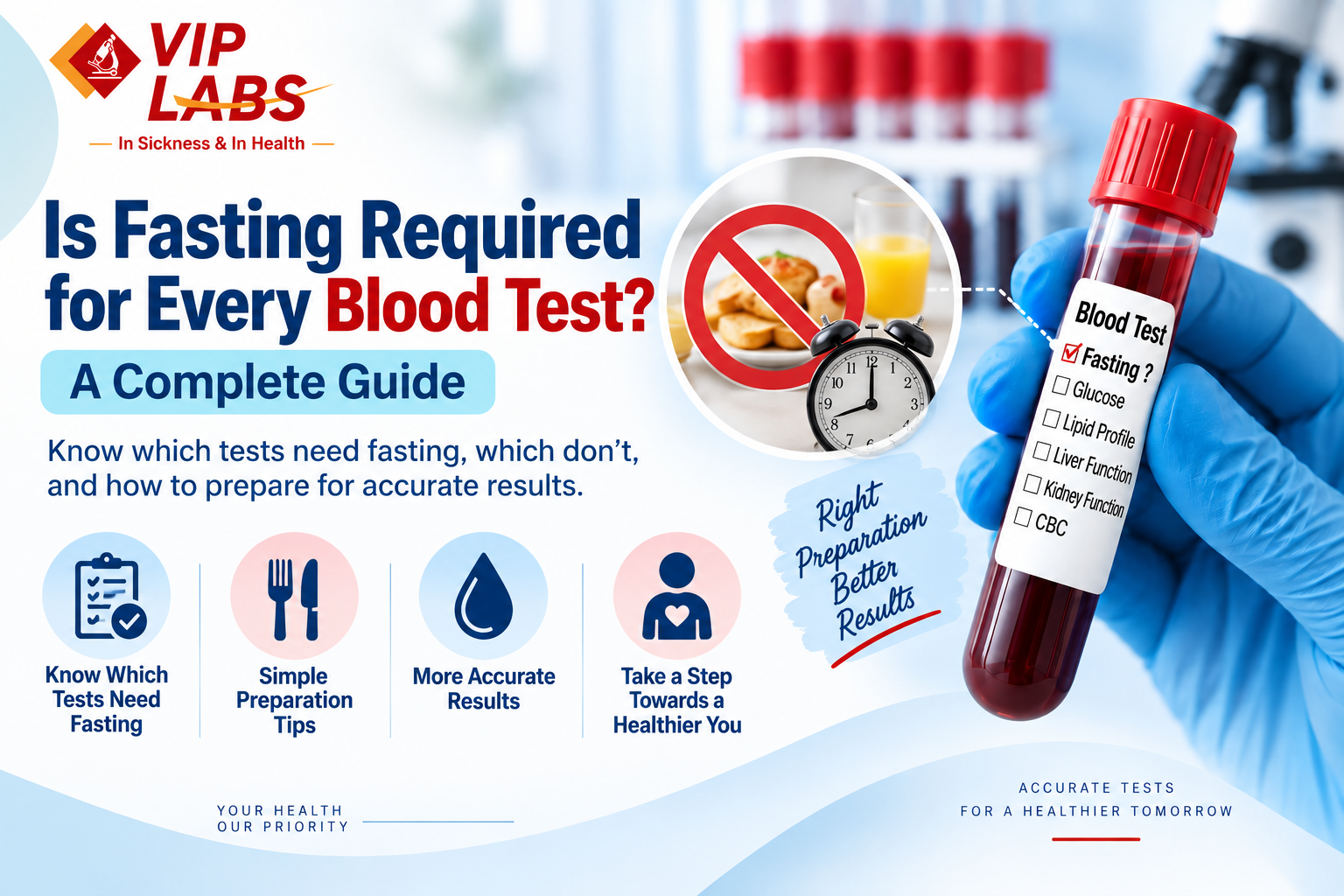
Is Fasting Required for Every Blood Test?
Many people believe that they must always provide a blood sample on an empty stomach. However, fasting is not required for every laboratory or blood test. The preparation needed depends on the specific test, the combination of tests ordered, and the instructions provided by your doctor or laboratory.
 
For some tests, eating or drinking shortly before sample collection can affect certain measurements. For others, fasting is unnecessary and may not provide any additional benefit.
 
Therefore, it is important to know which blood tests require fasting and which can be performed without fasting.


What Does Fasting Before a Blood Test Mean?

Fasting generally means not eating or drinking anything except plain water for a specified period before the blood sample is collected.
 
For tests that require fasting, the fasting period is commonly around 8–12 hours, although the exact duration depends on the test and your healthcare provider's instructions.
 
During a fasting period, you may generally be advised to avoid:
  • Food
  • Tea and coffee
  • Juice
  • Soft drinks
  • Milk
  • Chewing gum
  • Smoking
  • Strenuous exercise
Plain water is generally allowed and can help you stay hydrated before blood collection.


Why Is Fasting Required for Some Blood Tests?

After you eat, nutrients such as glucose, fats, proteins and other substances enter your bloodstream. These changes can affect the measurement of certain substances in a blood sample.
 
For tests that are affected by food intake, fasting can help provide a more consistent sample and improve the usefulness of the results.
 
However, fasting when it has not been requested is not necessarily better. Some tests do not require fasting, and unnecessary fasting may make the test more difficult or uncomfortable.


Which Blood Tests May Require Fasting?

Some commonly performed tests may require fasting depending on the specific test and the reason it has been ordered.

1. Fasting Blood Glucose Test

A fasting blood glucose test measures blood sugar after a period without food. It generally requires at least 8 hours of fasting.
 
However, not every glucose test requires fasting. For example:
  • Random blood glucose – no fasting required
  • HbA1c – no fasting required
  • Fasting blood glucose – fasting required
  • Oral glucose tolerance test (OGTT) – fasting is required
Therefore, always check which glucose test has been prescribed.


2. Lipid Profile or Cholesterol Test

A lipid profile measures substances such as cholesterol and triglycerides.
 
Depending on the test and clinical situation, your healthcare provider may ask you to fast before the sample is collected. MedlinePlus lists cholesterol/lipid testing among tests that may require fasting.
 
If your doctor or laboratory specifically instructs you to fast, follow those instructions carefully.


3. Basic or Comprehensive Metabolic Tests

Some metabolic panels may require fasting, particularly when glucose and other measurements are being assessed together.
 
Whether fasting is required depends on the specific panel and the healthcare provider's instructions.
 

4. Some Liver and Kidney Function Tests

Certain liver or renal function tests may sometimes be performed after fasting, particularly when they are included as part of a larger group of tests.
 
However, not every liver or kidney test requires fasting. The required preparation depends on the exact test or panel ordered.
 

Which Common Blood Tests Usually Do Not Require Fasting?

Many routine blood tests can be performed without fasting.


Complete Blood Count (CBC)

A CBC or hemogram generally does not require special preparation. However, if your doctor orders other tests along with the CBC, you may need to fast because of those additional tests.


HbA1c Test

An HbA1c test measures average blood glucose levels over approximately the previous three months and generally does not require fasting.


Random Blood Glucose

A random blood glucose test can be performed at any time and does not require fasting.


Many Other Laboratory Tests

Many blood tests and other laboratory tests do not require fasting or special preparation. However, preparation requirements can vary according to the specific test.
 
Important: This table is a general guide. Your doctor or laboratory may provide specific preparation instructions based on the tests ordered.
Laboratory Test Is Fasting Usually Required?
Fasting Blood Glucose Yes
Oral Glucose Tolerance Test (OGTT) Yes
Random Blood Glucose No
HbA1c No
CBC / Hemogram Usually No
Lipid Profile May be required depending on test/instructions
Basic Metabolic Panel May be required
Liver Function Tests Depends on the test/panel
Kidney/Renal Function Tests Depends on the test/panel

How Long Should You Fast Before a Blood Test?

When fasting is required, the duration is commonly 8–12 hours, but it varies depending on the test.
 
Your healthcare provider or laboratory should tell you exactly how long you need to fast.
 
For example, a fasting blood glucose test generally requires at least 8 hours of fasting.
 
Scheduling a fasting test in the morning can make the process easier because most of the fasting period occurs while you are sleeping.
 

Can You Drink Water While Fasting?

Plain water is generally allowed during a blood-test fast.
 
In fact, staying adequately hydrated may make blood collection easier because it can help maintain fluid in the veins.
 
However, avoid beverages such as:
  • Tea
  • Coffee
  • Milk
  • Juice
  • Soft drinks
  • Sweetened beverages
unless your healthcare provider specifically gives different instructions.
 

Can You Take Medicines During Fasting?

Do not stop prescription medicines simply because you are fasting.
 
Some medicines can affect laboratory results, while certain medications may need specific instructions before particular tests. Tell your healthcare provider or laboratory professional about the medicines, vitamins and supplements you take.
 
If you are unsure whether you should take a medicine before your test, ask your healthcare provider.
 

What If You Accidentally Eat Before a Fasting Blood Test?

If you have been instructed to fast but accidentally eat or drink something other than water, inform the laboratory or healthcare provider before your sample is collected.
 
Depending on the test, you may need to reschedule the test to obtain an appropriate fasting sample.
 
Do not simply assume that the test can proceed without informing the laboratory.
 

Why You Should Not Fast Unless It Is Required

Fasting is useful when a particular test requires it, but unnecessary fasting is not recommended.
 
MedlinePlus specifically advises that you should not fast if your healthcare provider has not instructed you to do so, because fasting can affect some test results as well.
 
The best approach is simple:
 
Follow the preparation instructions for the specific laboratory test you are having.
 

Frequently Asked Questions

1. Is fasting required for every blood test?
 
No. Many blood tests do not require fasting. Fasting is necessary for certain tests, such as fasting blood glucose and some lipid or metabolic testing, depending on the instructions.
 
2. Can I drink water before a fasting blood test?
 
Yes, plain water is generally allowed during a fasting blood test. Avoid other beverages unless your healthcare provider gives different instructions.
 
3. Does a CBC test require fasting?
 
Usually, no. A CBC generally requires no special preparation. However, fasting may be necessary if other tests are ordered at the same time.
 
4. Does HbA1c require fasting?
 
No. HbA1c generally does not require fasting.
 
5. How many hours should I fast before a blood test?
 
When fasting is required, it is commonly 8–12 hours, but the exact duration depends on the test. Follow the instructions provided by your healthcare provider or laboratory.


Conclusion

Not every laboratory test requires a fasting blood sample. The need for fasting depends on the specific test and the instructions provided by your doctor or laboratory.
 
Tests such as fasting blood glucose and certain lipid or metabolic tests may require fasting, while tests such as CBC, HbA1c and random blood glucose generally do not require fasting.
 
Before visiting a diagnostic laboratory, always confirm the preparation requirements for your particular tests. Proper preparation can help ensure that your laboratory results are as accurate and useful as possible.