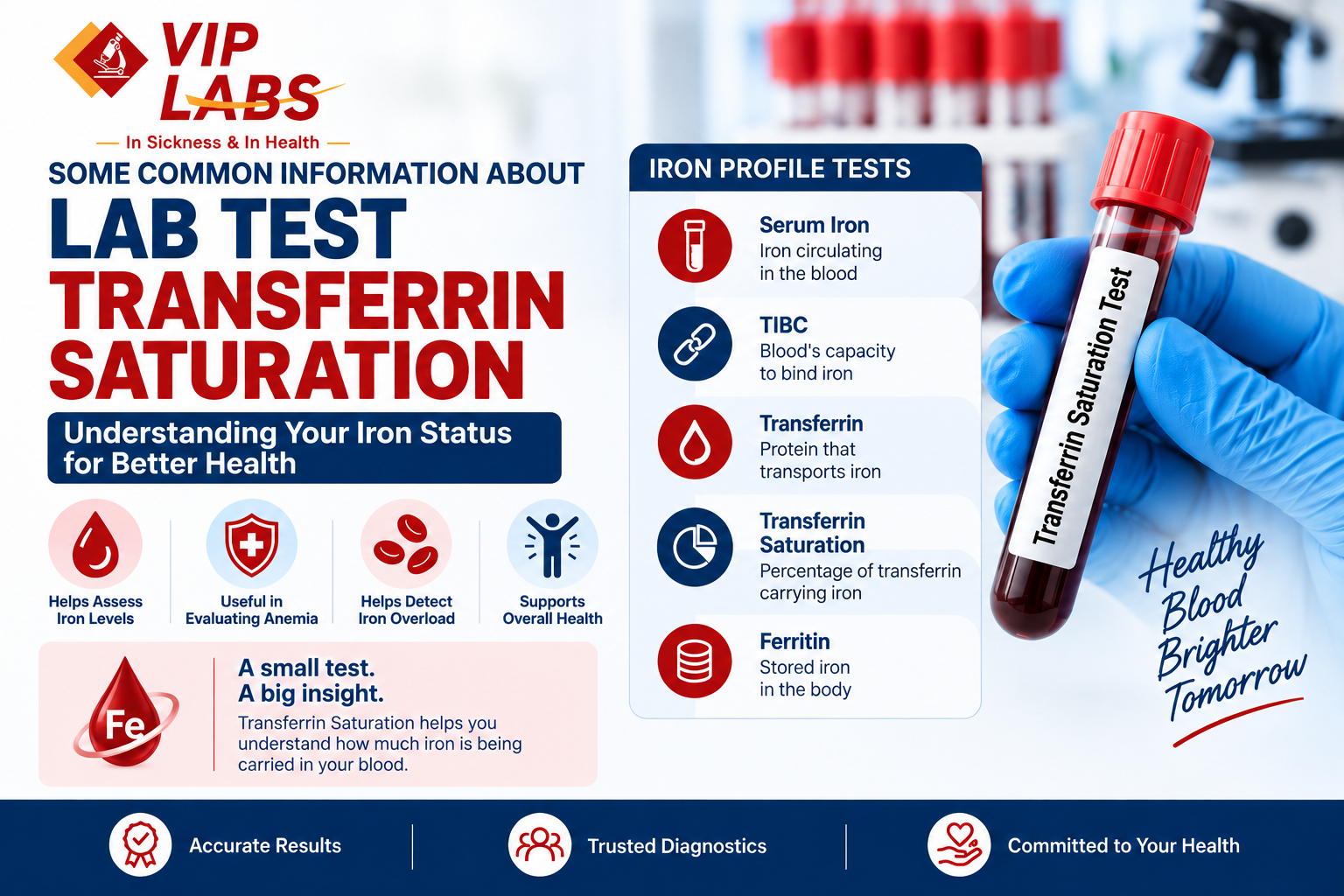
Some common information about Lab Test Transferrin Saturation
Transferrin saturation (TSAT) is an important measurement used to understand how much iron is being carried in the blood by transferrin. It is commonly evaluated along with other iron tests such as serum iron, TIBC, transferrin and ferritin to assess iron status and investigate conditions related to low or high iron levels.
What Is Transferrin Saturation?
Transferrin is a protein that transports iron through the bloodstream. Transferrin saturation tells you the percentage of transferrin that is carrying iron.
TSAT is calculated using serum iron and Total Iron-Binding Capacity (TIBC):
TSAT (%) = Serum Iron ÷ TIBC × 100
This value helps healthcare professionals understand how much iron is available for transport in the blood.
Why Is the Transferrin Saturation Test Done?
A Transferrin Saturation Test may be included as part of an iron profile or iron studies panel. It can help evaluate:
- Iron deficiency
- Iron-deficiency anemia
- Possible iron overload
- Certain liver conditions
- Other disorders affecting iron metabolism
TSAT is generally interpreted together with ferritin, serum iron, TIBC or transferrin, CBC, symptoms and medical history rather than being used alone.
What Does Low Transferrin Saturation Mean?
A low TSAT may indicate that there is not enough iron available for transport. It can occur with iron deficiency or iron-deficiency anemia.
Low TSAT can also be seen in some situations involving chronic inflammation or problems with iron absorption. The result needs to be interpreted along with other laboratory findings.
What Does High Transferrin Saturation Mean?
A high TSAT can indicate that there is more iron available than usual for transferrin to carry. It may be associated with iron overload, including conditions such as hemochromatosis.
However, a high result does not by itself establish a diagnosis. Healthcare professionals generally consider other iron tests and the person's medical history before determining the cause.
What Is the Normal Transferrin Saturation Range?
Reference ranges can vary between laboratories and may differ based on the testing method and individual factors.
Cleveland Clinic notes that TSAT is generally around 20%–50%, while MedlinePlus lists common ranges of approximately 20%–50% for males and 15%–45% for females. Always use the reference range provided on your laboratory report when interpreting your result.
Transferrin Saturation and Other Iron Tests
Transferrin saturation is often considered as part of a broader iron profile test.
| Test |
What It Helps Assess |
| Serum Iron |
Iron circulating in the blood |
| TIBC |
Blood's capacity to bind iron |
| Transferrin |
Protein that transports iron |
| Transferrin Saturation |
Percentage of transferrin carrying iron |
| Ferritin |
Stored iron in the body |
Using several tests together can provide a more complete picture of iron status.
How Is the Transferrin Saturation Test Performed?
The test requires a blood sample, usually collected from a vein in the arm. The sample is sent to the laboratory for analysis.
Your healthcare provider or laboratory may provide specific preparation instructions. Depending on the iron tests being performed, you may be asked to fast or have the sample collected in the morning. Follow the instructions given for your particular test.
Does a Transferrin Saturation Test Require Fasting?
Fasting requirements can depend on the specific iron panel and laboratory instructions. Some providers may ask you not to eat or drink for a period before iron testing.
If your doctor or laboratory has provided preparation instructions, follow those instructions carefully. Do not stop prescribed medicines or supplements unless your healthcare provider tells you to.
When Should You Consider an Iron Profile Test?
A healthcare professional may recommend an iron profile when there are symptoms or laboratory findings suggesting abnormal iron levels. It may also be ordered when evaluating anemia or suspected iron overload.
An iron profile may include serum iron, TIBC, transferrin, transferrin saturation, and ferritin, depending on the laboratory and clinical requirement.
How Are Transferrin Saturation Results Interpreted?
One abnormal result does not necessarily mean that you have a disease. TSAT can be affected by several factors, and healthcare professionals generally interpret it alongside other blood tests.
For example:
- Low TSAT + low ferritin may support iron deficiency.
- High TSAT + high iron stores may require evaluation for iron overload.
- TSAT results should also be considered alongside TIBC, serum iron, ferritin, CBC, symptoms and medical history.
Your doctor can determine whether additional testing is needed based on your complete results.
Frequently Asked Questions
1. What is a Transferrin Saturation Test?
A Transferrin Saturation Test measures the percentage of transferrin in the blood that is carrying iron.
2. What is TSAT in a blood test?
TSAT stands for Transferrin Saturation. It indicates how much of the iron-carrying protein transferrin is occupied by iron.
3. What is a normal TSAT level?
Common reference ranges are around 20%–50%, but ranges vary between laboratories. Your laboratory report's reference range should be used for interpretation.
4. What does low transferrin saturation indicate?
Low TSAT can be associated with iron deficiency and iron-deficiency anemia, although other conditions can also affect the result.
5. What does high transferrin saturation indicate?
High TSAT may indicate increased iron availability or possible iron overload. Further evaluation may be needed to determine the cause.
Get Your Iron Profile Test
If your doctor has recommended an Iron Profile or Transferrin Saturation Test, accurate laboratory testing can help provide useful information about your iron status.
Symbion VIP Diagnostics provides laboratory testing for a range of health and diagnostic needs.
If you have any questions about the test, preparation, or your report, speak with your healthcare professional.