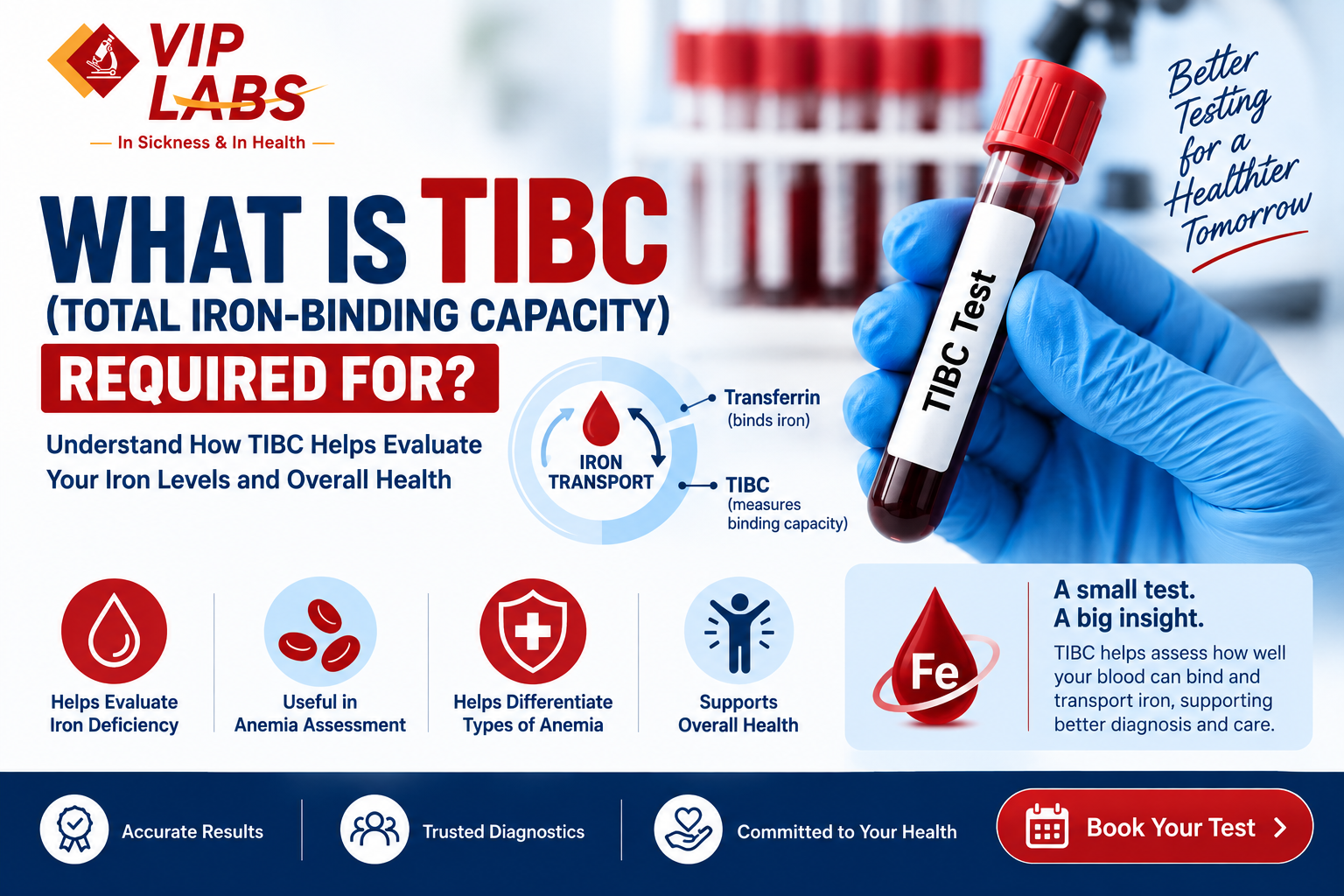
What is lab test TIBC or Iron Binding Capacity required for ?
What Is Lab Test TIBC or Iron Binding Capacity Required For?
Total
Iron-Binding Capacity (TIBC) is an important blood test used to evaluate how well your blood can bind and transport iron. Iron in the bloodstream is mainly carried by a protein called transferrin and TIBC provides information about the blood's capacity to bind iron.
TIBC is commonly performed as part of an iron profile or iron studies panel, along with tests such as serum iron, ferritin and transferrin saturation. Looking at these tests together can help healthcare professionals evaluate conditions related to iron deficiency, anemia and iron overload.
What Is TIBC?
TIBC stands for Total Iron-Binding Capacity.
It measures the blood's capacity to bind and carry iron through transferrin. Your body needs iron to produce hemoglobin, which carries oxygen from the lungs to tissues throughout the body.
TIBC is generally not interpreted on its own. Healthcare professionals may compare it with serum iron, ferritin and transferrin saturation to get a more complete picture of iron status.
Why Is a TIBC Test Required?
A doctor may recommend a TIBC blood test when there is a concern about low or high iron levels or when investigating certain types of anemia.
TIBC may be useful for:
- Evaluating suspected iron deficiency
- Investigating iron-deficiency anemia
- Helping differentiate types of anemia
- Assessing iron overload
- Evaluating abnormal iron test results
- Monitoring certain iron-related conditions
- Understanding iron status together with other iron tests
- TIBC and Iron Deficiency
One of the common reasons for ordering a TIBC test is to investigate iron deficiency.
When the body's available iron is low, TIBC is often higher because there is more available transferrin capacity to bind iron. A pattern of low serum iron, low ferritin, high TIBC and low transferrin saturation can support iron deficiency, although results must be interpreted in the appropriate clinical context.
Iron deficiency can eventually lead to iron-deficiency anemia, which may cause symptoms such as:
- Fatigue
- Weakness
- Dizziness
- Shortness of breath
- Reduced exercise tolerance
- Pale skin
However, symptoms alone cannot determine whether iron deficiency is present.
What Does High TIBC Mean?
A high TIBC can occur when the body's iron stores are low. One common example is iron-deficiency anemia. Pregnancy, particularly later pregnancy, can also be associated with higher TIBC.
However, a high TIBC result alone does not establish a diagnosis. It should be interpreted with other iron studies and the patient's medical history.
What Does Low TIBC Mean?
A low TIBC can occur in several situations, including:
- Inflammation
- Liver disease
- Malnutrition
- Certain chronic illnesses
- Some types of anemia
- Low levels of blood proteins
Low TIBC can also occur in some cases of iron overload. The cause needs to be determined by considering the complete set of laboratory results and clinical information.
TIBC vs Serum Iron
TIBC and serum iron provide different information.
Serum Iron: Measures the amount of iron currently present in the blood.
TIBC: Measures the blood's capacity to bind and transport iron through transferrin.
Because serum iron can vary during the day, healthcare professionals often consider it together with other iron studies rather than interpreting it by itself.
TIBC vs Ferritin
Ferritin and TIBC are also different tests.
Ferritin: Provides information about the body's stored iron.
TIBC: Provides information about the blood's capacity to bind and transport iron.
Both can provide complementary information when evaluating iron status.
What Is Transferrin Saturation?
Transferrin saturation (TSAT) represents the percentage of transferrin that is carrying iron.
It can be calculated using serum iron and TIBC:
TSAT (%) = Serum Iron ÷ TIBC × 100
TSAT is often considered along with TIBC and other iron tests when evaluating iron deficiency or iron overload.
TIBC Test and Iron Profile
TIBC is commonly included in an Iron Profile Test or Iron Studies Panel.
An iron profile may include:
| Test |
What It Helps Assess |
| Serum Iron |
Iron circulating in the blood |
| TIBC |
Blood's capacity to bind iron |
| Transferrin |
Protein that transports iron |
| Transferrin Saturation |
Percentage of transferrin carrying iron |
| Ferritin |
Stored iron in the body |
Who May Need a TIBC Test?
Your healthcare professional may recommend TIBC if you have:
- Low hemoglobin
- Suspected iron deficiency
- Suspected iron-deficiency anemia
- Unexplained fatigue or weakness
- Abnormal CBC results
- Possible iron overload
- A condition that may affect iron metabolism
- Abnormal serum iron or ferritin results
People with heavy menstrual bleeding, pregnancy, certain digestive conditions or other risk factors may also require evaluation for iron deficiency depending on their individual circumstances.
Is Fasting Required for a TIBC Test?
Preparation requirements can vary depending on the laboratory and the other iron tests being performed.
Some healthcare providers may recommend fasting before an iron panel, and iron tests are often collected in the morning. Certain medicines and supplements can also affect results.
Always follow the specific instructions provided by your doctor or diagnostic laboratory. Do not stop prescribed medicines without medical advice.
How Is the TIBC Test Performed?
TIBC is a simple blood test.
A healthcare professional collects a blood sample, usually from a vein in your arm. The sample is then sent to the laboratory for analysis.
The blood collection generally takes only a few minutes, with minimal risk apart from possible mild discomfort or bruising at the collection site.
TIBC Normal Range
Reference ranges can vary between laboratories because different laboratories may use different testing methods and units.
MedlinePlus lists commonly used adult TIBC ranges of approximately 171–505 mcg/dL for males and 149–492 mcg/dL for females, but the reference range printed on your own laboratory report should be used when interpreting your result.
An abnormal TIBC result does not automatically mean that you have a disease. Your healthcare professional will consider your other iron results, symptoms and medical history.
What Happens If Your TIBC Is Abnormal?
If your TIBC result is higher or lower than the laboratory's reference range, your doctor may evaluate other parameters such as:
This combined approach helps provide a better understanding of your iron status.
Frequently Asked Questions (FAQs)
What is a TIBC blood test?
TIBC stands for Total Iron-Binding Capacity. It measures how much iron the blood can bind and transport through transferrin.
Why is the TIBC test required?
TIBC is mainly used to help evaluate iron deficiency, iron-deficiency anemia and other conditions affecting iron metabolism. It may also be useful when investigating possible iron overload.
What does high TIBC mean?
High TIBC is commonly associated with low body iron stores and can occur in iron-deficiency anemia. It may also increase during late pregnancy.
Low TIBC may occur with inflammation, liver disease, malnutrition and certain types of anemia. It can also be seen in some cases of iron overload.
Is TIBC part of an iron profile?
Yes. TIBC is commonly included in an iron studies or iron profile panel along with tests such as serum iron, ferritin and transferrin saturation.
Conclusion
The TIBC or Total Iron-Binding Capacity test is an important laboratory investigation used to understand how the body transports iron through the blood. It is particularly useful when evaluating suspected iron deficiency, iron-deficiency anemia and other iron-related conditions.
TIBC should generally be interpreted together with serum iron, ferritin, transferrin saturation and CBC results rather than as an isolated number.
If your doctor has recommended a TIBC or Iron Profile Test, follow the laboratory's preparation instructions and discuss your results with a qualified healthcare professional.