
Need Help?
+91 94294 10291
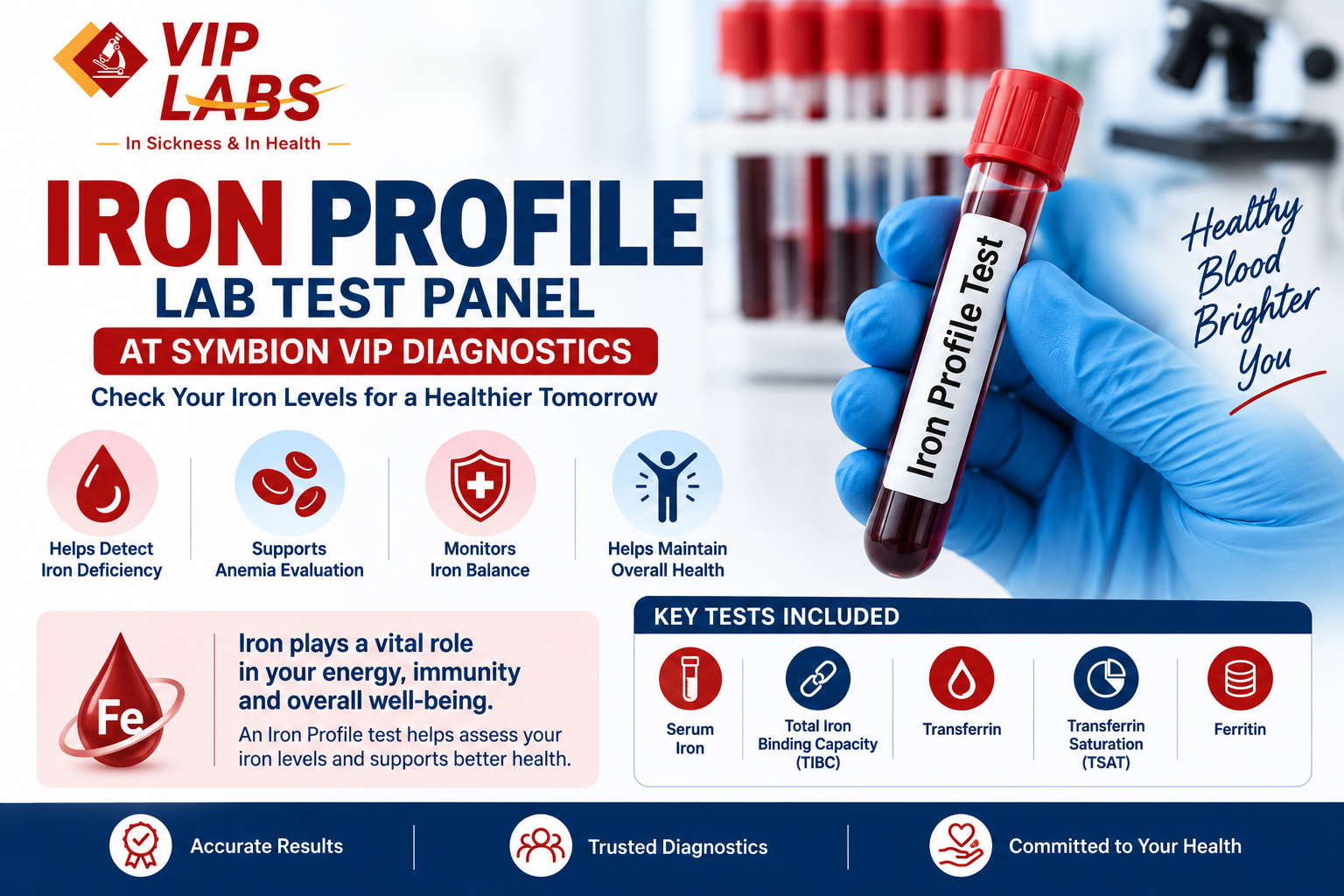
Iron is an essential mineral that helps the body produce hemoglobin, the protein in red blood cells responsible for carrying oxygen throughout the body. Both iron deficiency and excess iron can affect overall health, making proper testing important when symptoms or risk factors are present.
An Iron Profile Lab Test Panel evaluates different markers related to iron metabolism and storage. It can help healthcare professionals investigate iron deficiency, anemia, iron overload, and other conditions affecting iron balance.
An Iron Profile Test, also called an Iron Studies Panel, is a group of blood tests used to assess how much iron is available in the blood and how the body transports and stores it.
Depending on the laboratory and clinical requirement, an iron profile may include:
These parameters provide different information and are generally interpreted together rather than individually.
Your healthcare professional may recommend an iron profile when there are symptoms or laboratory findings suggesting an iron-related problem.
The test may help evaluate:
An iron profile may also be ordered when a Complete Blood Count (CBC) shows abnormal hemoglobin or red blood cell parameters.
Serum iron measures the amount of iron circulating in the blood, primarily bound to transferrin.
Serum iron levels can fluctuate during the day and can be influenced by factors such as recent food intake, medications and other health conditions. Therefore, serum iron is generally interpreted alongside other iron studies.
TIBC estimates the blood's capacity to bind and transport iron.
TIBC can provide useful information when evaluating suspected iron deficiency or other abnormalities in iron metabolism.
Transferrin is a protein that transports iron through the bloodstream.
Changes in transferrin levels can provide additional information about iron status and may help differentiate certain causes of anemia.
Transferrin saturation (TSAT) represents the percentage of transferrin binding sites occupied by iron.
It is calculated using serum iron and TIBC and can help assess whether sufficient iron is available for the body's needs.
Ferritin is a protein that stores iron in the body. Blood ferritin is commonly used as an indicator of iron stores.
Low ferritin can be an important indicator of depleted iron stores. However, ferritin can also increase with inflammation, infection, liver disease and other conditions, so the result needs to be interpreted in context.
An iron profile may be recommended for people with:
Your doctor will determine whether an iron profile is appropriate based on your symptoms and medical history.
Iron deficiency is one of the common causes of anemia. When the body does not have enough iron, it may not be able to produce sufficient hemoglobin.
Iron deficiency may occur due to:
Symptoms can include fatigue, weakness, headaches, dizziness and reduced ability to exercise.
An iron profile, along with a CBC and other investigations when required, can help healthcare professionals determine whether iron deficiency may be contributing to anemia.
Low iron-related results may be associated with iron deficiency, but the interpretation depends on the complete panel.
For example, iron deficiency may be associated with:
However, similar laboratory patterns can occur in different conditions. Your healthcare professional should interpret the results rather than relying on a single value.
Higher-than-expected iron levels can have several possible causes.
These may include:
A high serum iron result alone does not necessarily mean that the body has excessive iron. Additional markers such as ferritin and transferrin saturation may be needed for proper evaluation.
A CBC and an Iron Profile provide different types of information.
CBC: Evaluates blood cells, including red blood cells, white blood cells and platelets, as well as hemoglobin and hematocrit.
Iron Profile: Evaluates iron availability, transport and storage.
Doctors may order both tests when investigating suspected iron-deficiency anemia or other blood-related conditions.
Test preparation can vary depending on the specific iron studies included and the laboratory's instructions.
Some healthcare professionals may recommend fasting or collecting the sample at a particular time because serum iron can vary during the day.
Always follow the preparation instructions provided by your doctor or diagnostic laboratory.
Do not stop prescribed medicines or iron supplements unless your healthcare professional specifically advises you to do so.
An iron profile is performed using a blood sample.
A healthcare professional usually collects blood from a vein in your arm. The sample is then sent to the laboratory for analysis of the required iron parameters.
The blood collection process generally takes only a few minutes.
Ferritin provides information about the body's stored iron.
Low ferritin can indicate reduced iron stores and may support a diagnosis of iron deficiency. However, ferritin is also an acute-phase reactant, meaning it can increase during inflammation or infection.
For this reason, ferritin should be considered along with other iron studies and the patient's clinical condition.
Yes. Iron stores can become depleted before significant anemia develops.
A person may have low iron stores and experience symptoms such as fatigue or reduced energy even when hemoglobin has not yet fallen substantially.
This is one reason why healthcare professionals may consider ferritin and other iron studies when evaluating suspected iron deficiency.
Accurate laboratory testing is an important part of understanding your health. A reliable diagnostic laboratory should follow appropriate sample collection, processing and quality-control procedures.
At Symbion VIP Diagnostics, laboratory testing is designed to provide dependable results that can support healthcare professionals in evaluating patient health.
If you have been advised to undergo an Iron Profile Lab Test, follow the preparation instructions provided by your healthcare professional and laboratory.
An Iron Profile is a group of blood tests that evaluates iron levels, iron transport and iron stores. It may include serum iron, TIBC, transferrin, transferrin saturation and ferritin.
An iron profile can help evaluate iron deficiency, iron-deficiency anemia, possible iron overload and other conditions affecting iron metabolism.
No. A CBC evaluates blood cells and parameters such as hemoglobin and hematocrit, while an iron profile evaluates iron availability, transport and storage.
No single test is ideal in every situation. Ferritin is an important marker of iron stores, while serum iron, TIBC, transferrin saturation and CBC results can provide additional information.
Low ferritin generally indicates reduced iron stores and can support a diagnosis of iron deficiency. However, results should be interpreted according to the individual's clinical situation.
Follow your doctor's or laboratory's instructions. Do not stop or change prescribed medication or supplements without professional advice.
Preparation requirements can vary. Your doctor or laboratory may provide specific instructions depending on the tests being performed.
Common symptoms may include fatigue, weakness, dizziness, headaches, pale skin and shortness of breath. Some people may have few symptoms in the early stages.
Yes. Prolonged iron deficiency can reduce hemoglobin production and lead to iron-deficiency anemia.
If you are looking for an Iron Profile Lab Test in Ahmedabad, you can contact Symbion VIP Diagnostics for information about available iron studies and test preparation.
An Iron Profile Lab Test Panel is a useful diagnostic tool for evaluating the body's iron status. By assessing parameters such as serum iron, TIBC, transferrin, transferrin saturation and ferritin, healthcare professionals can gain a better understanding of iron deficiency, anemia or possible iron overload.
If you experience persistent fatigue, weakness, dizziness or other symptoms, or if your CBC shows abnormal hemoglobin or red blood cell results, speak with your healthcare professional about whether an Iron Profile Test is appropriate for you.
Accurate testing, proper interpretation and timely medical advice can help you take better care of your health.
Book your Iron Profile Lab Test today and take an important step toward understanding your iron health.