
Need Help?
+91 94294 10291
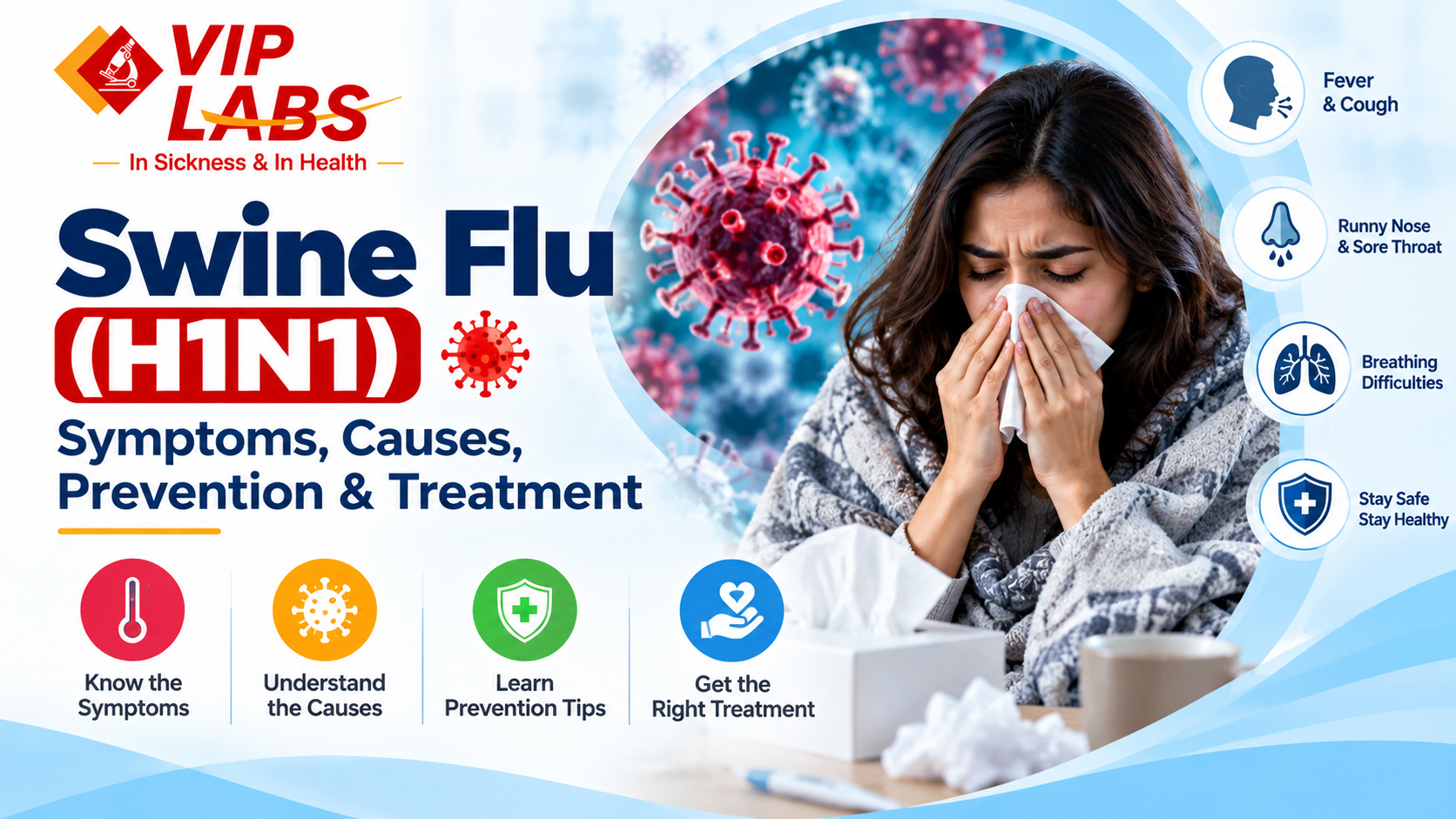
Swine flu is a respiratory infection associated with the Influenza A (H1N1) virus. The H1N1 virus became widely known during the 2009 influenza pandemic and has since become one of the seasonal influenza viruses that circulate among people.
Influenza is a contagious respiratory illness that can cause mild to severe symptoms. Most people recover without serious complications, but certain individuals have a higher risk of developing severe illness.
Swine flu is caused by the Influenza A (H1N1) virus. The virus can infect the respiratory system and may spread from one person to another through respiratory droplets and particles released when an infected person coughs, sneezes, talks, or breathes.
The infection may spread more easily in crowded or poorly ventilated places where people are in close contact.
Swine flu can spread through:
A person with influenza may spread the virus even before they realize that they are infected.
Swine flu symptoms can develop suddenly and may vary from person to person.
Common symptoms include:
Some people may also experience vomiting or diarrhea, particularly children.
The symptoms of influenza can sometimes be similar to those of other respiratory infections. Therefore, symptoms alone may not always confirm whether a person has H1N1 influenza.
Although anyone can develop influenza, some people have a higher risk of serious complications.
These may include:
People in higher-risk groups should seek medical advice promptly if they develop flu-like symptoms.
A healthcare professional may diagnose influenza based on symptoms and a physical examination. In some situations, laboratory testing may be recommended to confirm the infection.
Respiratory samples can be tested for influenza viruses using laboratory methods such as molecular tests. Rapid influenza diagnostic tests are also available, although their accuracy can vary depending on the type of test and the situation in which it is used.
If you have persistent fever, cough, body aches, or other flu-like symptoms, your healthcare professional can advise whether testing is necessary.
Most people with mild influenza can recover with adequate rest, sufficient fluids, and appropriate care for their symptoms.
For people who are at higher risk of complications or who develop severe illness, a healthcare professional may recommend antiviral medication.
Antiviral medicines are generally most effective when started early after symptoms begin, particularly for people at higher risk of complications.
Antibiotics do not treat influenza because influenza is caused by a virus. Therefore, antibiotics should not be taken without medical advice.
Always take medicines according to the advice of your healthcare professional.
Taking simple precautions can help reduce the risk of influenza infection and transmission.
1.Get Recommended Flu Vaccination
Seasonal influenza vaccination is one of the important ways to reduce the risk of influenza and its complications.
Vaccination may be particularly important for people at higher risk of severe influenza, including older adults, young children, pregnant women, people with certain chronic health conditions, and healthcare workers.
Speak with your healthcare professional about the influenza vaccine and whether it is appropriate for you.
2.Wash Your Hands Regularly
Wash your hands frequently with soap and water, particularly after coughing, sneezing, using public facilities, or coming into contact with potentially contaminated surfaces.
If soap and water are not available, an alcohol-based hand sanitizer can be used.
3.Cover Your Mouth and Nose
Cover your mouth and nose when coughing or sneezing. Using a tissue or your elbow can help reduce the spread of respiratory droplets.
Dispose of used tissues properly and wash your hands afterward.
4.Avoid Close Contact When You Are Sick
If you have flu-like symptoms, try to avoid close contact with other people. Staying home when you are unwell can help reduce the risk of spreading the infection.
5.Improve Ventilation
Good ventilation can help reduce the concentration of respiratory particles in indoor spaces. Opening windows or improving airflow where appropriate can be helpful.
6.Avoid Touching Your Face
Try to avoid frequently touching your eyes, nose, and mouth with unwashed hands because viruses can enter the body through these areas.
Most people recover from influenza without serious problems. However, medical attention is important if symptoms become severe, worsen, or do not improve as expected.
Seek urgent medical attention if you experience symptoms such as:
Children, older adults, pregnant women, and people with chronic health conditions should seek medical advice earlier if they develop flu-like symptoms.
Preventive healthcare and timely medical attention are important for maintaining overall health. People with chronic conditions or other health concerns should follow their healthcare professional's recommendations and maintain regular health checkups.
At VIP Labs, comprehensive health checkup packages can help monitor several important health parameters as part of preventive healthcare.
Swine flu, commonly associated with the H1N1 influenza virus, is a contagious respiratory infection that can cause fever, cough, sore throat, body aches, tiredness, and other flu-like symptoms.
Most people recover with appropriate care, but some individuals are at greater risk of complications. Early medical advice, recommended vaccination, good hygiene, proper respiratory etiquette, and avoiding close contact when sick can help reduce the risk of infection and transmission.
If you develop severe or worsening symptoms, consult a healthcare professional promptly.
1.What is swine flu?
Swine flu is a respiratory infection associated with the Influenza A (H1N1) virus. H1N1 became widely known during the 2009 influenza pandemic and continues to circulate as one of the seasonal influenza viruses.
2.What are the common symptoms of swine flu?
Common symptoms include fever, cough, sore throat, runny or blocked nose, headache, body aches, chills, tiredness, and weakness.
3.Is swine flu contagious?
Yes. H1N1 influenza can spread from an infected person through respiratory droplets and particles, close contact, and contaminated hands or surfaces.
4.How long does swine flu last?
The duration can vary. Many people with uncomplicated influenza begin to recover within several days, although cough and tiredness may last longer.
5.Can swine flu be treated?
Yes. Most mild cases can be managed with rest, fluids, and appropriate symptom care. Antiviral medicines may be recommended by a healthcare professional for certain people, particularly those at higher risk of complications.
6.Can antibiotics treat swine flu?
No. Antibiotics treat bacterial infections and do not work against influenza viruses. They should only be used when prescribed for an appropriate bacterial infection.
7.How can I prevent swine flu?
Recommended influenza vaccination, regular handwashing, covering coughs and sneezes, avoiding close contact when sick, improving indoor ventilation, and avoiding touching your face with unwashed hands can help reduce the risk.
8.Who is at higher risk of severe influenza?
Young children, older adults, pregnant women, people with certain chronic diseases, and people with weakened immune systems may have a higher risk of severe influenza and complications.
9.Is there a test for H1N1 influenza?
Yes. Respiratory samples can be tested using laboratory methods to detect influenza viruses. A healthcare professional can determine whether testing is appropriate.
10.When should I seek medical attention?
Seek medical attention if symptoms are severe, worsen, or include difficulty breathing, persistent chest pain, severe weakness, confusion, or signs of dehydration.
This blog is intended for general health and educational information only. It should not be considered a substitute for professional medical advice, diagnosis, or treatment. If you have severe symptoms, belong to a high-risk group, or have concerns about your health, consult a qualified healthcare professional.