
Need Help?
+91 94294 10291
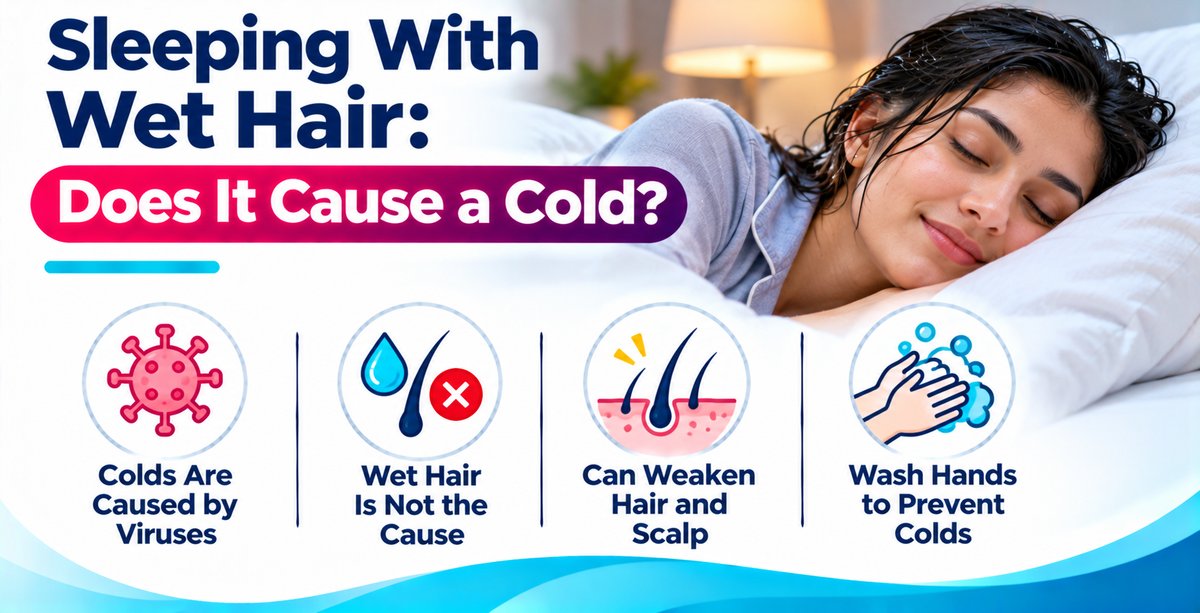
Quick answer: Sleeping with wet hair does not give you a cold. Colds are caused by viruses, mainly rhinoviruses, that spread through droplets and unwashed hands, not by cold or damp hair. Wet hair can make you feel chilly and may cause hair breakage or scalp problems. A CBC test helps if fever persists.
Many of us grew up being told to dry our hair before bed or we would wake up with a runny nose. It is one of the most common health beliefs in Indian homes. Here is what science says, what wet hair can actually do, how a cold really spreads, and when a "cold" needs a doctor.
No. The common cold is a viral infection of the nose and throat. More than 200 different viruses can cause it, and rhinoviruses are the most common. Other culprits include seasonal coronaviruses, adenoviruses and RSV. Without one of these viruses entering your body, you cannot catch a cold, however wet your hair is.
So why does the belief persist? Colds are more common in winter and during the monsoon. In those seasons people stay indoors in close contact, windows are closed, and viruses pass easily from person to person. Feeling cold and catching a cold happen at the same time of year, so it is easy to link the two.
There is some limited research suggesting that chilling the body may make it slightly easier for a virus you have already picked up to cause symptoms, possibly because cooler nasal passages respond less strongly to infection. This evidence is small and not conclusive. Even if it is true, the virus must already be present. Wet hair on its own is not the cause.
Cold viruses spread in three main ways:
Your risk also rises with poor sleep, high stress, smoking and a weak immune system.
While sleeping with wet hair will not make you sick with a virus, it is not completely harmless. Here are the real effects:
Water evaporating from the scalp draws heat away, so you may feel chilly, especially under a fan or air conditioner. This is discomfort, not illness, but it can disturb sleep.
Hair is weakest when wet, because the strand swells and the outer layer (cuticle) lifts. Tossing and turning on a cotton pillowcase can cause friction, tangles, split ends and breakage. People with long, curly or chemically treated hair notice this more.
A warm, damp pillow and scalp is a good environment for yeast and fungi. The yeast Malassezia, which lives on everyone's skin, is linked to dandruff and seborrhoeic dermatitis. Regularly sleeping with a wet scalp may worsen itching and flaking in people who are prone to it. A damp pillowcase that is not washed often can also collect bacteria and fungi, and may contribute to acne along the hairline. See our guide on how to prevent body itching for skin care tips.
| Belief | Myth or fact? | What is true |
|---|---|---|
| Wet hair at night gives you a cold | Myth | Colds are caused by viruses that spread through droplets and hands |
| Going out with wet hair in winter gives you flu | Myth | Influenza is also viral; the flu vaccine and hand hygiene protect you |
| Wet hair can make you feel chilly | Fact | Evaporation cools the scalp, especially under a fan or AC |
| Sleeping with wet hair damages hair | Partly true | Wet hair is weaker and breaks more easily with friction |
| A damp scalp can worsen dandruff | Partly true | Warm, moist conditions favour yeast in people prone to dandruff |
| Wet hair causes pneumonia or weak eyesight | Myth | Pneumonia is an infection of the lungs; wet hair does not affect the eyes |
A cold and flu (influenza) are both viral infections, but flu is usually more severe.
In India, fever with body ache can also be dengue, malaria or typhoid, especially in the monsoon. Read about swine flu symptoms and prevention and dengue facts you should know.
There is no cure for the common cold, and antibiotics do not work on viruses. Taking them unnecessarily adds side effects and drives antibiotic resistance. Supportive care helps your body recover:
Learn more in how to take medicines correctly.
Most colds settle on their own within 7 to 10 days. See a doctor if you or your child has:
A simple cold does not need any test. Your doctor may advise tests if fever persists, colds keep coming back, or another infection is suspected:
You can browse every blood test in Ahmedabad on our test menu.
No. Colds and flu are caused by viruses that spread through droplets, hands and close contact, not by wet hair. You may feel chilly or uncomfortable, but wet hair alone cannot give you a viral infection.
It will not make you ill, but doing it every night can cause hair breakage, frizz and tangles because wet hair is weaker. In people prone to dandruff, a damp scalp and pillow may worsen itching and flaking. Drying hair at least partly before bed is a good habit.
There is no strong evidence that wet hair causes headaches. Some people feel a headache after a cold, uncomfortable night, but frequent headaches have other causes and should be checked by a doctor.
It does not directly cause them, but a warm, damp scalp and pillowcase can encourage the yeast linked to dandruff and seborrhoeic dermatitis. Washing pillowcases regularly and drying your scalp helps. See a dermatologist if itching or flaking persists.
The common cold is caused by more than 200 types of viruses, most often rhinoviruses. They spread when an infected person coughs or sneezes nearby, or when you touch a contaminated surface and then your nose, eyes or mouth.
See a doctor if fever lasts more than 3 days, symptoms last more than 10 days, or there is difficulty breathing, chest pain, severe headache, a stiff neck or confusion. Babies, older adults, pregnant women and people with long-term illnesses should be checked sooner.
Sleeping with wet hair will not give you a cold, but a fever that will not settle deserves a proper check. VIP Labs, a trusted pathology lab in Ahmedabad, offers CBC, CRP, flu and vitamin D tests with quick online reports. Choose home blood collection in Ahmedabad or visit a pathology lab near you.
Disclaimer: This article is for general awareness only and is not a substitute for medical advice. Please consult a qualified doctor for diagnosis and treatment.