
Need Help?
+91 94294 10291
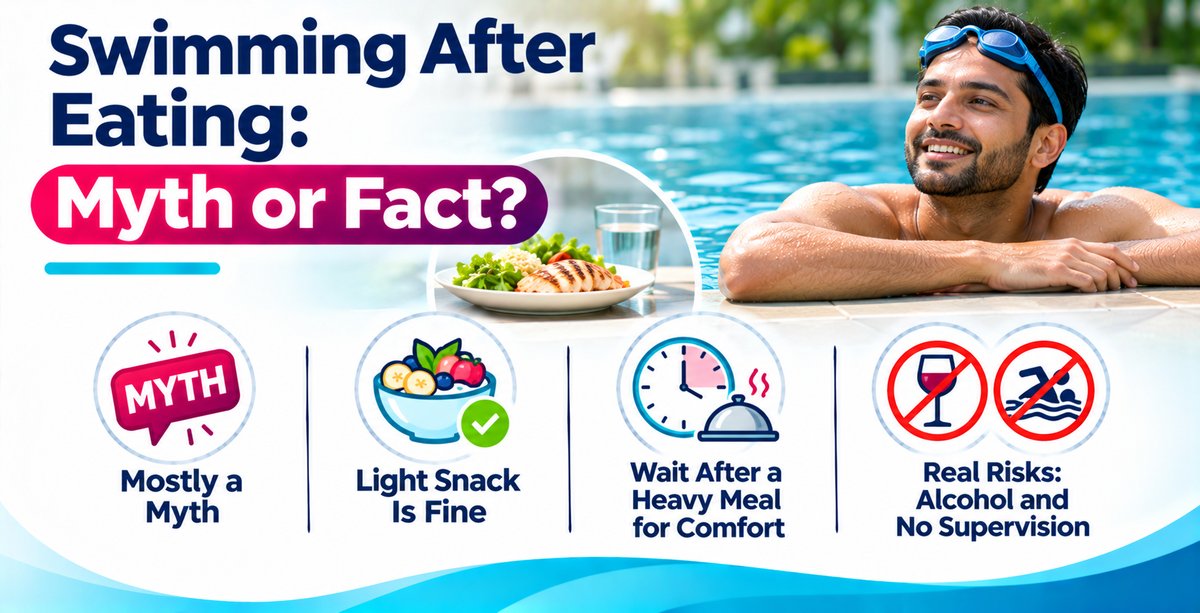
Quick answer: Swimming after eating is not dangerous for most healthy people, and there is no good evidence that a meal causes cramps that lead to drowning. A big meal may cause a stitch, heaviness or reflux, so wait 30–60 minutes before hard swimming. Like the myth about drinking water during meals, the warning is mostly folklore.
"Don't jump in the pool, you just ate!" Most of us heard this as children, often with the promise of a deadly stomach cramp. This guide looks at where the rule came from, what science says, what really causes drowning, and how people with diabetes can use exercise after meals to their advantage.
The short answer is no. Water-safety and first aid experts who have reviewed the evidence have not found documented drowning cases caused by swimming after eating a normal meal. Lifeguard organisations do not treat a recent meal as a drowning risk factor.
That does not mean a full stomach feels great in the water. A large, oily meal followed by fast laps can cause discomfort, a side stitch, burping, acid reflux or even vomiting. These are unpleasant, but they are not a reason to fear the pool after a snack or a light lunch.
The warning appeared in swimming and scouting manuals in the early twentieth century and was repeated by parents for generations. The theory sounded logical: after a meal, more blood flows to the stomach and intestines for digestion, so less would be left for the arm and leg muscles, which would then cramp and leave the swimmer helpless.
Digestion does increase blood flow to the gut, but the body has plenty of reserve. During exercise, the heart pumps more blood and the body adjusts where it goes. Your muscles get enough oxygen to swim; at most, very hard exercise may slow digestion a little.
Muscle cramps during exercise are mainly linked to muscle fatigue, overexertion and poor conditioning, sometimes with heavy sweating or cold water. A meal has not been shown to trigger them. Even when a cramp does happen, a swimmer can usually float, stretch the muscle and move to the side.
Swimming after eating a very heavy meal can cause mild, temporary problems:
None of these usually lead to drowning in a calm pool, but vomiting in deep or open water can be risky for a weak swimmer. That is the sensible reason to wait.
There is no fixed medical rule. A practical approach based on meal size and how hard you plan to swim:
| What you ate | Relaxed swim or playing in water | Fast laps, training or open water |
|---|---|---|
| Light snack (fruit, biscuits, a small sandwich) | No need to wait | About 15–30 minutes if you feel full |
| Normal meal (roti, dal, sabzi, rice) | Fine whenever comfortable | About 30–60 minutes |
| Heavy or fried meal (wedding food, biryani, buffet) | Gentle swimming once you feel comfortable | 1–2 hours, or keep the session easy |
| Meal with alcohol | Avoid swimming | Avoid swimming |
Listen to your body. If you feel bloated or have acid reflux, wait longer or keep to an easy pace.
Drowning is a serious public health problem in India, especially among children near ponds, rivers, wells, tanks and buckets at home. Instead of worrying about lunch, focus on the factors that really matter:
Alcohol is one of the biggest risk factors for adult drowning. It affects judgement, balance, coordination and reaction time, and makes people take risks they otherwise would not. Never drink before or while swimming or boating. Read how alcohol affects your health.
Children can drown silently and quickly, in a few centimetres of water. Drowning rarely looks like the dramatic splashing shown in films. A responsible adult should watch children constantly, within arm's reach for young or weak swimmers, without phones or other distractions.
Learning basic water skills, such as floating, treading water and getting out of the pool, is one of the best protections. Weak swimmers should stay in shallow water and use a properly fitted life jacket in open water.
Rivers, lakes, canals and the sea have currents, sudden depth changes and cold water. Swim only in designated areas with a lifeguard, and do not overestimate your stamina.
Epilepsy, heart rhythm problems and low blood sugar in people on diabetes medicines can cause sudden loss of control in water. These people can still swim, but should never swim alone and should discuss safety with their doctor.
Here is something the old myth missed. Light activity after a meal, such as a 10–15 minute walk or an easy swim, helps muscles use glucose and can reduce the post-meal rise in blood sugar. This is useful for people with prediabetes or type 2 diabetes. Even a simple walk after meals counts.
However, people taking insulin or certain diabetes tablets can develop low blood sugar (hypoglycaemia) during or after swimming, because exercise lowers sugar further. Warning signs are shakiness, sweating, sudden hunger, confusion or weakness, which are dangerous in water. If you have diabetes:
Get medical help if, during or after swimming, you or your child has:
You do not need a lab test to go swimming. But if you are starting a new exercise routine, have diabetes, get frequent cramps or have risk factors for heart disease, these tests help your doctor guide you:
For details on sugar tests and preparation, see our diabetes test in Ahmedabad guide.
No, there is no medical rule that you must wait 30 minutes. For a light snack or relaxed swimming, you can go in straight away. After a heavy meal, waiting 30 to 60 minutes before hard swimming simply helps you avoid a stitch, reflux or nausea.
There is no good evidence that eating a normal meal before swimming causes drowning. The real risk factors are alcohol, lack of supervision for children, not knowing how to swim, open-water currents and exhaustion.
Swimming cramps are mainly linked to muscle fatigue, overexertion, poor conditioning and sometimes cold water or heavy sweating. Food has not been shown to cause them. If a cramp happens, float on your back, stretch the muscle gently and move to the edge.
Yes, children can usually swim after a normal meal or snack, and they tend to slow down if they feel full. What matters far more is constant adult supervision, staying within reach of young or weak swimmers, and using life jackets in open water.
Light activity after meals, such as walking or easy swimming, can reduce the rise in blood sugar after eating. People on insulin or certain diabetes tablets should check their sugar, carry a quick source of glucose and ask their doctor about low-sugar risk during exercise.
No. Alcohol affects judgement, balance, coordination and reaction time, and it is a major factor in adult drowning. Avoid swimming, diving or boating after drinking any alcohol.
Swimming after eating is safe for most people, but staying active with diabetes, heart risk or frequent cramps is easier with the right information. VIP Labs, a trusted pathology lab in Ahmedabad, offers blood sugar, HbA1c, electrolyte and heart-risk tests. Find a lab test near me or book online for home sample collection.
Disclaimer: This article is for general awareness only and is not a substitute for medical advice. Please consult a qualified doctor for diagnosis and treatment.