
Need Help?
+91 94294 10291
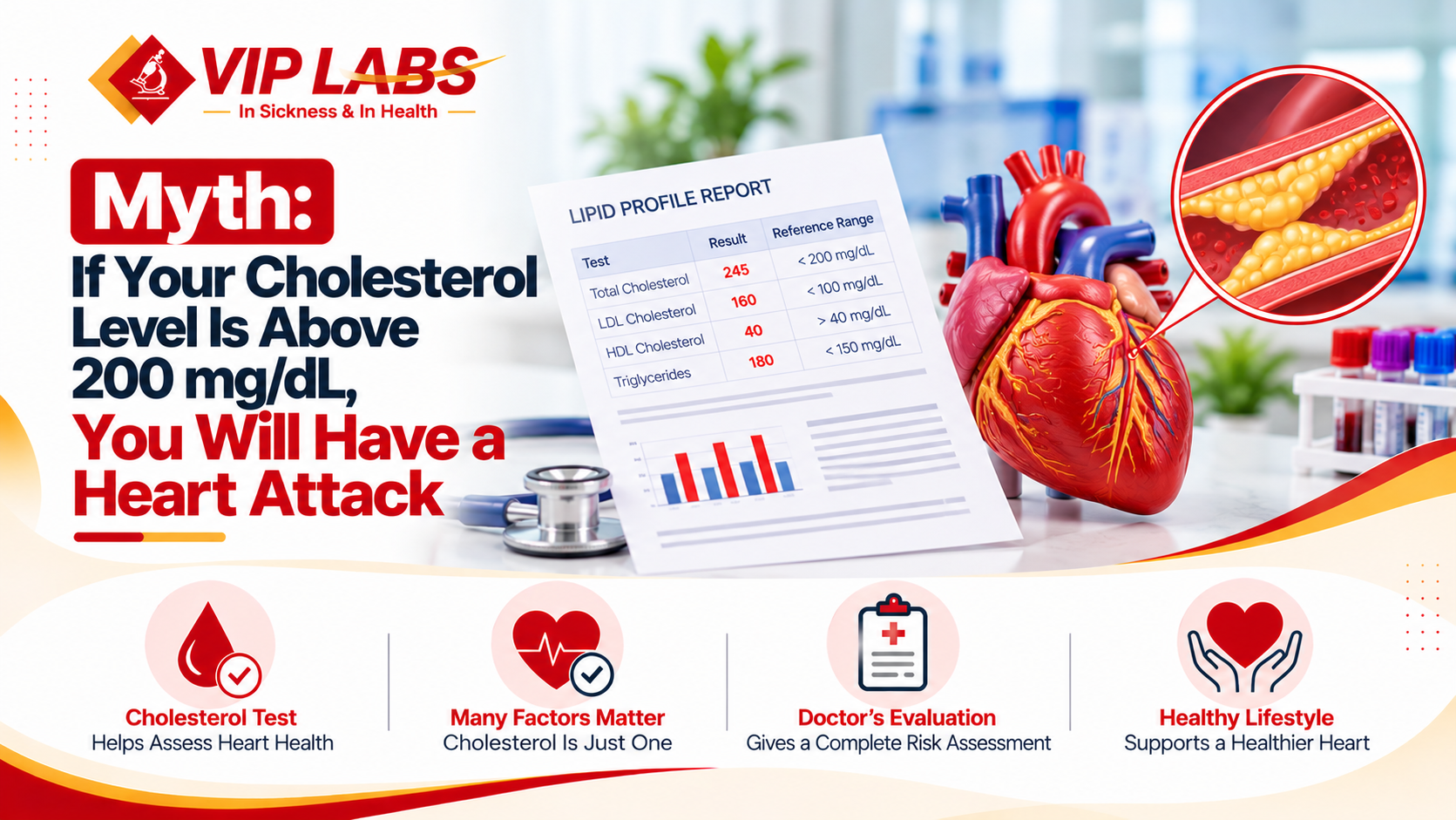
This is a common concern, but having a cholesterol level above 200 mg/dL does not mean you will definitely have a heart attack. It can indicate an increased risk of heart disease, depending on your cholesterol levels and other health factors.
Cholesterol is an essential substance that your body needs to function properly. However, when certain types of cholesterol remain elevated, they can contribute to the buildup of plaque in your arteries and increase your risk of cardiovascular disease.
In this article, we will explain what a cholesterol level above 200 mg/dL means, how cholesterol affects heart health, and what you can do to manage your risk.
Total cholesterol measures the overall amount of cholesterol in your blood, including cholesterol carried by different lipoproteins.
For most adults, a total cholesterol level below 200 mg/dL is generally considered desirable. A level between 200 and 239 mg/dL is commonly classified as borderline high, while 240 mg/dL or higher is generally classified as high.
However, total cholesterol alone cannot determine your overall risk of having a heart attack.
Your doctor will also consider your LDL cholesterol, HDL cholesterol, triglycerides, age, blood pressure, diabetes status, family history, smoking habits, and other relevant factors.
The meaning of your cholesterol result therefore depends on your complete health profile rather than one number alone.
No. A cholesterol level above 200 mg/dL does not guarantee that you will have a heart attack.
However, it should not be ignored.
When certain cholesterol levels, particularly LDL cholesterol, remain elevated, cholesterol-containing deposits can gradually build up inside your arteries. This process is called atherosclerosis.
Over time, these deposits can narrow the arteries or contribute to the formation of a blood clot. If blood flow to part of the heart becomes blocked, a heart attack can occur.
The risk depends on several factors, including the degree and duration of cholesterol elevation and the presence of other cardiovascular risk factors.
A doctor can assess these factors and recommend appropriate steps to help reduce your risk.
A cholesterol test usually measures several important blood lipid parameters. Understanding them can help you interpret your report more effectively.
Low-density lipoprotein (LDL) carries cholesterol through the bloodstream. When LDL levels are elevated, cholesterol can accumulate in artery walls and contribute to plaque formation.
Higher LDL cholesterol is associated with an increased risk of heart disease and stroke.
The appropriate LDL target varies according to your overall cardiovascular risk and medical history.
High-density lipoprotein (HDL) helps transport cholesterol away from tissues and towards the liver for processing.
An appropriate HDL level is generally considered beneficial for heart health. However, a high HDL level does not automatically cancel out the risks associated with elevated LDL cholesterol or other cardiovascular risk factors.
Triglycerides are another type of fat measured in a lipid profile.
Elevated triglycerides, especially when combined with high LDL cholesterol or low HDL cholesterol, may increase cardiovascular risk.
Your doctor will interpret these values together rather than evaluating them in isolation.
A lipid profile is a blood test that measures cholesterol and other fats in your blood. It provides more detailed information than a total cholesterol measurement alone.
A typical lipid profile includes:
Total cholesterol
LDL cholesterol
HDL cholesterol
Triglycerides
Depending on the laboratory and test panel, additional measurements or calculated cholesterol ratios may also be reported.
If your total cholesterol is above 200 mg/dL, your doctor may review your complete lipid profile to understand your cardiovascular risk and determine whether lifestyle changes, follow-up testing, or treatment may be appropriate.
You can learn more about the Lipid Profile Test at VIP Labs.
Cholesterol is an important risk factor, but it is not the only one. Several other factors can influence your chances of developing cardiovascular disease.
High blood pressure can damage blood vessel walls over time and increase the risk of heart disease and stroke.
Regular blood pressure monitoring and appropriate management are important for protecting your cardiovascular health.
Diabetes can increase the risk of cardiovascular disease, particularly when blood sugar levels are not well managed.
People with diabetes may need more careful assessment of their cholesterol levels and other heart disease risk factors.
Smoking damages blood vessels and increases cardiovascular risk. Quitting smoking is an important step towards protecting your heart.
A sedentary lifestyle and a diet high in saturated fats can contribute to unhealthy cholesterol levels and other cardiovascular risk factors.
Regular physical activity and a balanced diet can help support healthier cholesterol levels.
Cardiovascular risk generally increases with age. A family history of early heart disease may also increase your risk.
These factors are important because a person with cholesterol above 200 mg/dL and several additional risk factors may have a different risk profile from someone with the same cholesterol level but fewer risk factors.
If your cholesterol report shows a total cholesterol level above 200 mg/dL, take the result seriously without assuming that a heart attack is inevitable.
Look at your total cholesterol, LDL cholesterol, HDL cholesterol, and triglycerides.
Your doctor can explain which values need attention and how they relate to your overall health.
Your doctor can assess your cardiovascular risk using your cholesterol results, medical history, blood pressure, diabetes status, family history, and other relevant information.
Depending on your risk, they may recommend lifestyle changes, additional investigations, or medication.
Choose a balanced diet that includes vegetables, fruits, whole grains, legumes, nuts, and other nutritious foods.
Limit foods high in saturated fats and avoid excessive intake of highly processed foods. The best dietary approach depends on your individual health needs.
Regular physical activity can support cardiovascular health and help improve several risk factors.
Choose activities that suit your fitness level, and consult a healthcare professional before starting a new exercise routine if you have existing health concerns.
Avoid tobacco, maintain a healthy weight where appropriate, and follow your doctor's advice for managing blood pressure and blood sugar.
These steps can help reduce overall cardiovascular risk.
Some people need cholesterol-lowering medication, such as statins, depending on their LDL level, medical history, and overall cardiovascular risk.
Do not start, stop, or change prescribed medication without consulting your doctor.
The frequency of cholesterol testing depends on your age, previous results, medical history, family history, and cardiovascular risk factors.
Adults with normal cholesterol levels and no major risk factors may need periodic screening, while people with elevated cholesterol, diabetes, existing cardiovascular disease, or other risk factors may require more frequent monitoring.
Your doctor can recommend an appropriate testing schedule based on your individual needs.
If you need to check your cholesterol levels, you can explore the VIP Labs Lipid Profile Test and follow the preparation instructions provided for your test.
High cholesterol usually does not cause noticeable symptoms on its own. A person may have elevated cholesterol for years without knowing it.
However, a heart attack can cause symptoms such as:
Chest pain, pressure, tightness, or discomfort
Pain or discomfort spreading to one or both arms, the back, neck, jaw, or stomach
Shortness of breath
Cold sweating, nausea, or lightheadedness
Symptoms can vary from person to person.
If you or someone nearby may be having a heart attack, seek emergency medical care immediately. Do not wait for a cholesterol test or laboratory report to confirm the problem.
Regular laboratory testing can help you and your doctor monitor cholesterol levels and understand changes in your lipid profile over time.
VIP Labs offers a Lipid Profile Test that measures important blood lipid parameters. The results can support your healthcare professional's assessment of cardiovascular risk.
If you are looking for a diagnostic lab in Ahmedabad for cholesterol testing, you can also explore the VIP Labs online test booking service for available testing and sample collection options.
Remember that a laboratory report provides valuable information, but your doctor should interpret the findings alongside your overall health and medical history.
1. Is cholesterol above 200 mg/dL dangerous?
A total cholesterol level above 200 mg/dL may indicate increased cardiovascular risk, but its significance depends on your complete lipid profile and other health factors. Discuss your result with your doctor.
2. Will I definitely have a heart attack if my cholesterol is above 200 mg/dL?
No. A cholesterol level above 200 mg/dL does not mean a heart attack is inevitable. However, elevated cholesterol can increase cardiovascular risk, so appropriate assessment and management are important.
3. What is the ideal total cholesterol level for adults?
A total cholesterol level below 200 mg/dL is generally considered desirable for most adults. However, doctors assess total cholesterol alongside LDL, HDL, triglycerides, and individual risk factors.
4. Which cholesterol is more harmful: LDL or HDL?
Elevated LDL cholesterol is a major contributor to cholesterol buildup in arteries. HDL helps transport cholesterol towards the liver, but the overall lipid profile and cardiovascular risk factors must be considered together.
5. Can high cholesterol occur without symptoms?
Yes. High cholesterol usually does not cause noticeable symptoms. A blood test is needed to measure cholesterol levels and help identify people who may need further evaluation.
6. Can lifestyle changes lower cholesterol?
Yes. A heart-healthy diet, regular physical activity, avoiding tobacco, and maintaining a healthy weight can help improve cholesterol levels. Some people also need medication prescribed by their doctor.
7. Which test checks cholesterol levels?
A lipid profile measures total cholesterol, LDL cholesterol, HDL cholesterol, and triglycerides. Your doctor can advise when testing is appropriate and whether any preparation is needed.
8. Where can I get a cholesterol test in Ahmedabad?
You can explore the VIP Labs Lipid Profile Test for cholesterol testing in Ahmedabad. Follow the laboratory's preparation instructions and discuss your results with your doctor.
9. Does normal cholesterol mean I cannot have a heart attack?
No. Normal cholesterol results do not eliminate all cardiovascular risk. Blood pressure, diabetes, smoking, age, family history, and other factors can also influence the risk of a heart attack.
10. Should I take medicine if my cholesterol is above 200 mg/dL?
Not everyone with total cholesterol above 200 mg/dL needs medication. Your doctor will consider your LDL level, medical history, and overall cardiovascular risk before recommending treatment.
The belief that “if your cholesterol level is above 200 mg/dL, you will have a heart attack” is a myth.
A total cholesterol level above 200 mg/dL can indicate a need for closer attention, but it does not predict a heart attack with certainty. Your LDL cholesterol, HDL cholesterol, triglycerides, blood pressure, blood sugar, lifestyle, and family history all contribute to your overall cardiovascular risk.
The right approach is to understand your complete lipid profile, follow healthy lifestyle habits, and seek medical advice when needed.
Remember: high cholesterol is a risk factor, not a guarantee of a heart attack. Early assessment and appropriate management can help protect your heart health.