
Need Help?
+91 94294 10291
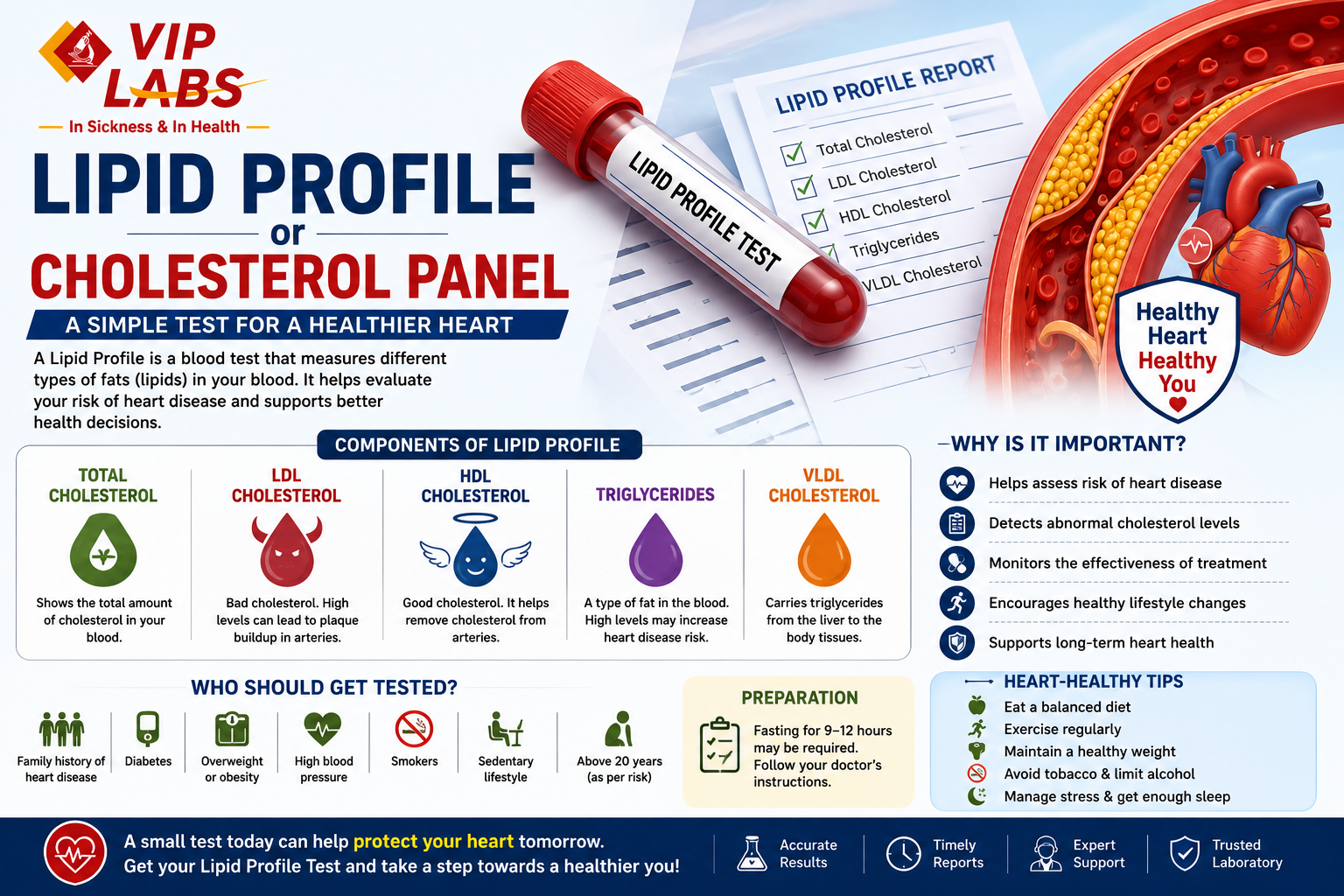
A Lipid Profile, also known as a Cholesterol Panel, is a common blood test used to measure different types of fats in the blood. It provides important information about cholesterol and triglyceride levels and can help healthcare professionals assess a person's risk of cardiovascular disease.
Regular monitoring of cholesterol levels, along with a healthy diet, physical activity, maintaining a healthy weight, and other healthy lifestyle habits, can support better heart health.
A Lipid Profile Test is a blood test that measures several important types of lipids (fats) in your blood. The test commonly includes:
Depending on the laboratory and testing method, the report may also include calculated values such as VLDL cholesterol and ratios or non-HDL cholesterol.
A lipid profile helps doctors understand your cholesterol levels and evaluate cardiovascular risk along with other factors such as age, blood pressure, diabetes, smoking, family history, and overall health.
1. Total Cholesterol
Total cholesterol represents the overall amount of cholesterol in the blood. Cholesterol is a waxy substance that the body needs for several important functions, including producing hormones and building cell membranes.
However, excessively high cholesterol levels can contribute to the buildup of plaque in the arteries.
2. LDL Cholesterol
LDL cholesterol (Low-Density Lipoprotein) is often referred to as "bad cholesterol."
High levels of LDL cholesterol can contribute to plaque buildup in the arteries. Depending on a person's overall cardiovascular risk, a doctor may recommend lifestyle changes or treatment to lower LDL cholesterol.
3. HDL Cholesterol
HDL cholesterol (High-Density Lipoprotein) is commonly called "good cholesterol."
HDL helps transport cholesterol away from the bloodstream toward the liver, where it can be processed and removed from the body.
4. Triglycerides
Triglycerides are another type of fat found in the blood. The body uses triglycerides for energy, but elevated levels can be associated with an increased risk of cardiovascular disease and, when very high, pancreatitis.
Triglyceride levels can be influenced by diet, body weight, alcohol intake, diabetes, certain medications and other health conditions.
5. VLDL Cholesterol
Some lipid reports may include VLDL (Very-Low-Density Lipoprotein) cholesterol. VLDL particles primarily carry triglycerides through the bloodstream.
The exact parameters reported can vary depending on the laboratory and testing method.
A Cholesterol blood test can provide useful information about cardiovascular health.
Your doctor may recommend a lipid profile to:
A lipid profile is not interpreted by looking at one number alone. Doctors consider the complete lipid profile along with your medical history and other cardiovascular risk factors.
The appropriate cholesterol level depends on the individual and their overall cardiovascular risk. There is no single target that applies equally to everyone.
For example, people with established cardiovascular disease or certain high-risk conditions may have lower LDL cholesterol targets than people at lower risk.
Your laboratory report will provide reference information, but your doctor should determine what your results mean for your individual health.
High cholesterol, particularly elevated LDL cholesterol, may increase the risk of plaque buildup in the arteries over time.
High cholesterol usually does not cause noticeable symptoms. This is why regular testing can be important for people who have risk factors.
Factors that may contribute to high cholesterol include:
High cholesterol generally does not cause specific symptoms. Many people only discover that their cholesterol is elevated after having a blood test.
Because high cholesterol can remain unnoticed, appropriate screening and regular health monitoring can be useful, particularly for people with cardiovascular risk factors.
A cholesterol panel may be recommended for people who:
The appropriate testing schedule depends on your age, risk factors, health history, and doctor's recommendation.
A lipid profile is performed using a blood sample. A healthcare professional typically collects blood from a vein in your arm.
The laboratory analyzes the sample and reports the relevant lipid measurements.
Some lipid tests can be performed without fasting, depending on the clinical situation and the specific test being performed. However, your doctor or laboratory may recommend fasting in certain circumstances.
Always follow the preparation instructions provided by your healthcare professional or diagnostic laboratory.
Healthy lifestyle habits can play an important role in maintaining healthy cholesterol levels.
Include more:
Limit excessive intake of saturated fats, trans fats, highly processed foods, and foods high in added sugars.
Exercise Regularly
Regular physical activity can support cardiovascular health and help maintain healthy cholesterol and triglyceride levels.
Walking, cycling, swimming, and other suitable activities can be incorporated into your routine according to your fitness level.
Maintain a Healthy Weight
If you are overweight, even modest weight loss may help improve some cholesterol and triglyceride levels