
Need Help?
+91 94294 10291
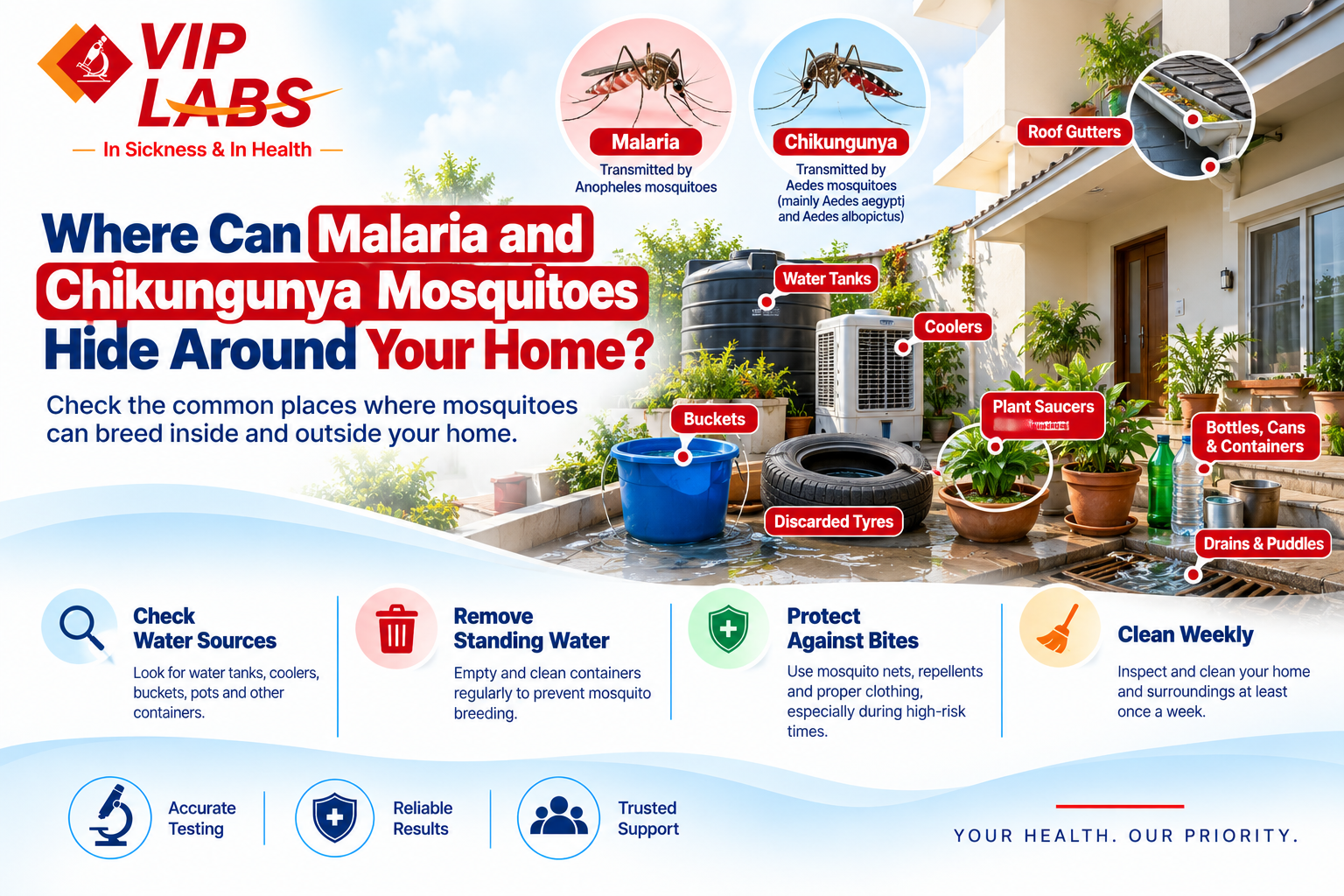
Mosquitoes can find surprisingly small amounts of standing water around homes and use them as breeding sites. Buckets, plant pots, water tanks, coolers, tyres, bottles, roof gutters, and other containers can collect water and create suitable conditions for mosquito breeding.
Malaria and chikungunya are both mosquito-borne diseases, but they are spread by different mosquito groups. Malaria is transmitted by infected Anopheles mosquitoes, while chikungunya is mainly transmitted by infected Aedes aegypti and Aedes albopictus mosquitoes.
Knowing where mosquitoes may breed around your home is an important part of prevention.
Mosquitoes can breed in many places where water remains undisturbed. Some breeding sites may be obvious, while others can be easily overlooked.
Common areas to check include:
Aedes mosquitoes, which can transmit chikungunya, can breed in small amounts of standing water collected in household and outdoor containers.
Yes. Mosquito breeding is not limited to outdoor areas.
Aedes mosquitoes can feed indoors and may breed in water-holding containers inside or close to homes. Flower vases, plant saucers, buckets, coolers, and uncovered water containers can become potential breeding sites when water remains stagnant.
This is why checking both indoor and outdoor areas is important.
Yes. Water tanks and other water-storage containers can become mosquito breeding sites if they are not properly covered or maintained.
Some malaria vectors found in India, including Anopheles stephensi, can breed in water tanks and other collections of relatively clean water in urban and peri-urban areas.
Water tanks should therefore remain properly covered, and their surroundings should be checked regularly.
Air coolers can collect standing water and may become potential mosquito breeding sites if the water is not regularly emptied and the cooler is not properly cleaned.
During mosquito-control activities, emptying, drying, and cleaning water-holding containers such as coolers is recommended to reduce breeding opportunities.
Yes. Water can collect in flower-pot saucers, decorative plant containers, and other gardening items.
Even a relatively small amount of standing water can provide a breeding opportunity for Aedes mosquitoes. Regularly emptying plant saucers and avoiding unnecessary water accumulation can help reduce mosquito breeding around the home.
Yes. Discarded tyres can collect rainwater and become suitable breeding places for mosquitoes.
Old tyres should not be left outdoors where rainwater can accumulate. They should be disposed of properly or stored in a way that prevents water collection.
WHO specifically identifies items such as tyres, buckets, and flowerpots as common places where standing water can provide breeding grounds for mosquitoes that transmit chikungunya.
Yes. Small containers can collect rainwater or water from household activities.
Examples include:
These objects may appear harmless, but if they hold standing water, they can become potential mosquito breeding sites. Government of India's vector-control guidance recommends removing such water-holding containers around homes.
Yes. Blocked roof gutters and areas where water collects after rainfall can create stagnant water.
Regularly checking rooftops, gutters, balconies, drains, and other areas where rainwater can remain trapped can help reduce mosquito breeding opportunities.
Keeping these areas clean and ensuring proper water drainage is an important part of mosquito control.
Malaria is transmitted by Anopheles mosquitoes. Their breeding habitats vary depending on the mosquito species and local environment.
Some Anopheles mosquitoes breed in rainwater pools, puddles, irrigation channels, wells, pond margins, river-bed pools, and other water collections. In India, certain malaria vectors can also adapt to urban environments and breed in water tanks.
Malaria-transmitting Anopheles mosquitoes generally bite from evening into the night, although biting patterns can vary by species and environment.
Chikungunya is mainly transmitted by Aedes aegypti and Aedes albopictus mosquitoes.
These mosquitoes commonly breed in water-holding containers around homes, including:
Aedes mosquitoes mainly bite during daylight hours and can feed both indoors and outdoors.
The diseases are caused by different infectious agents and are transmitted by different mosquito groups.
Malaria:
Malaria is caused by parasites and is transmitted through infected Anopheles mosquitoes. These mosquitoes commonly become active around dusk and during the night.
Chikungunya:
Chikungunya is caused by a virus and is mainly transmitted by Aedes aegypti and Aedes albopictus mosquitoes. These mosquitoes are primarily active during daylight hours.
Preventing mosquito breeding starts with removing standing water.
Follow these simple steps:
Government of India's vector-control guidance recommends source reduction, proper covering of stored water, management of rooftops and other water-collecting areas, and regular inspection of mosquito breeding sources.
Removing breeding sites is important, but preventing mosquito bites is also helpful.
You can reduce exposure by:
Because Aedes mosquitoes that transmit chikungunya mainly bite during the day, daytime protection is particularly important.
If you develop symptoms such as fever, headache, body aches, joint pain, chills, fatigue, or other symptoms after possible mosquito exposure, consult a healthcare professional.
Malaria and chikungunya require different diagnostic approaches, and the appropriate test can depend on the timing of symptoms and clinical assessment.
A Complete Blood Count (CBC) may be used as part of an evaluation of fever or other health concerns, while additional disease-specific investigations may be recommended by a healthcare professional. VIP Labs' CBC includes blood cell measurements and a peripheral smear study.
VIP Labs also provides home sample collection services for patients who prefer testing from home.
Fever can have many possible causes, and mosquito-borne diseases can sometimes have overlapping symptoms.
Getting appropriate medical evaluation can help identify the possible cause and guide further testing or treatment.
If malaria or chikungunya is suspected, a healthcare professional can determine which diagnostic tests are appropriate based on symptoms, exposure history, and the stage of illness.
1.Where do malaria mosquitoes breed around the home?
Malaria mosquitoes can breed in various water collections, including puddles, rainwater pools, irrigation areas, wells, pond margins, and, in some urban settings, water tanks.
2.Where do chikungunya mosquitoes breed?
Chikungunya-transmitting Aedes mosquitoes commonly breed in water-holding containers such as buckets, flower pots, plant saucers, tyres, bottles, cans, and water tanks.
3.Can mosquitoes breed in clean water?
Yes. Some mosquito species, including Aedes mosquitoes, can breed in relatively clean standing water collected in household containers.
4.Can mosquitoes breed inside the house?
Yes. Aedes aegypti can feed indoors, and water-holding containers inside or around a home can provide breeding opportunities.
5.Do mosquitoes breed in plant pots?
Yes. Water collected in plant pots, saucers, and other gardening containers can become mosquito breeding sites.
6.Do old tyres attract mosquitoes?
Old tyres can collect rainwater and become breeding sites, particularly for container-breeding Aedes mosquitoes.
7.When do chikungunya mosquitoes usually bite?
Aedes mosquitoes that transmit chikungunya mainly bite during daylight hours.
8.When do malaria mosquitoes usually bite?
Many malaria-transmitting Anopheles mosquitoes are more active from dusk into the night, although biting patterns can vary by species and environmental conditions
9.How often should I check my home for mosquito breeding places?
Check your home and surrounding areas regularly, especially after rainfall. Water-holding containers should be emptied and cleaned regularly to prevent mosquito breeding.
10.Can a blood test help when someone has fever after mosquito exposure?
Yes. Blood tests may be part of the evaluation of fever, but the appropriate investigation depends on the suspected infection and the timing of symptoms. A healthcare professional can recommend the appropriate tests.
Mosquitoes can breed in many places around your home, and some of these areas may be easy to overlook. Water tanks, coolers, buckets, plant saucers, old tyres, bottles, cans, roof gutters, drains, and other water-holding containers can create opportunities for mosquito breeding.
Malaria and chikungunya are spread by different mosquito groups, so understanding their breeding and biting habits can help you take better preventive measures.
The simplest approach is to regularly inspect your home, remove standing water, keep water containers covered, clean potential breeding areas, and protect yourself from mosquito bites.
If fever or other symptoms develop after mosquito exposure, seek medical evaluation and follow the testing advice provided by a healthcare professional.